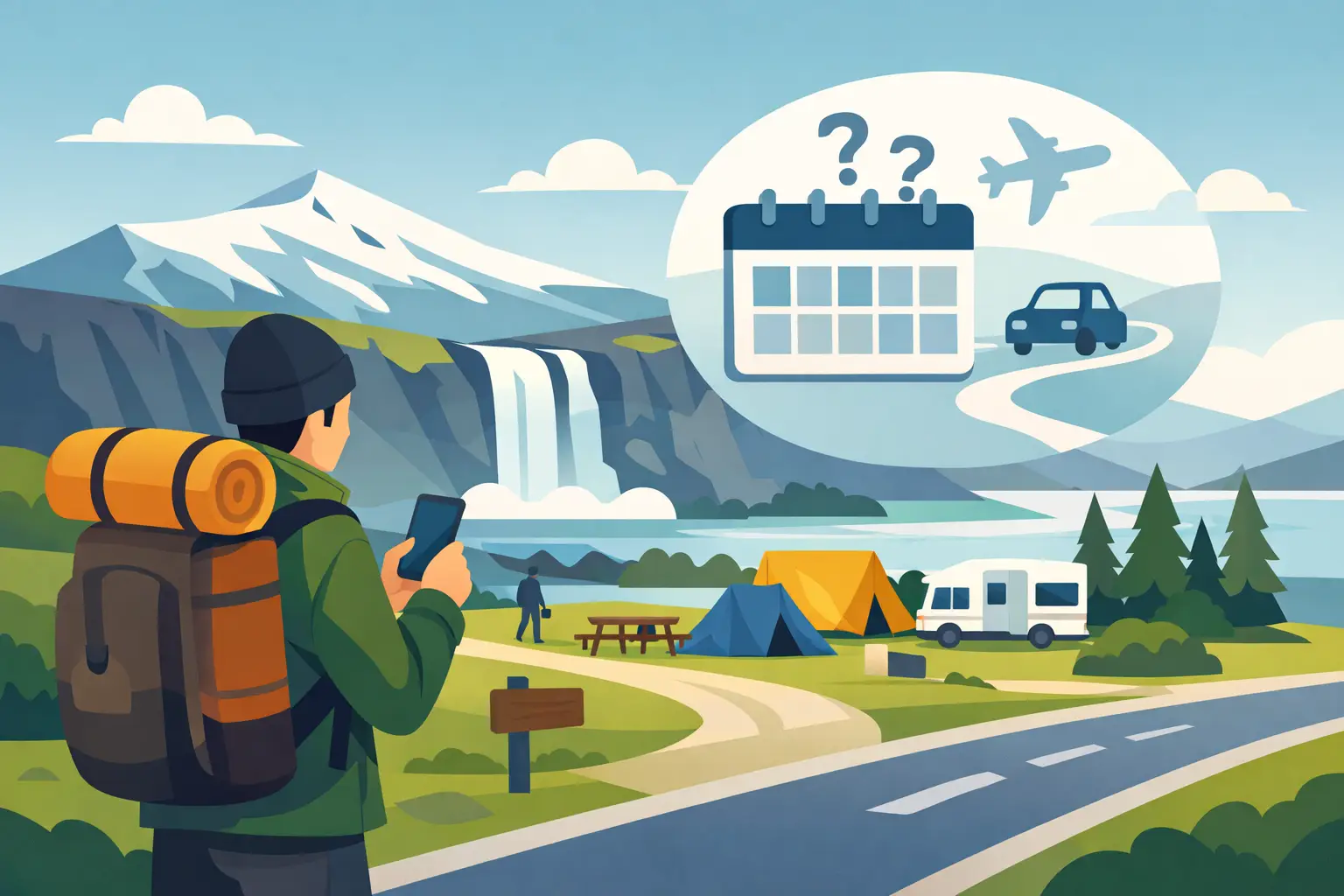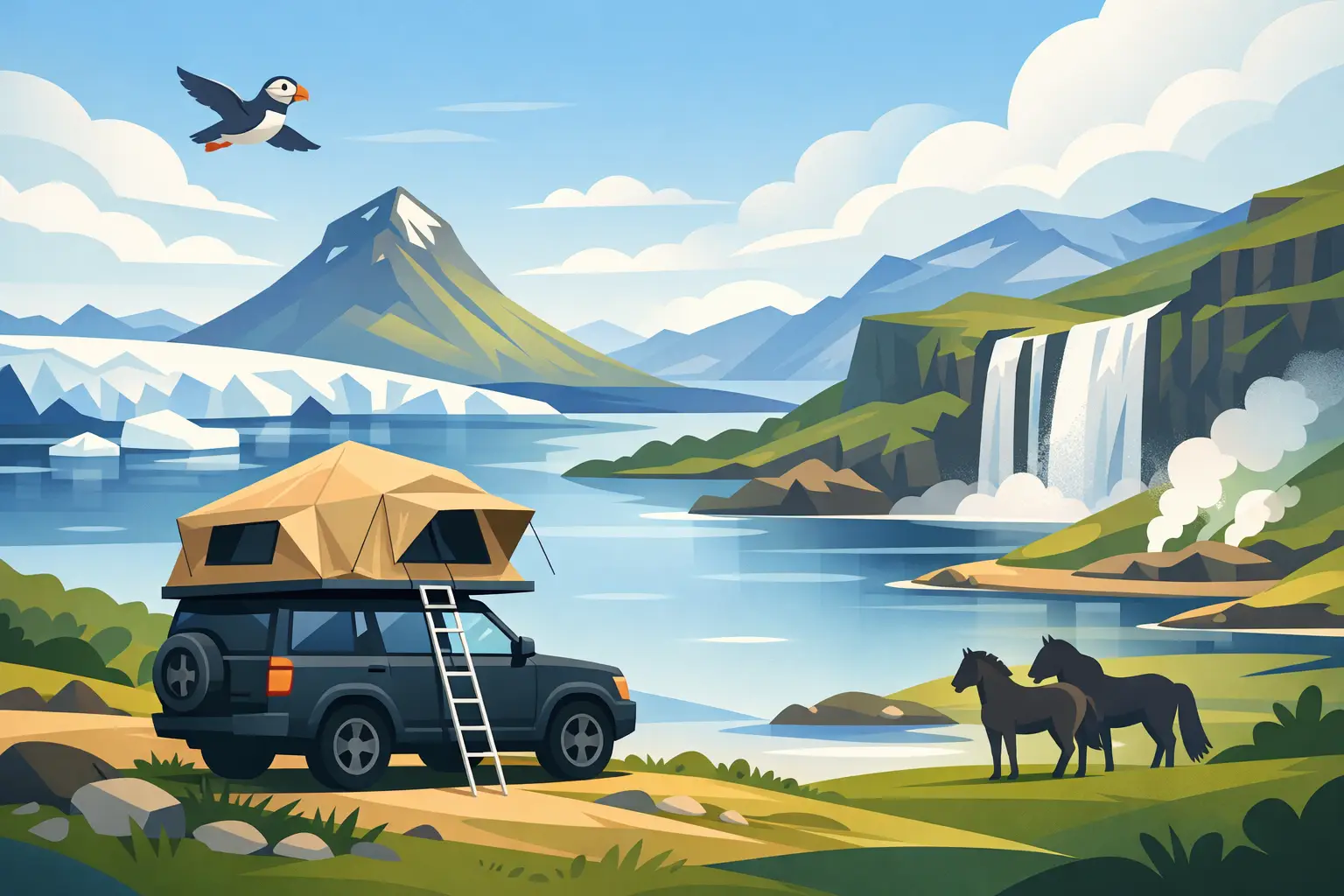
The best seven day Iceland 4×4 itinerary does not try to race around every landmark on the map. It gives you room to stop when the weather clears, take a gravel road to a quiet viewpoint, and change plans when Iceland does what Iceland does. With a 4×4 camper, your vehicle is also your base, so you can travel lighter and keep your schedule flexible.
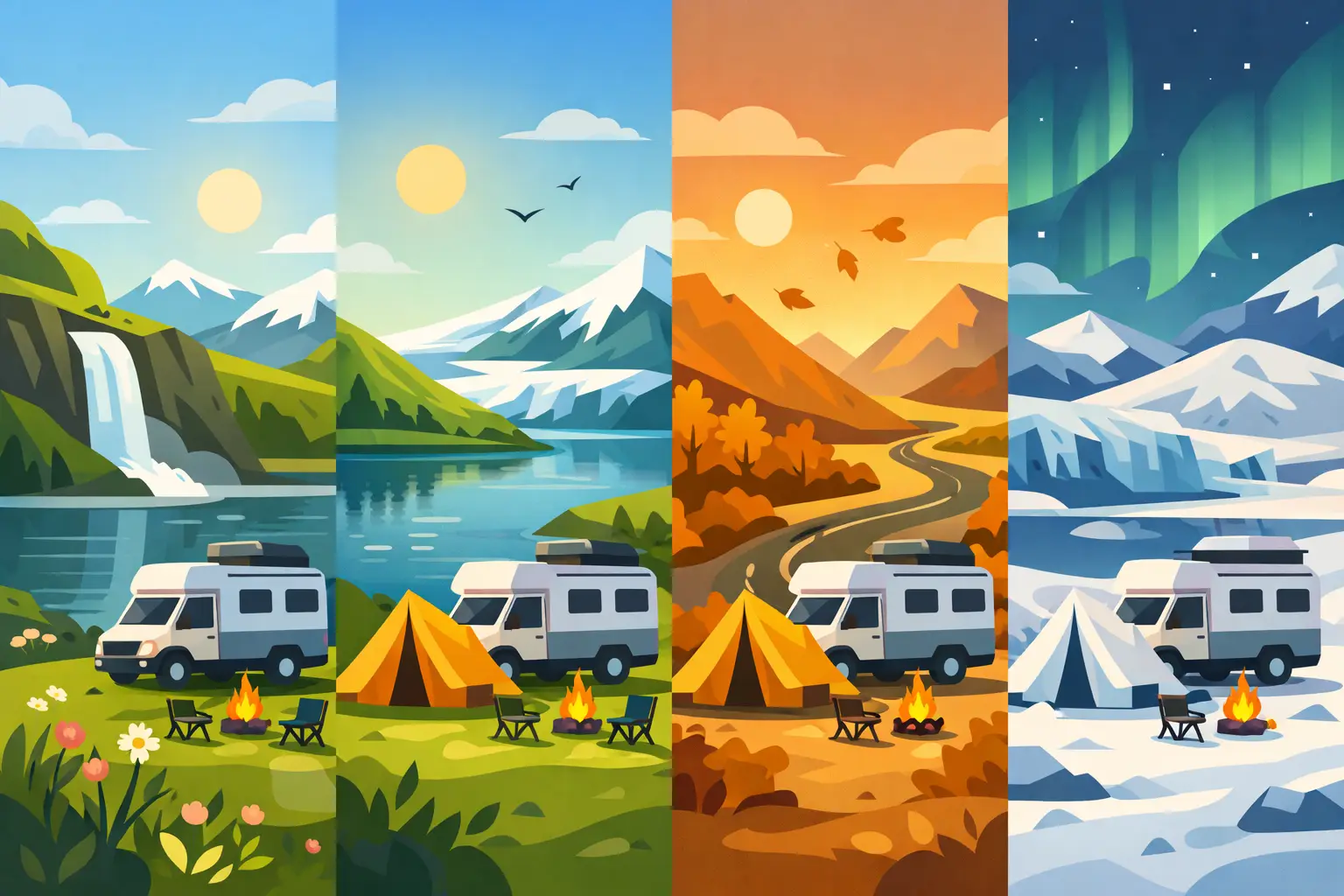
This route follows the Ring Road clockwise, then adds a realistic Highland option if conditions allow. It works especially well from late spring through early fall. In winter, keep the route closer to the coast, build in extra time, and treat the Highlands as off-limits.
Before You Start Your Seven Day Iceland 4×4 Itinerary
Pick up your vehicle, load food, and check the forecast before committing to a direction. A fully equipped 4×4 camper means you are not tied to hotel check-in times, but it does not make weather, wind, or road closures disappear. Keep your first and last driving days short enough to avoid airport stress.
Plan to sleep at registered campgrounds, not in parking lots or roadside pullouts. Iceland has strict rules around overnight stays, and campsites give you toilets, showers, cooking areas, and a legal place to settle in. In high season, popular sites can be busy, but you usually do not need to book every night far in advance.
A 4×4 is most useful for uneven gravel roads, mountain access, and the confidence to handle changing surfaces. It is not a license to ignore road signs or cross rivers. F-roads open only when conditions are safe, and some require real river crossings that are not suitable for every vehicle or every driver.
The Route: South Coast, Eastfjords, North, and West
Day 1: Keflavik to the South Coast
Start with the Reykjanes Peninsula only if your flight arrives early and you are well rested. Otherwise, head east toward Seljalandsfoss and Skogafoss. Both are close to the Ring Road and make a strong first introduction to Iceland’s waterfalls without turning the day into a long drive.
Continue to Reynisfjara for black sand, basalt columns, and views toward the sea stacks. Respect the warning signs here. Sneaker waves are dangerous, even on days that look calm. Camp near Vik or farther east if you want a quieter start the next morning.
Day 2: Vik to Skaftafell and Jokulsarlon
Drive through the lava fields of Eldhraun and across the wide sands of Skeidararsandur toward Skaftafell. A walk to Svartifoss is a good choice if you want a proper leg stretch, while shorter trails and glacier views work better if the weather is wet or visibility is poor.
By afternoon, reach Jokulsarlon Glacier Lagoon and nearby Diamond Beach. This is one of the places worth seeing in different light, so do not rush away after the first photos. Camp around Hofn or stay west of the lagoon if you prefer a shorter drive the next day.
Day 3: Jokulsarlon to the Eastfjords
The road from Hofn into the Eastfjords is a change of pace. The landscape becomes steeper, narrower, and more coastal, with fishing villages tucked between mountains and fjords. This is a good day to travel slowly rather than chase a long checklist.
Stop where the view earns it, whether that is a beach, a harbor, or a small cafe in Djupivogur. If the weather is clear, the Eastfjords can be one of the most memorable parts of the route. Camp around Egilsstadir or in one of the smaller coastal towns, depending on how far you want to drive.
Day 4: East Iceland to Myvatn
Head north through Modrudalsoraefi, a high, open stretch where the road feels remote even though you are still on the main route. Fuel up before leaving larger towns and keep snacks and water within reach. Weather can shift quickly across this interior plateau.
Arrive in the Myvatn area with time for Hverir’s steaming geothermal ground, the lava formations at Dimmuborgir, or a walk around Lake Myvatn. This is also a practical place for a rest day feeling without losing momentum. Settle into a campground nearby and use the evening light for a quiet walk.
Day 5: Myvatn to Husavik and Akureyri
Start at Godafoss, then decide whether your day is about the coast or the city. Husavik is a worthwhile detour for whale watching in season, while Akureyri offers groceries, cafes, fuel, and a useful resupply stop. You do not need both if you prefer an unhurried day.
From Akureyri, cross Eyjafjordur and camp in the north or west of town. The roads are generally straightforward here, but wind can be strong on exposed sections. Keep both hands on the wheel, especially when passing larger vehicles.
Day 6: Choose the Highlands or the West
This is your flexible day. If F-roads are open, your rental agreement permits the route, and conditions are suitable, use the 4×4 for a Highland day such as the approach toward Landmannalaugar. Check road conditions that morning, understand the route, and turn back if water levels, weather, or your confidence say no. The Highlands are rewarding precisely because they are not predictable.
If the Highlands are closed or you would rather avoid a demanding drive, take the scenic route west through Skagafjordur and Borgarfjordur. You can stop at waterfalls, soak in a hot spring, or simply enjoy a less pressured drive. Camp in the Borgarnes area to make the final day easy.
Day 7: Borgarnes to Reykjavik and Keflavik
Keep this day simple. Explore Reykjavik if your flight timing allows, stock up on a final meal, and leave enough time for fuel, cleaning up your camping gear, and the drive to Keflavik. A self-service return is useful here because you can work around an early departure or a late arrival without waiting at a rental counter.
Black Sheep Campers keeps that part straightforward with 24/7 pickup and return, unlimited mileage, and practical camping setups. No queues. No waiting. No surprises.
Driving and Camping Rules That Keep the Trip Easy
Do not measure Iceland days by mileage alone. A 150-mile drive can take much longer than expected when it includes gravel, photo stops, wind, roadworks, or a one-lane bridge. Start with a full tank whenever you leave a larger town, and never assume a remote fuel station will be open or staffed.
Check official road and weather updates every morning, then check them again before a long mountain drive. Slow down on gravel, keep headlights on, and watch for sheep near the road. If visibility drops, there is no prize for continuing. A campground night closer to where you are is usually the smart call.
For rooftop tent travelers, wind matters as much as rain. Choose a sheltered campground when strong gusts are forecast and follow the vehicle’s tent setup instructions exactly. For sleep-in-the-back campers, organize your gear before dark and keep wet items separate from your sleeping area. Small routines make camping much more comfortable after a full driving day.
Make the Itinerary Fit Your Trip
This route is a framework, not a fixed tour. If you love hiking, remove one town stop and spend more time around Skaftafell or Myvatn. If you want the Highlands, protect Day 6 and keep earlier days efficient. If rain follows you down the south coast, move on instead of waiting for perfect conditions. The north or east may be clear tomorrow.
The freedom of a 4×4 camper is not about covering more ground. It is about having a warm place to sleep when the view is too good to leave, and a practical way to change course when the road ahead looks better than the plan you made at home.