Landing at Keflavik at 6 a.m. with a week of Iceland ahead of you creates one practical question: Dacia Duster or campervan? The answer affects where you can drive, how you sleep, what you pack, and how much of your budget stays available for hot springs, hiking, and good food.
A traditional campervan makes daily living easy. A 4×4 Dacia Duster gives you a smaller footprint and better options when your route includes rougher roads. Neither is automatically the right choice. It comes down to the season, your route, your comfort level, and whether you want your vehicle to be mostly a bedroom or an adventure car that also sleeps you.
Dacia Duster or campervan: the key difference
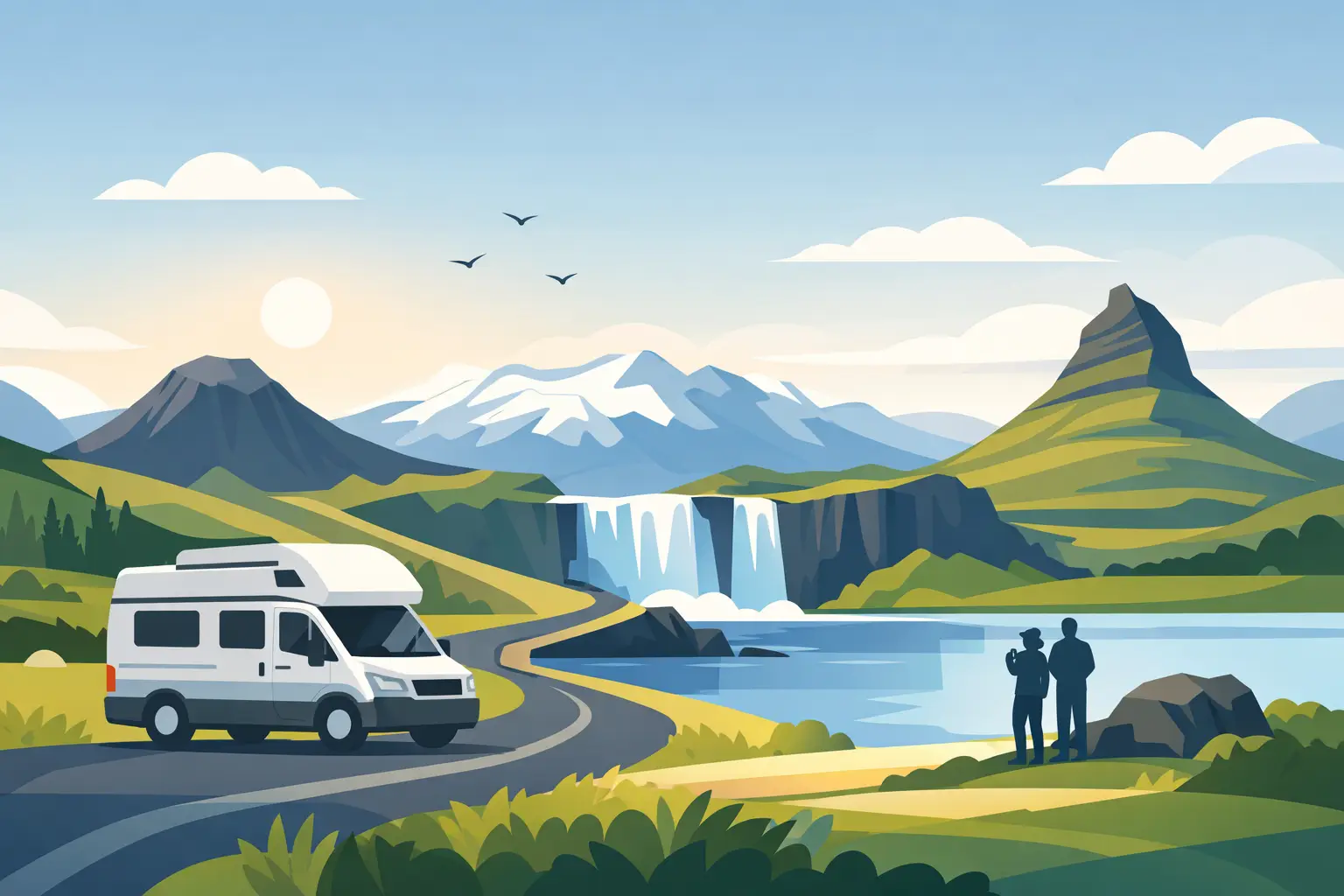
A standard campervan is built around interior space. You generally get a proper bed inside the vehicle, room to sit when the weather turns wet, and more convenient access to cooking equipment and storage. For travelers following the Ring Road, staying at established campgrounds, and prioritizing a simple place to sleep every night, that setup is hard to beat.
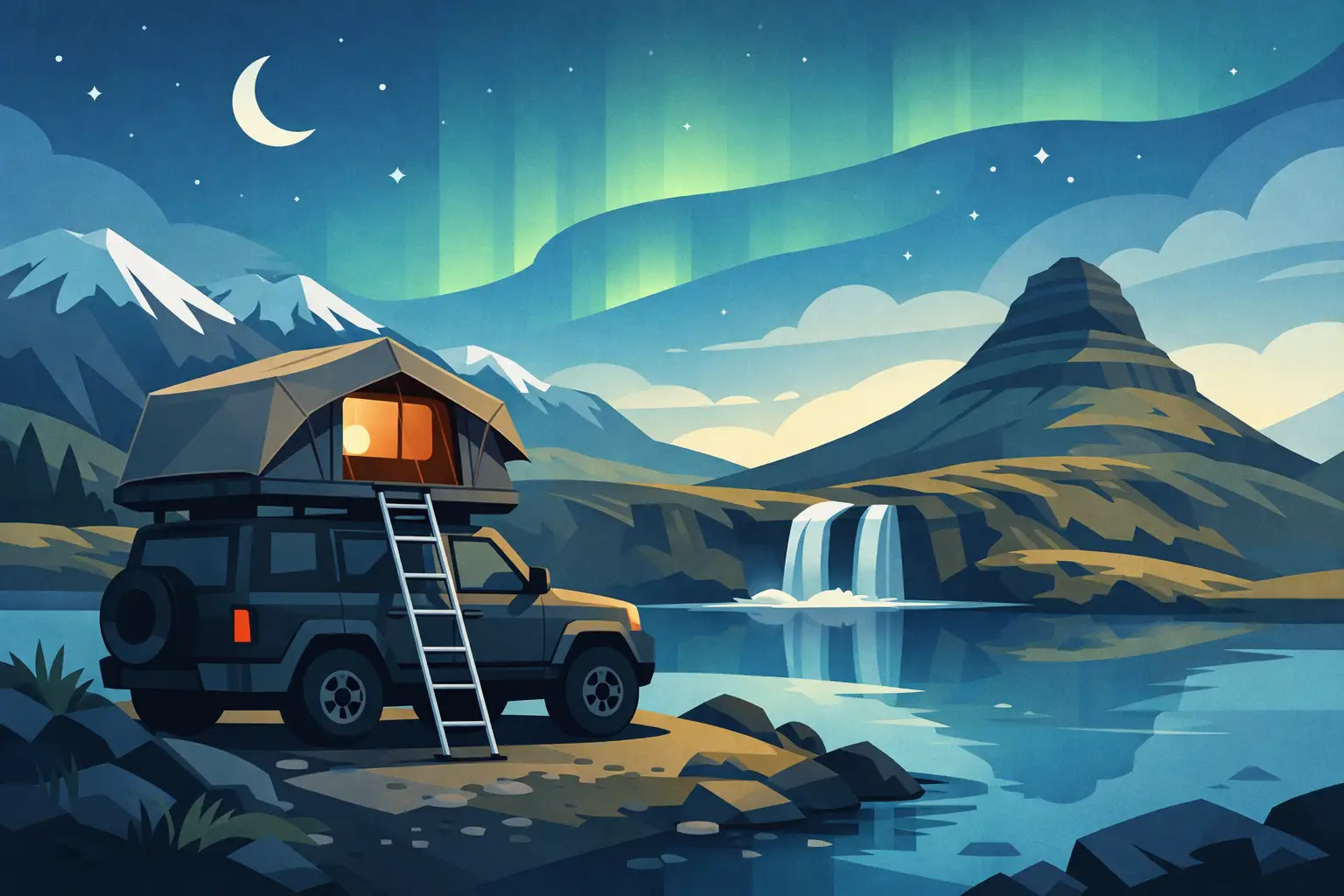
A Dacia Duster camper setup takes a different approach. It is a compact 4×4 with either a rooftop tent or a sleep-in-the-back arrangement, plus the essential camping gear needed for the road. You trade standing room and a large indoor living area for easier driving, lower fuel use than many larger campers, and the capability that comes with a compact 4×4.
That difference matters in Iceland. A wide, tall camper can feel less relaxed in strong crosswinds, narrow pull-offs, busy parking areas, and on unpaved roads. A Duster is closer to driving a normal car, while still giving you transport and accommodation in one vehicle.
Choose a campervan if your trip is about comfort
A campervan is often the best fit when the cabin itself is a major part of your plan. Iceland can deliver rain, wind, and long stretches of gray weather even in summer. Having room to sit inside, make a meal, organize clothes, and read without setting up camp is a real advantage.
It is also a sensible choice for travelers who do not want to climb a ladder into a rooftop tent at the end of a long day. If you are traveling with a young child, have limited mobility, or simply value an indoor bed that is ready whenever you stop, a conventional campervan offers more comfort with less setup.
For a first Ring Road trip, the lack of 4×4 capability may not be a problem. Iceland’s main Route 1 and many of the country’s best-known sights are reached on paved roads or well-maintained gravel roads. Waterfalls, black-sand beaches, glacier lagoons, geothermal areas, and plenty of excellent hikes do not require a trip into the Highlands.
The trade-off is that most standard campervans are not allowed on F-roads. They are larger, heavier, and less suited to uneven surfaces. If the Highlands are a priority, a basic campervan can limit your route before you even leave the airport.
Choose a Dacia Duster if your route needs flexibility
A Duster makes sense for couples, solo travelers, and light-packing friends who want a more capable vehicle without moving into a large 4×4 or a full-size motorhome. It is particularly useful if your Iceland plan mixes the Ring Road with gravel routes, remote trailheads, and selected Highland roads during the open season.
The benefit is not that you must drive every F-road. The benefit is that you can build a route with more options. You may decide to take a quieter gravel road to a hiking area, spend longer exploring the Westfjords, or head inland when conditions and your rental agreement allow it.
A Dacia Duster with a rooftop tent works especially well when the journey matters as much as the overnight stop. Drive during the day, use campgrounds at night, and wake up closer to the landscapes you came to see. A sleep-in-the-back Duster can be even more straightforward for travelers who prefer to avoid a rooftop tent ladder and want a fast, low-profile evening setup.
Black Sheep Campers focuses on this practical middle ground: equipped 4×4 camping vehicles that keep your trip simple without tying you to hotel check-in times or a large campervan footprint. No rental-counter queues. No fixed pickup schedule. Just collect your vehicle and start driving when it suits your flight and plan.
Do not choose a 4×4 for F-roads alone
A 4×4 badge does not make every Highland route easy or suitable. Iceland’s F-roads open only in summer, and opening dates vary with snow, road damage, and weather. Conditions can change quickly after rain, and some roads involve river crossings that require experience, careful judgment, and the right vehicle.
Before driving inland, check the current road conditions, weather forecast, and the rules of your rental agreement. Some routes are suitable for a compact 4×4 in good conditions; others call for a larger vehicle or should be left for another trip. Never drive off-road in Iceland. It is illegal, damages fragile land, and can lead to serious costs.
The same caution applies to river crossings. Do not cross if you are unsure of the depth, current, or exit point. Turn around rather than forcing a route. Iceland will still be there tomorrow.
Compare the real daily experience
The best choice is usually clearer once you picture a normal day, not just the vehicle in a parking lot.
Driving and parking
A Duster is easier to maneuver in Reykjavik, at supermarkets, and in crowded attraction parking lots. It is also more comfortable for drivers who are used to a car rather than a van. A campervan gives you more room, but you will feel its size more in wind and tight spaces.
Sleeping and weather
A campervan wins for indoor space. On a cold or rainy evening, you can close the door and settle in. A rooftop tent gives you a raised, comfortable sleeping spot and a great view from camp, but getting in and out means being outside. A sleep-in-the-back Duster is a practical compromise, though it has less space to move around than a van.
Fuel and trip budget
Vehicle size affects fuel use, particularly when you are covering Iceland’s long distances. A compact Duster will generally be more economical than a larger campervan. However, compare the complete rental package rather than looking at the daily vehicle rate alone. Camping gear, insurance options, mileage limits, pickup fees, and extra charges can change the real cost quickly.
A setup with unlimited mileage is valuable when you want freedom to change plans. A sunny forecast in the Eastfjords or clear skies near Vestrahorn can be a good reason to drive farther than expected.
Campsites and routines
Both options work best with Iceland’s campgrounds. Camping in a vehicle outside designated campgrounds is generally not permitted, so plan overnight stops before the end of the day, especially in busy summer months. Campgrounds also give you access to bathrooms, showers, kitchens, charging points, and a place to meet other travelers.
With a campervan, evening routines happen mainly inside. With a Duster, you will spend more time outdoors, cooking beside the vehicle and enjoying the light, air, and view. That is a strength for travelers who came to camp, but it is not everyone’s preferred version of vacation.
A quick way to decide
Choose a campervan when indoor comfort, a ready-made bed, and a relaxed Ring Road itinerary matter most. Choose a Dacia Duster camping vehicle when you want a smaller 4×4, are happy with a simpler sleeping setup, and want more freedom to explore beyond the main paved route.
If you are traveling in spring, fall, or a colder part of the year, think carefully about how much time you want to spend outdoors at camp. If you are coming in summer for hiking, long daylight, and open Highland routes, the Duster’s flexibility becomes more compelling. Couples who pack light often find it hits the sweet spot between cost, capability, and comfort.
Keep your plan simple: choose the vehicle that supports the places you genuinely want to go, not the one that sounds most adventurous on paper. The right setup leaves you free to follow the weather, stop when the view is worth it, and make Iceland feel like your own road trip.