The first F-road sign can feel like an invitation and a warning at the same time: paved road ends, the Highlands begin, and your plan needs to get simpler. Knowing how to navigate Iceland F-roads is less about chasing the most remote route and more about making calm, well-timed decisions with the right vehicle, current information, and enough room in your schedule.
F-roads lead into some of Iceland’s most striking landscapes: black-sand plains, highland deserts, glacial rivers, volcanic ridges, and valleys that regular rental cars will never reach. They are also unpaved mountain roads, often rough, narrow, weather-dependent, and sometimes crossed by rivers. Treat them with respect, and a 4×4 road trip can be one of the best ways to see Iceland on your own terms.
What Makes an Icelandic F-Road Different?
An F-road is a mountain road marked with an F before its route number, such as F35, F208, or F225. By law, only a proper 4×4 vehicle may drive on these roads. A standard two-wheel-drive car is not enough, even if the surface looks dry and easy at the start.
The challenge varies widely by route and by season. Some F-roads are broad gravel tracks with washboard surfaces and a few potholes. Others have steep sections, loose rocks, blind crests, deep ruts, and river crossings. A road that was straightforward yesterday can be closed today after rain, high winds, snow, or rising rivers.
That is why a route number alone does not tell you whether a road is suitable. Check the current conditions, understand your vehicle’s limits, and be willing to change the plan. Flexibility is part of the experience, not a failed itinerary.
How to Navigate Iceland F-Roads Before You Leave
The best F-road driving happens before the engine starts. Check Iceland’s official road conditions and weather forecast on the morning you travel, then check again if conditions change. Road openings are seasonal and depend on snowmelt, maintenance, and weather. Most Highland routes open in summer, but the exact dates can vary significantly from one year to the next.
Pay attention to more than open or closed status. Look for warnings about river crossings, wet conditions, high winds, reduced visibility, or rough surfaces. A road marked open is not a promise that it is easy. It means the route is legally open, not that every driver and vehicle should attempt it.
Plan a realistic route around daylight, fuel, food, and your overnight stop. Highland driving is slower than it looks on a map. Thirty miles of gravel, potholes, and careful river checks can take much longer than the same distance on Route 1. Avoid building a schedule that depends on reaching a campsite at a precise time.
Download offline maps before entering remote areas. Mobile coverage can be limited in the Highlands, and relying on live navigation alone is unnecessary stress. Keep a paper map as a backup if you prefer. Make sure your phone is charged, and bring a power bank or use your vehicle’s charging setup.
Choose a Vehicle That Matches the Route
A 4×4 is required on F-roads, but not every 4×4 has the same clearance, tires, or river-fording ability. Choose your route based on the vehicle you have, not the other way around.
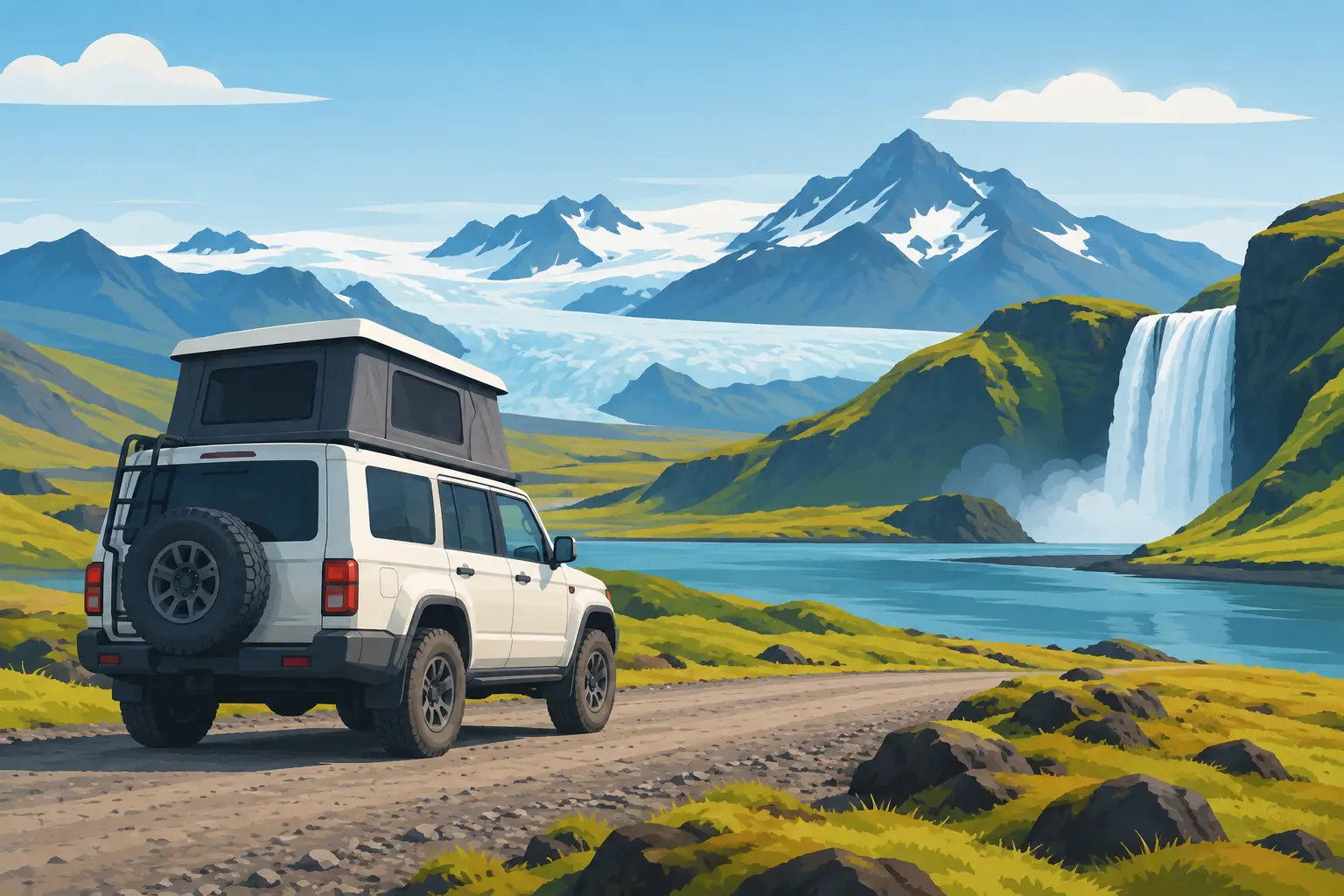
A practical 4×4 camper, such as a Dacia Duster setup, can be a great fit for many Highland routes and gives you the freedom to combine driving and camping in one simple trip. But it still has limits. Do not assume that a 4×4 can safely cross every river or handle every track. For routes known for deep or unpredictable fords, wait for better conditions, travel with more experienced vehicles, or choose another destination.
Before pickup, understand what your rental agreement says about F-roads and water crossings. Follow the vehicle-specific guidance you receive. Black Sheep Campers keeps the process straightforward: use the vehicle within its intended limits, ask when you are unsure, and do not turn an uncertain crossing into an expensive problem.
Driving Techniques That Make F-Roads Easier
On gravel, slow and steady beats fast and confident-looking. Keep both hands on the wheel, leave generous space behind other vehicles, and reduce speed before corners, crests, and rough sections. Sudden braking or sharp steering can make a vehicle lose grip on loose surfaces.
Washboard roads can be tiring because the vehicle vibrates constantly. There is no single perfect speed, and trying to drive faster to smooth out the bumps usually creates more risk. Find a controlled pace that keeps the vehicle stable and comfortable. If the road gets rougher, slow down again.
Stay on the marked road at all times. Driving off-road is illegal in Iceland and can damage fragile moss, soil, and volcanic landscapes for decades. If there is a pothole, a flooded section, or a rough patch, do not create a new track around it. Turn around if necessary.
On narrow roads, be patient and communicate clearly with other drivers. Pull over only where the road is wide enough and the ground is firm. Sheep, hikers, cyclists, and vehicles may appear around a blind bend, so keep your speed low enough to react.
Give River Crossings Your Full Attention
River crossings are the part of F-road driving that deserves the most caution. Water levels can change quickly with rain, warm temperatures, and glacial melt. A crossing that looks manageable in the morning may be unsafe later in the day.
Never drive into a river without stopping first. Get out, assess the crossing from a safe place, and look at the marked entry and exit points. Check the water depth, current, riverbed, and whether other drivers are successfully crossing. If the water is high, fast, cloudy, or you cannot judge the route, do not proceed.
When it is safe and appropriate for your vehicle, cross slowly in low gear at a steady pace. Do not stop in the river, do not change direction sharply, and do not race through the water. Follow the established track and keep enough distance from the vehicle ahead. Their wake can make your crossing harder.
There is no shame in turning back. In fact, it is one of the most experienced decisions you can make in Iceland. Water damage can end a trip quickly, and help may be hours away. The Highlands will still be there tomorrow.
Fuel, Weather, and Time: The Things That Change the Day
Fill up before entering the Highlands. Gas stations are limited, and detours on rough roads use more fuel than drivers expect. Keep snacks, drinking water, warm layers, and basic supplies in the vehicle, even if your planned route is short.
Icelandic weather can change quickly in any season, but exposure feels more serious in remote areas. Wind can make doors difficult to manage, fog can erase visibility, and rain can alter road and river conditions. If weather turns against you, slow down or stop at a safe location. Do not push on just because you booked a campsite or hoped to reach a specific waterfall.
Tell someone your intended route if you are heading into a particularly remote area. If you change plans, let them know when possible. This is simple preparation, not drama.
Camping Responsibly in the Highlands
A rooftop tent or sleep-in-the-back camper gives you more freedom, but it does not mean you can camp anywhere. In the Highlands, use designated campsites or areas where camping is explicitly permitted. Many protected areas have specific rules, and conditions can be stricter than elsewhere in Iceland.
Arrive with enough time to set up before dark or bad weather. Keep all waste with you or use the facilities provided, and never leave toilet paper, food scraps, or gear behind. The goal is simple: enjoy the quiet without adding to the impact on a place that is already exposed to wind, water, and heavy seasonal use.
A Simple F-Road Decision Rule
If you are unsure about the road, the weather, the river, or your vehicle, stop and reassess. Check updated information, talk to other drivers if they are nearby, and choose the safer option. A good Iceland road trip is not measured by how many difficult roads you complete. It is measured by the places you reach, the time you have there, and the confidence to keep the adventure enjoyable.
Leave space in the day for the unexpected turnoff, the changing weather, and the decision to head back early. That freedom is what makes the Highlands worth driving in the first place.