You land at Keflavik after a long flight, pick up your camper, and the first real decision is waiting in the parking lot: clutch pedal or no clutch pedal? The manual vs automatic camper Iceland question matters more than it might on a city break. You may drive long distances, deal with wind and changing weather, climb gravel roads, and set up camp somewhere far from the next hotel.
There is no single right answer. A manual camper can be a practical, good-value choice for confident stick-shift drivers. An automatic camper makes the driving side of your trip easier, especially if you are visiting from the US or want to focus on the road, views, and weather rather than gear changes. Keep it simple: choose the transmission that lets you feel calm and in control.
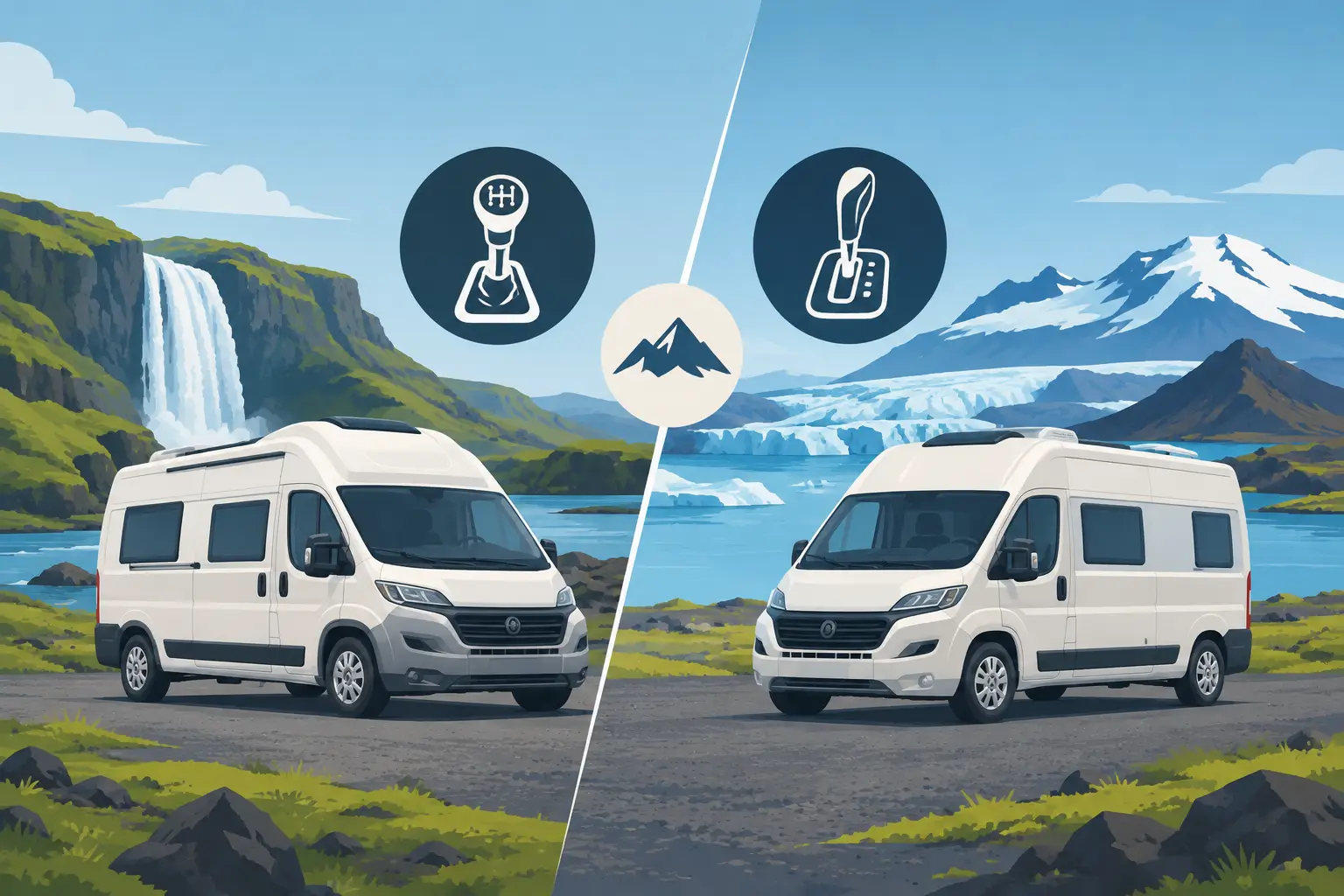
Manual vs Automatic Camper Iceland: The Real Difference
Iceland is not one type of driving. A Ring Road itinerary in summer is very different from a Highlands route with open F-roads, and both are different again in shoulder-season rain, wind, or early snow. Transmission affects comfort and confidence, but it does not change the rules of the road or turn a vehicle into a Highlands machine.
A manual is often the familiar choice for European drivers and anyone who regularly drives stick. It gives you direct control over gear selection on steep grades and loose gravel. For an experienced manual driver, it quickly becomes second nature.
An automatic removes one task from every start, hill, traffic circle, and stop for a photo. That sounds small, but Icelandic road trips can involve hours behind the wheel. If you have only driven automatic vehicles, this is not the place to learn manual while managing unfamiliar roads and variable weather.
For most US travelers, automatic is the easier and more relaxing option. For travelers comfortable in a manual, the better value or vehicle availability may make a manual a smart choice. The important part is being honest about your experience before booking.
When a Manual Camper Makes Sense
Choose a manual camper if you drive one confidently at home, not just if you passed a test in one years ago. Iceland’s roads reward smooth, deliberate driving. You should be able to pull away on an incline, select lower gears on gravel, and handle a hill start without feeling rushed.
Manual can also be the practical choice when you want to keep your rental cost down. Manual vehicles are often more widely available, particularly in 4×4 camping setups. If your route is mostly the Ring Road, the Snæfellsnes Peninsula, the Golden Circle, and established campgrounds, a capable manual 4×4 can be an excellent base for the trip.
On descents, selecting a lower gear helps maintain speed without constantly riding the brakes. That is useful on long hills, gravel sections, and wet roads. But do not confuse this benefit with permission to drive faster. Slow down before curves, leave space, and adjust to visibility and surface conditions.
A manual is not ideal if you are likely to be tired from travel, nervous on unfamiliar roads, or sharing driving with someone who does not drive stick. A camper trip works best when both drivers can comfortably take over. One person doing every mile can limit your flexibility.
When an Automatic Camper Is Worth It
An automatic camper is usually worth the extra cost for drivers who only use automatic vehicles. You will have enough to think about: one-lane bridges, roundabouts, gravel, wind gusts, livestock, road closures, and where you will sleep that night. There is no prize for making the drive harder.
Automatics are particularly helpful in and around Reykjavik, where traffic circles and stop-start driving can feel unfamiliar after an overnight flight. They are also easier when you are moving a fully equipped camper, which is heavier and less nimble than a small rental car.
For couples or friends sharing the driving, automatic keeps the handover simple. That can mean more breaks, less fatigue, and more freedom to stop when the light changes over a waterfall or a weather window opens. With a self-service camper pickup, you can begin on your own schedule. Choosing the transmission everyone can use helps you keep that freedom throughout the trip.
Many modern automatics also offer manual or low-gear modes. These can be useful when you need more control on a descent. Check the vehicle guide before setting off, and practice the controls somewhere quiet rather than figuring them out on a mountain road.
F-Roads: Transmission Is Not the Main Question
If F-roads are part of your Iceland plan, start with the vehicle, not the gearbox. F-roads require a legal, suitable 4×4, and conditions can change quickly with weather, river levels, snow, and road maintenance. A 2WD camper is not permitted on F-roads, even if it has a manual transmission.
A manual 4×4 does not automatically handle every F-road better than an automatic 4×4. Ground clearance, tires, four-wheel-drive capability, route conditions, and your own experience matter more. Some Highland routes are rough but manageable in the right vehicle. Others include river crossings or difficult terrain that demand real experience and careful judgment.
Never treat river crossings as a casual add-on to an itinerary. Water levels can rise fast, crossings may be unsafe, and damage from driving through water is commonly excluded from rental coverage. If you are unsure, turn around or choose another route. Iceland has no shortage of good roads and memorable places that do not require a risky crossing.
Before any F-road drive, check current road and weather information. Ask yourself whether the route is officially open, whether your specific camper is approved for it, and whether you have enough time, fuel, daylight, and confidence. The sensible decision is often the one that leaves room to change plans.
Driving a Camper in Iceland: What Both Transmissions Need
Whether you choose manual or automatic, the same habits make a big difference. Keep your speed down on gravel, where loose stones can damage your vehicle and reduce grip. Watch for sudden wind, especially when opening doors or driving along exposed coastal stretches. A strong gust can catch a door, a rooftop tent, or an inattentive driver by surprise.
Plan shorter driving days than the map suggests. Icelandic distances can look manageable, but frequent stops, narrow roads, weather, and scenic detours make every route take longer. A camper gives you the freedom to slow down. Use it.
Camping also needs a simple routine. Arrive with time to cook, set up, and check the forecast rather than searching for a campground at the last minute in bad weather. Secure loose gear inside the vehicle, especially before rough roads. If you use a rooftop tent, park on level ground where possible and close it carefully before driving away.
Fuel is another easy detail to manage well. Fill up before heading into remote areas, do not wait for the warning light, and know whether your payment card works at unattended pumps. In the Highlands and more remote parts of the country, the next gas station can be much farther away than expected.
A Quick Way to Choose
Pick a manual camper when you are genuinely comfortable driving stick, want the widest choice of vehicles, and do not mind shifting during long days on the road. It can be a capable, straightforward choice for a self-drive Iceland adventure.
Pick an automatic camper when you drive automatic at home, are sharing the vehicle with another automatic-only driver, or want to reduce stress after a long flight. The extra convenience often pays off in a more relaxed trip.
If F-roads are your priority, choose the right approved 4×4 camper first, then select the transmission you can operate with confidence. Black Sheep Campers is built around that practical approach: a properly equipped 4×4 camping vehicle, clear information, no rental-counter queues, and the freedom to travel at your pace.
The best camper is not the one that sounds most adventurous on paper. It is the one that lets you take the next gravel turn, weather delay, or quiet campground in stride – with enough confidence left to enjoy where you are.