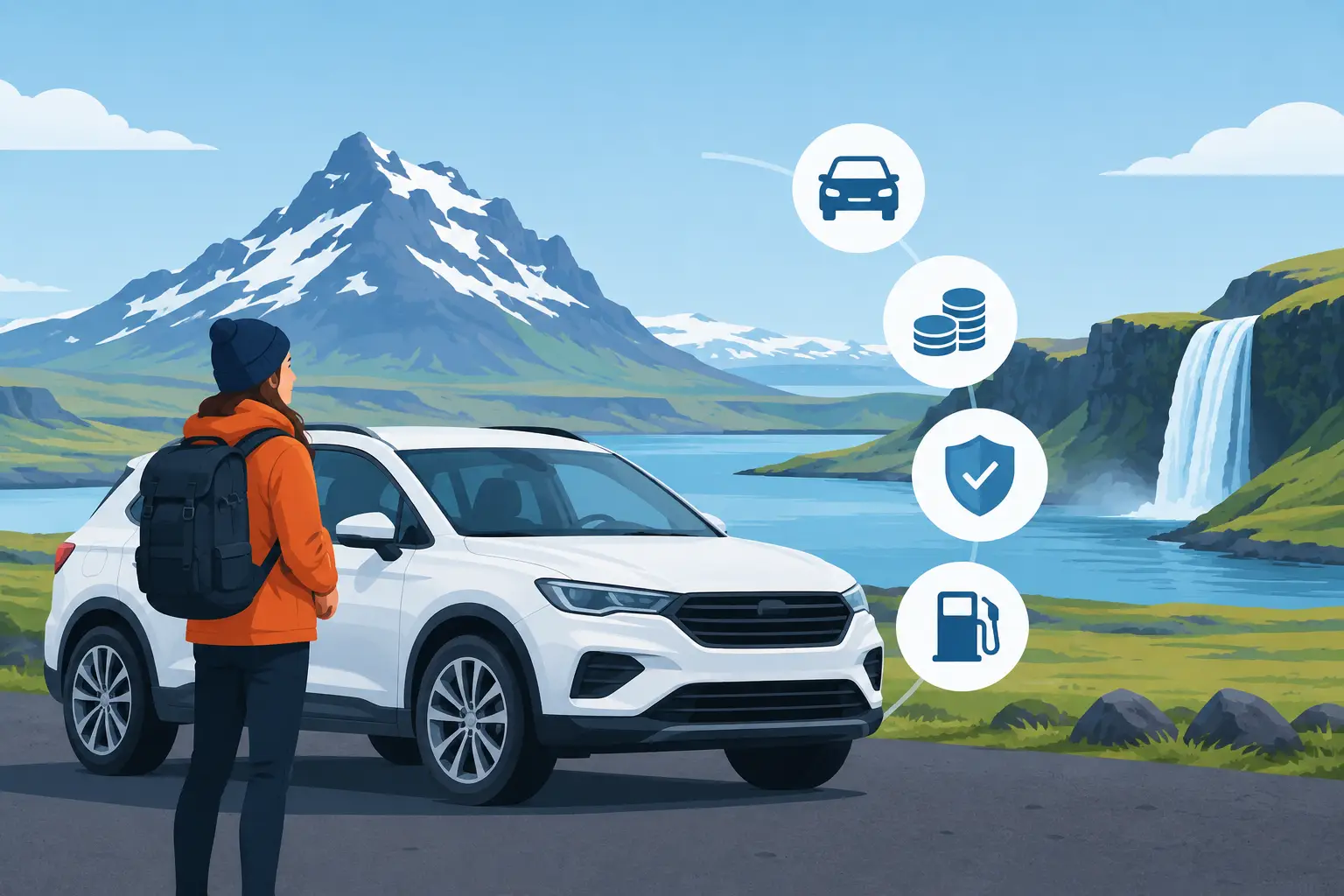
Landing at Keflavik after a long flight is not the moment to find out that your rental costs more than the price you planned for. Transparent rental fees Iceland travelers can rely on are about more than seeing a low daily rate. They mean knowing what is included, what is optional, what may be held as a deposit, and which costs belong to the road trip rather than the vehicle.
For an Iceland camping trip, a clear quote makes it easier to choose the right vehicle, set a realistic budget, and get on the road without second-guessing every decision. No queues. No waiting. No surprises.
What transparent rental fees in Iceland should show
A rental price should be easy to understand before you enter payment details. Start with the total vehicle charge for your dates, not only the advertised daily rate. A longer rental can have a different daily price, and summer demand, winter conditions, and vehicle type all affect the final number.
The quote should also make clear whether taxes are included. Iceland uses value-added tax, and travelers should not have to calculate it themselves at the end of a booking. If there is a booking fee, location fee, or mandatory service charge, it should appear before checkout as well.
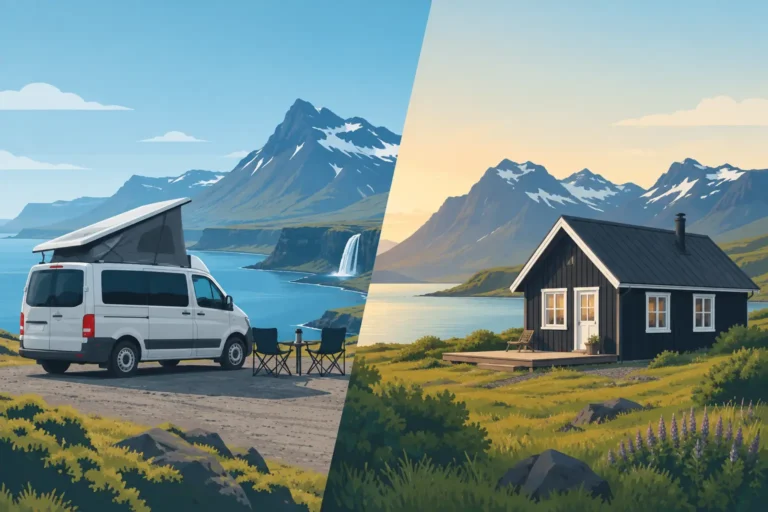
For a 4×4 camper or rooftop tent rental, clarity matters even more because the vehicle is both transportation and a place to sleep. Ask exactly what comes with it. A fully equipped setup may include sleeping gear, cooking equipment, basic camping items, and unlimited mileage. If an item is essential to your plan, confirm that it is included rather than assuming it is part of the package.
A good rule is simple: if a charge is unavoidable, it should be visible before you book. Optional upgrades are different, but they should be clearly labeled as optional.
Separate the rental price from trip costs
Not every expense on an Iceland road trip is a rental fee. Keeping those categories separate helps you compare vehicles fairly and avoid blaming the rental for costs that come from your route or travel style.
Fuel is the obvious example. A 4×4 uses more fuel than a small city car, particularly on gravel roads, in strong wind, or when carrying camping gear. That trade-off can be worth it if your route includes rougher roads or you want the confidence of higher clearance, but it belongs in your trip budget.
Campsites are another separate cost. Iceland has campgrounds across the country, and most charge per person, per night. Prices vary by location and facilities. Showers, laundry, electricity, and hot tubs may cost extra, so carry a payment card and leave room in the budget for those small daily expenses.
You may also encounter parking fees at popular natural sites, tolls for specific tunnels, food, activities, and paid showers. These are normal travel costs, not hidden vehicle charges. The difference is that you can plan for them when the rental total is clear from the start.
Insurance is where details matter most
Iceland’s weather and road conditions make insurance worth reading closely. It is not the most exciting part of planning a road trip, but it is one of the fastest ways to avoid an expensive misunderstanding.
Rental coverage can involve several parts: basic liability coverage, collision damage coverage, a deductible or excess, and optional protection that reduces your financial responsibility. Depending on the rental and season, optional protection may cover risks such as gravel damage, sand and ash damage, or wind damage to doors.
The right choice depends on where and when you travel. A summer Ring Road trip with careful driving is different from a shoulder-season trip through exposed areas, where wind and loose gravel are more likely. A route involving permitted mountain roads can add another layer of consideration. F-roads are not ordinary paved highways, and conditions can change quickly with weather, river levels, and the time of year.
Before choosing coverage, check four things: the deductible amount, what types of damage are excluded, whether windshield and tire damage are addressed, and whether the policy applies to your planned roads. Clear answers matter more than vague labels such as “full protection.”
Insurance does not replace careful driving
Even strong coverage has conditions. Driving through a closed road, taking a non-approved vehicle on an F-road, crossing a river without the right experience, or damaging a vehicle through careless use can fall outside normal protection.
This is not about making a trip feel restrictive. It is about matching the vehicle to the route and respecting Iceland’s conditions. Check road status each day, slow down on gravel, watch the wind when opening doors, and never treat water crossings as an attraction. A smart route protects both your budget and your adventure.
Deposits, payment holds, and fuel policies
A deposit is not always an additional charge. Often, it is a temporary authorization hold on a credit card that covers the deductible or potential costs during the rental period. The amount, card requirements, and release process should be explained before pickup.
Ask whether the card must be in the main driver’s name and whether debit cards are accepted for the security hold. These details can affect your plans, especially for travelers using a card with a lower credit limit. Also remember that banks can take several business days to release a hold after a rental ends, even when the rental company processes the release promptly.
Fuel policies should be just as plain. The common arrangement is full-to-full: collect the vehicle with a full tank and return it full. That gives you control over what you pay. Take a quick photo of the fuel gauge at pickup and save the final fuel receipt if you are returning close to your drop-off time.
With a digital rental process, check how pickup instructions, condition reports, and return photos work. At Black Sheep Campers, 24/7 self-service pickup and return are designed to keep your schedule flexible, but flexibility works best when you read the instructions before arriving and document the vehicle clearly.
Watch for extras that change the real price
Extras are not automatically bad. Some make a road trip easier, safer, or more comfortable. The key is deciding what you need before you reach the checkout page.
Common add-ons may include extra drivers, Wi-Fi devices, child seats, upgraded insurance, roadside assistance options, or camping equipment beyond the standard setup. If you are sharing long drives, an additional driver may be worthwhile. If you are traveling in summer with two people, you may find the standard camping kit is all you need.
Think carefully about arrival and departure times, too. A traditional counter can limit pickup to business hours, while self-service collection may remove that problem. If your flight lands late or leaves early, 24/7 access can save both time and the cost of an airport hotel night. That convenience is valuable when it is included clearly, not added as an unexpected fee.
How to compare 4×4 camper quotes fairly
Comparing a basic car rental with a 4×4 camping vehicle by daily rate alone rarely tells the full story. One option may look cheaper until you add hotels, luggage storage, camping equipment, limited mileage, or a second transfer. Another may cost more upfront but combine your vehicle, sleeping setup, and essential gear in one practical package.
Use the same checklist for every quote. Compare the final price for your exact dates, taxes, included mileage, equipment, insurance deductible, deposit rules, fuel policy, and pickup hours. Then add the costs you would otherwise pay separately, especially accommodation and camping gear.
There is no single best choice for every traveler. A compact car and guesthouses may suit a short winter break or travelers who want indoor comfort every night. A 4×4 camper can make more sense for independent travelers who want to camp, follow good weather, and spend more time outside Iceland’s towns. Transparency lets you make that choice based on real numbers, not a headline price.
Questions worth asking before you book
You do not need to read every line like a lawyer, but you should be able to get direct answers to a few practical questions. What is included in the total? What is the deductible? Is there a deposit hold? Which roads can this vehicle use? What camping equipment is supplied? Are there mileage limits? How does pickup work if my flight is delayed?
If the answers are hard to find or change during the booking process, pause. A good rental experience starts with information that is easy to understand before your card is charged.
Iceland is better when your attention stays on the route ahead: the weather clearing over a black-sand beach, a quiet campsite near the mountains, and the freedom to change plans when the road calls. Choose a rental with clear terms, budget for the costs that belong to your trip, and keep the rest simple.