A quiet pullout beside a black-sand beach might look like the perfect place to spend the night. In Iceland, it usually is not. Iceland camping laws are designed to protect a landscape that is beautiful, exposed, and far more fragile than it appears from the road. The simplest rule for a camper road trip is this: plan to sleep at registered campgrounds, not wherever you happen to stop.
That does not mean giving up freedom. It means you can explore all day, change plans when the weather does, and still finish with a legal, comfortable place to park, cook, and sleep. No guesswork. No damaged moss. No unwelcome knock on the window.
Iceland Camping Laws: The Rule for Vehicles
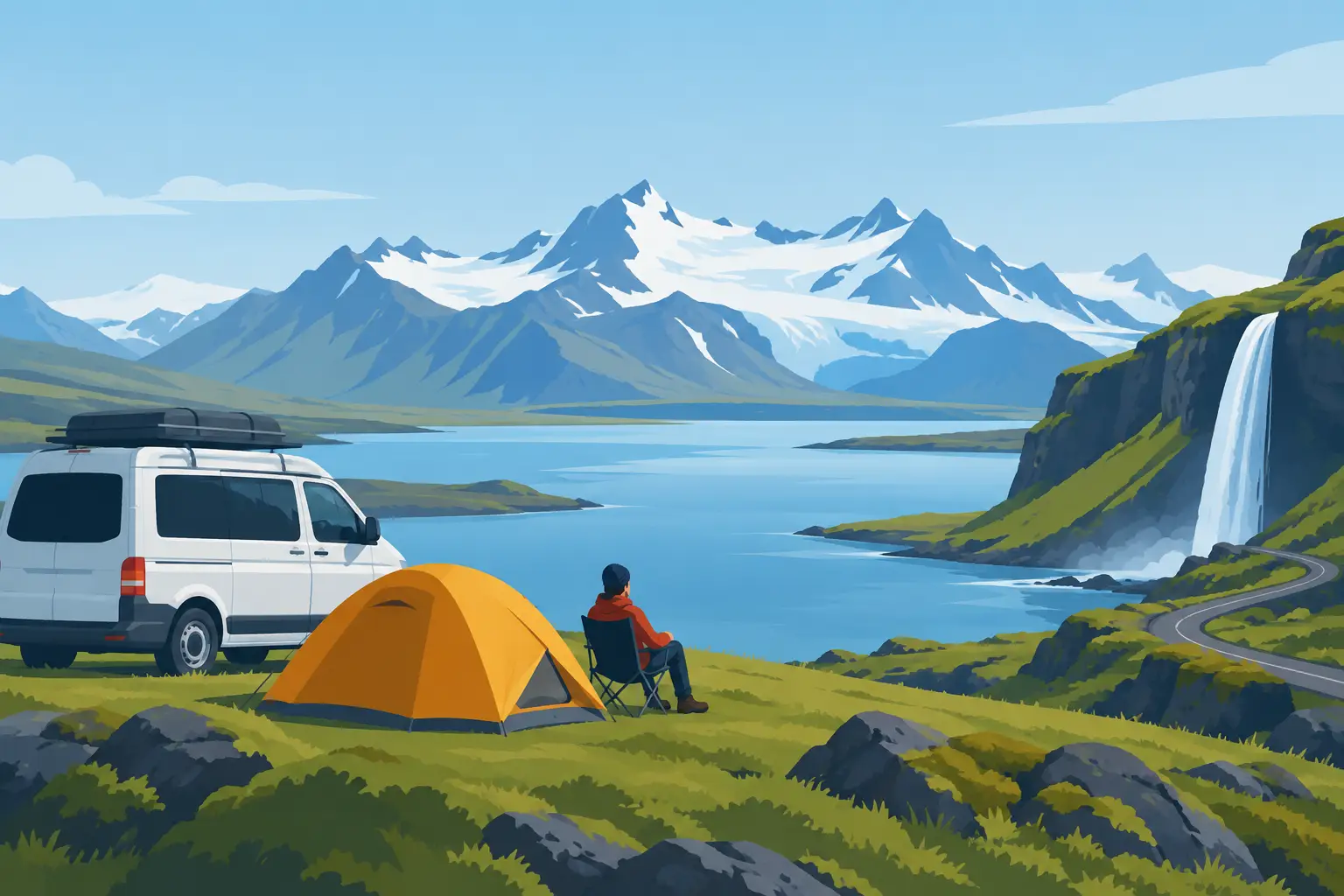
Wild camping in a vehicle is generally not allowed in Iceland. This applies to campervans, cars fitted for sleeping, motorhomes, and 4x4s with rooftop tents. If you are using your vehicle as accommodation, stay at an organized campground or on private land where the landowner has clearly given permission.
The rule exists for good reason. Iceland’s visitor numbers rose quickly, while many rural roads, pullouts, and natural areas were never built to handle overnight traffic. One vehicle parked on a soft verge may leave a mark for a season. A line of vehicles can turn it into a new track, damage vegetation, and create sanitation problems where there are no facilities.
Do not assume that a remote place is unowned, permitted, or suitable for an overnight stop. A gravel turnout, beach access road, trailhead lot, roadside lay-by, or scenic viewpoint is not a campsite unless signs specifically say otherwise. The same goes for parking lots near waterfalls, hot springs, and popular hiking areas.
With a rooftop tent, this can feel counterintuitive. Your tent may be off the ground, but it is still attached to a vehicle and parked on land. Treat it as vehicle camping and use a campsite.
What About a Small Tent?
Iceland has a traditional public access principle, often compared with the right to roam, but it has limits. Under certain conditions, travelers on foot may pitch a small tent for one night on uncultivated land. That is not a blanket permission to camp anywhere.
You must stay well away from homes, farms, cultivated fields, and places where camping has been prohibited. Protected areas, popular attractions, and land with signs restricting camping have their own rules. Larger groups, multiple tents, or stays longer than one night require landowner permission. If there is any doubt about whether land is private, cultivated, protected, or appropriate, ask the landowner or choose a campground instead.
For most visitors on a self-drive trip, this distinction is practical rather than theoretical. If you arrived by car and want to sleep beside it, use a campground. It is the clear, low-stress option.
Why campgrounds make the better base
Campgrounds are not just a legal workaround. They solve the problems that make roadside camping uncomfortable: toilets, showers, drinking water, dishwashing areas, waste bins, and a defined place to park. Some have kitchens, laundry, electricity, or indoor common spaces, though facilities vary widely.
They also make your route more flexible. You do not need a hotel reservation in every town, but you do need to check that a campground is open before relying on it. Many Icelandic campgrounds operate seasonally, particularly outside the main summer months. Opening dates, payment methods, and facilities can change with the weather and local staffing.
Arrive with a backup in mind when traveling in spring, fall, or the Highlands. In summer, you will usually find more options, but popular areas can still be busy by evening.
Respect the Land Beyond the Campsite
Camping legally is only part of traveling responsibly. Iceland’s nature does not need much help to look dramatic, but it does need visitors to stay within the places built for visitors.
Never drive off-road. Driving off-road is illegal, even when the surface looks like bare dirt or open gravel. Keep all four wheels on marked roads and established tracks. Going around a puddle, a closed gate, or a rough section by creating a new route is still off-road driving.
This matters especially in the Highlands. The open terrain can look empty, but tire tracks damage moss and volcanic soil that may take decades to recover. A 4×4 gives you access to designated mountain roads and rougher legal routes. It does not give you permission to leave them.
Use toilets at campgrounds, service stations, or public facilities. Do not empty gray water, chemical toilet waste, or food scraps into nature. Take all trash with you when bins are unavailable, including wipes, cigarette butts, and bottle caps. Iceland’s wind carries lightweight trash a long way.
F-Roads, Campsites, and Your 4×4
F-roads are mountain roads marked with an F before the route number. They are open only seasonally, require a 4×4 vehicle by law, and can include rough surfaces, steep sections, and unbridged river crossings. Their opening dates depend on snowmelt and road conditions, so a route that was open last week may be closed today.
An F-road is not automatically a camping route. Most Highland areas have designated huts, campsites, or specific overnight facilities. Plan your overnight stop before entering a remote area, because distances are long and weather can change fast. Fuel, food, mobile signal, and shelter should never be assumptions in the interior.
River crossings deserve extra caution. Do not cross a river unless your vehicle is suitable, conditions are safe, and you understand the route. Never drive into moving water simply because another vehicle did. Water levels can rise quickly, and rental insurance commonly excludes damage caused by reckless or unauthorized river crossings.
A practical 4×4 camper setup gives you a simpler way to travel: your sleeping space and basic gear move with you, while registered campsites give you a legal place to stop. Black Sheep Campers vehicles are built around that balance – independent travel without pretending Iceland’s rules do not apply.
A Simple Daily Routine That Works
A little planning prevents most camping problems. Before you leave each morning, check road conditions, weather alerts, and the status of any mountain roads on your route. Then choose one or two possible campgrounds for the night. You can still follow a detour to a waterfall or stay longer at a hiking trail, but you will not be searching for a legal place to sleep after dark.
When you reach camp, park only in designated spaces and follow posted instructions. Pay the camping fee as directed, even if no staff member is standing at the entrance. Many sites use a warden visit, payment box, app, or online system. Keep the receipt if one is issued.
Keep your camp footprint small. Set up chairs only where permitted, avoid blocking other travelers, and secure loose gear before the wind picks up. Icelandic weather has a way of turning an ordinary evening into a test of tent zippers and common sense.
Common Questions About Camping in Iceland
Can you sleep in your car in Iceland?
Not just anywhere. Sleeping in a car, campervan, or rooftop-tent vehicle is considered vehicle camping. Use a registered campground unless you have direct permission from the landowner to stay on private land.
Can you camp for free in Iceland?
A limited form of one-night tent camping may be possible on suitable uncultivated land, subject to restrictions and local rules. Free roadside vehicle camping is not the answer. For travelers using a rental vehicle, campground fees should be part of the trip budget.
Can you camp in national parks and protected areas?
Only in designated places or where local rules specifically allow it. Protected landscapes often have stricter rules because visitor pressure and environmental sensitivity are higher. Follow signs on site rather than relying on general camping advice.
Do you need to book campgrounds ahead?
Usually not in peak summer for standard tent or vehicle pitches, but availability and policies vary. Booking or calling ahead is smart during festivals, holiday weekends, in popular regions, and whenever you need a specific facility. Outside summer, always confirm the campground is open.
The best Iceland road trips leave room for weather, unexpected hikes, and the places you did not know you wanted to stop. Keep that freedom by making one decision easy: when the day is done, head for a proper campsite, settle in, and let the landscape stay wild for everyone who comes after you.