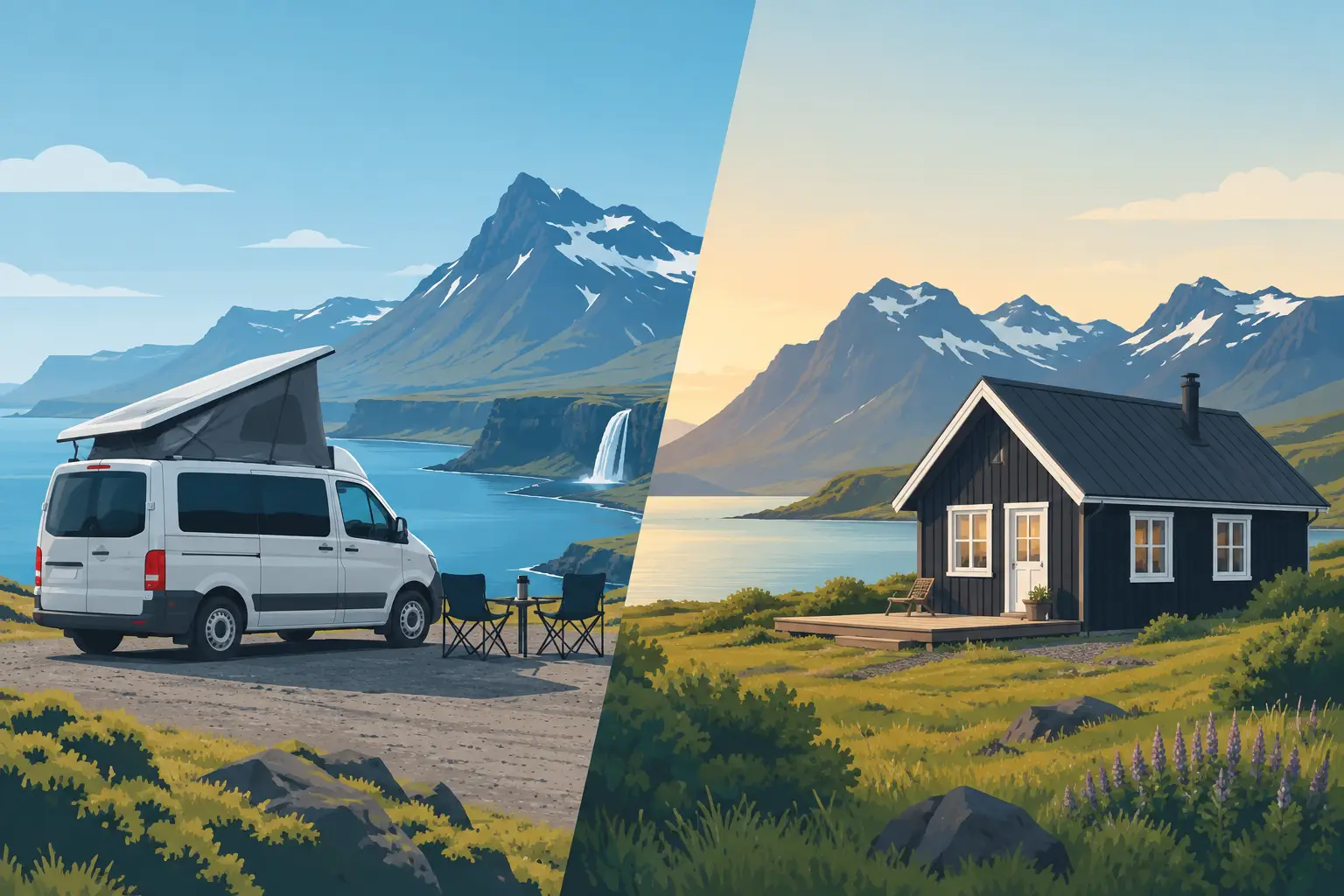
A cottage can look like the easy choice when you picture Iceland: a warm shower, a real kitchen, and a fixed place to sleep after a long day outside. But camper versus cottage is really a question of how you want your Iceland trip to move. Do you want to return to the same base each evening, or wake up closer to the next waterfall, hiking trail, or quiet stretch of coast?
For independent travelers, the answer affects far more than where you sleep. It shapes your route, daily driving time, budget, packing list, and ability to change plans when Icelandic weather does what it wants.
Camper versus cottage: the main difference
A cottage gives you a base. A camper gives you mobility. Neither is automatically better, but they support very different travel styles.
With a cottage, you book accommodation in one or several locations and drive between them in a rental car. This works well if comfort is a priority, if you are traveling with young children, or if you prefer a slower itinerary with time to settle in. It also makes sense when you want a dependable indoor space during colder months.
With a camper, your vehicle and accommodation travel together. You can choose a campsite near where the day ends, rather than driving back to a property because your reservation is there. A well-equipped 4×4 camper also keeps your setup simple: transport, sleeping space, and essential camping gear are in one place.
That freedom is especially useful in Iceland, where the best plan is often the one that can change. A strong wind forecast may make the south coast less appealing tomorrow. A clear evening could make you want to stay longer in the Westfjords. With a camper, you have more room to adjust.
Cost: compare the full trip, not the nightly rate
A cottage rate can seem reasonable until you add the other parts of the trip. You still need a rental vehicle, fuel, insurance options, and sometimes extra costs for bedding, cleaning, or a minimum stay. Cottages in popular areas can also be limited during summer, which can push travelers toward expensive locations or awkward route planning.
A camper combines the vehicle and sleeping arrangement, which can make budgeting more straightforward. Campsites generally cost less than private cottages, although prices vary by location and season. You will still pay for fuel, campsites, food, and any extras you choose, but the core setup is simpler to understand.
The biggest savings often come from flexibility rather than the campsite fee itself. If your route changes, a cottage booking may be difficult or costly to alter. In a camper, you are less likely to pay for a place you no longer want to reach because conditions, weather, or your plans have changed.
That said, a cottage can be good value for four or more travelers who can share the nightly cost, particularly outside peak season. For a couple or solo traveler, a camper is often the more practical all-in-one option.
Flexibility matters most on an Iceland road trip
Iceland is not a destination where every day needs to be scheduled down to the hour. Roads can close, wind can affect driving conditions, and a short stop can turn into an afternoon when the light is right. A fixed cottage itinerary can still work, but it asks you to keep moving even when you would rather stay or reroute.
A camper lets you build your day around the experience instead of the check-in time. Spend longer at Jökulsárlón. Take an extra walk near Mývatn. Skip a crowded stop and continue to a quieter campsite. You are not trying to reach a key box before dark or driving an extra two hours solely because that is where tonight’s bed is.
This does not mean camping without a plan. During summer, popular campsites can be busy, and it is smart to identify a few possible overnight stops along your route. But campsites are generally much more forgiving than fixed accommodation. You can make a practical decision late in the day based on your energy, the weather, and the road ahead.
Black Sheep Campers makes that approach even easier with fully digital, 24/7 self-service pickup and return. No queues. No waiting around for office hours. You can start your road trip when it works for your flight and finish it on your own schedule.
Comfort: what do you actually need at the end of the day?
This is where cottages have a clear advantage. A private bathroom, indoor lounge, full kitchen, laundry access, and reliable heating make a difference after days outside. If you are visiting in winter, traveling with a lot of camera equipment, or simply know that you sleep better indoors, a cottage is the comfortable choice.
But camper travel in Iceland is not about doing without everything. Most established campsites have toilets, showers, cooking areas, and places to recharge devices. A rooftop tent or sleep-in-the-back camper gives you a dry, sheltered sleeping setup while keeping the outdoors close. For many travelers, that is enough comfort after a day spent hiking, driving, and exploring.
Be honest about your expectations. A camper is not a hotel room on wheels. You will organize your gear, use campsite facilities, and pay attention to wind and rain when setting up. The reward is waking up in places that would be inconvenient to reach from a cottage.
A mixed trip can also work well. Use a camper for most of a summer route, then book a cottage for the final night near Reykjavík before an early flight. You get the freedom of the road trip without ending the vacation feeling rushed.
Road access and route planning
Your accommodation choice should match your driving plan. A cottage can be ideal for day trips from Reykjavík, the Golden Circle, or a settled base in South Iceland. If you only have a few days and do not want to pack up every morning, this is a sensible approach.
A 4×4 camper is better suited to travelers who want to cover more ground and explore beyond the usual hotel corridor. It can make a multi-day Ring Road route feel less repetitive because you do not need to retrace your steps to the same accommodation. It is also a practical choice for summer travelers planning approved Highland routes and F-roads.
However, a 4×4 does not make every road safe or permitted. F-roads are seasonal, conditions change quickly, and river crossings require sound judgment. Always check official road and weather information before setting out, follow rental restrictions, and turn back when conditions are beyond your experience. A flexible trip should never mean taking unnecessary risks.
Weather changes the camper versus cottage decision
From late spring through early fall, camper travel is at its best for many visitors. Long daylight hours give you time to drive, hike, cook, and settle into a campsite without racing the clock. Summer also brings the strongest case for mobility, since a bright evening can be just as useful as a bright morning.
Spring and fall can be excellent for campers too, but you need a warmer sleeping setup, a realistic route, and a willingness to accept rough weather. Expect rain, wind, and colder nights. Choose campsites with good facilities and leave room in the itinerary for weather delays.
In winter, a cottage is usually the easier option. Short daylight, icy roads, powerful winds, and limited campsite availability make a fixed indoor base more comfortable and less stressful. A winter self-drive trip can still be excellent, but it is usually better built around flexible hotel or cottage bookings and shorter daily drives.
Choose a camper if freedom is the priority
A camper is likely the better fit if you want to follow the weather, change direction without rebooking accommodation, and spend more time outside Iceland’s towns. It suits couples, solo travelers, and small groups who are comfortable with a practical camping routine and want their vehicle to do more than get them from one hotel to another.
Choose a cottage if you value indoor comfort, predictable evenings, and a slower route based around one region. It is also the stronger option when winter conditions, family needs, or a preference for private facilities outweigh the appeal of sleeping close to nature.
Before booking, look at your actual route on a map and count the return drives a fixed base would create. Then ask one simple question: would you rather spend that time returning to a cottage, or waking up ready for the next part of Iceland? Keep the answer practical, leave space for the weather, and choose the setup that gives your trip room to breathe.