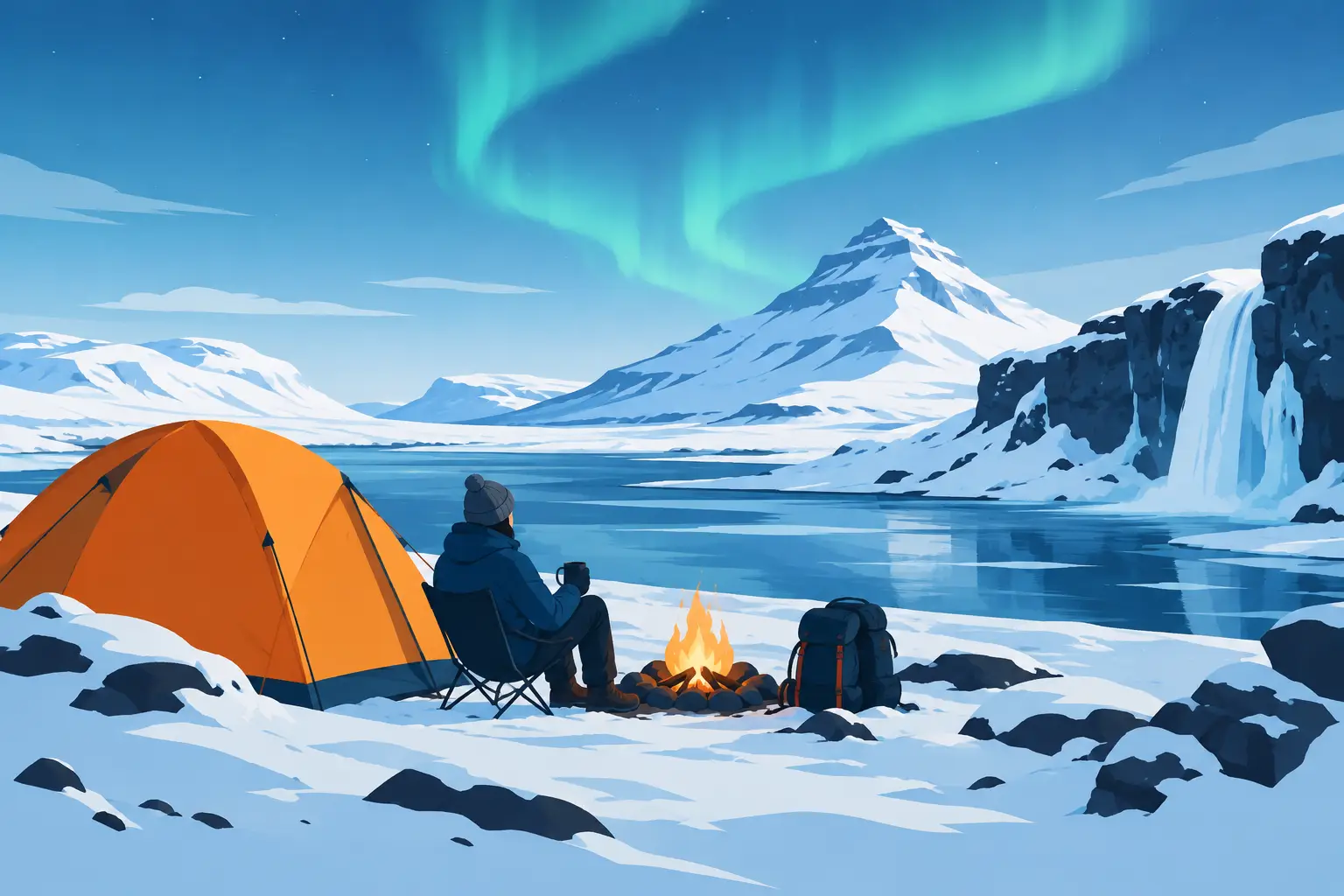
At 3:00 p.m. in an Icelandic winter, the light can already be fading, the wind can change direction, and a simple drive can take longer than expected. That is what makes a winter camping experience here memorable – and why it needs a different approach from a summer road trip.
Winter camping in Iceland can be quiet, dramatic, and deeply rewarding. Waterfalls are framed by ice, popular stops are less crowded, and the road feels like your own. But the trade-off is real: shorter days, fast-moving weather, limited open campsites, and road conditions that can change between breakfast and lunch. Keep your plan flexible, make conservative decisions, and treat the weather forecast as part of your daily route planning.
What a winter camping experience in Iceland really requires
A good winter trip is not about covering the whole island. It is about having enough time to stop when conditions demand it and enough warmth to enjoy the stops you do make. For many first-time visitors, the South Coast, Reykjanes Peninsula, Golden Circle, and Snæfellsnes Peninsula are more realistic than an ambitious full Ring Road itinerary.
Build fewer destinations into each day than you would in summer. Low sun, icy parking lots, wind, snow clearing, and slower traffic all add time. A route that looks easy on a map may be a long day in winter, especially if you are not used to driving on snow or in strong crosswinds.
Your vehicle matters, but it is not a guarantee. A capable 4×4 can offer better traction and clearance for winter travel, yet it does not make closed roads open or turn unsafe weather into safe weather. Iceland’s mountain F-roads are generally closed through winter. If a road is closed, turn around and change the plan. No view is worth becoming stuck, blocking a road, or needing a recovery.
Start with daylight, weather, and road conditions
In December, Iceland has only a few hours of usable daylight. By late February and March, days become noticeably longer, but weather can still be fully wintery. This means timing changes your trip more than many travelers expect.
Before setting out each morning, check the weather forecast, wind forecast, road conditions, and any official warnings. Check again before committing to a long drive. A calm morning can become a difficult afternoon, particularly along exposed coastal roads and mountain passes.
Wind deserves as much attention as snow. Strong gusts can make steering tiring and can damage a car door if you let it swing open. Park facing into the wind when possible, hold doors firmly, and avoid opening a rooftop tent or awning in conditions that could strain its fabric, poles, or mounting points.
If the forecast says to stay put, stay put. Use the time for a hot meal, a local pool, a café, or a shorter walk near your campsite. Flexible travel is the advantage of a self-drive trip. You do not need to force an itinerary built for better weather.
Choose overnight stops before the day gets dark
Winter is not the season to drive until you are tired and then look for somewhere to sleep. Many Icelandic campsites operate only in the warmer months, while others may have reduced facilities, restricted access, or uncertain opening dates. Confirm that a campsite is open before you rely on it, and have a second option in the same region.
Do not assume that a roadside pullout, beach, trailhead, or scenic parking area is a legal overnight stop. Iceland has rules around camping and overnight stays, and local restrictions vary. Respect signs, private land, protected areas, and designated parking rules. Staying at an open, authorized campsite is the straightforward choice, especially in winter when conditions are already demanding.
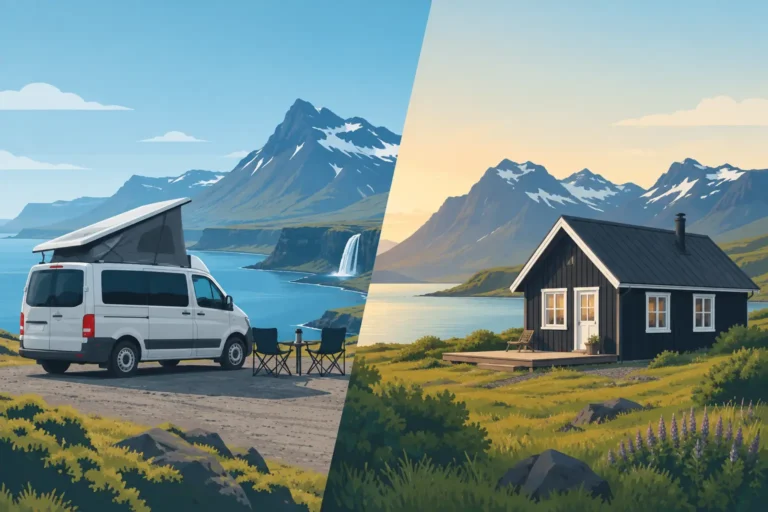
Aim to arrive before dark. That gives you time to assess the surface, find level ground, set up without rushing, use the restroom facilities if available, and make dinner before the temperature drops further. If you are traveling in a rooftop tent, choose a sheltered spot whenever possible and follow the vehicle provider’s weather guidance.
A sleep-in-the-back setup can be convenient when conditions make outdoor setup less appealing, but it still does not replace sensible planning. Ventilation, dry bedding, a level parking spot, and an authorized place to stay matter just as much.
Stay warm by staying dry
Cold is manageable when you have dry layers, a good sleeping setup, and food in your system. Damp clothing is what turns an adventurous night into an uncomfortable one. Keep a dry set of base layers and thick socks reserved for sleeping. Never wear wet hiking clothes to bed just because they are the only warm items left.
Dress in layers rather than relying on one oversized jacket. A moisture-wicking base layer, insulating mid-layer, and windproof outer layer give you options as conditions shift. Bring warm gloves, a hat that covers your ears, and footwear with solid grip for icy campground paths and parking areas.
For sleeping, use gear rated for the temperatures you expect, not just the average temperature shown in a travel guide. Wind and humidity can make a night feel colder than the number on the thermometer. An insulated sleeping pad is just as valuable as a warm sleeping bag because it limits heat loss to the surface beneath you.
Never run the vehicle engine while sleeping to stay warm. Carbon monoxide risk is serious, and exhaust can become blocked by drifting snow. Use the supplied camping equipment as intended, keep ventilation in mind, and ask your rental provider if you are unsure about safe use of any stove, heater, or sleeping setup.
Pack for small problems, not heroic rescues
A winter vehicle should have the required seasonal equipment, but personal preparation still makes a major difference. Carry water, snacks, a charged phone, a power bank, warm layers, and a headlamp where you can reach them without unpacking the whole vehicle. A thermos of hot tea or coffee is surprisingly useful when you are waiting out a brief delay or walking back from a viewpoint in the dark.
Keep your day bag simple and ready: waterproof outer layer, hat, gloves, traction-friendly shoes, phone, charger, and emergency food. If you head out for a waterfall or coastal walk, tell your travel partner where you are going and pay attention to warning signs. Winter ice can hide uneven ground, and waves along Iceland’s beaches can be dangerous in every season.
Food planning is also part of staying comfortable. Shops can be farther apart than expected outside larger towns, and poor weather may make you glad you stocked up earlier. Choose easy meals that require little water, little cleanup, and minimal time outside. Soup, pasta, oats, sandwiches, and hot drinks are practical camp food in cold conditions.
Drive for the conditions, not the schedule
Leave more distance than you think you need between your vehicle and the one ahead. Brake gently, avoid sudden steering movements, and slow down before you reach a curve or a downhill section. If visibility drops, reduce speed further and use your lights correctly.
Do not stop in the road to photograph northern lights, waterfalls, horses, or a dramatic sky. Find a legal, safe place to pull over completely. A stopped vehicle can be difficult to see in darkness, snow, or blowing rain.
Fuel up earlier than usual. In winter, the next open gas station may be farther away than your route suggests, and you do not want to be searching for fuel during a storm or after dark. Keep the tank comfortably above empty, particularly before entering quieter stretches of road.
If you are new to winter driving, give yourself an easy first day. A short route from the airport or Reykjavík lets you get used to the vehicle, road surfaces, daylight, and wind before you travel farther. Black Sheep Campers’ self-service pickup makes it easier to begin on your own schedule, but starting early still gives you the most room to adapt.
Make room for the good parts
A winter camping trip should not feel like a test of endurance. Leave time for a geothermal pool after a cold walk, a slow breakfast while the sky brightens, or an extra night in one region when the forecast looks promising. Northern lights may appear, but treat them as a bonus rather than a promise. Cloud cover and solar activity decide more than your itinerary does.
The travelers who enjoy Iceland most in winter are usually the ones willing to change plans. They turn back before the weather worsens, choose an open campsite over a perfect map pin, and accept that one missed attraction can mean a safer, better day tomorrow.
Pack warm, drive patiently, and give yourself permission to stop early. Iceland will still be there when the wind drops.