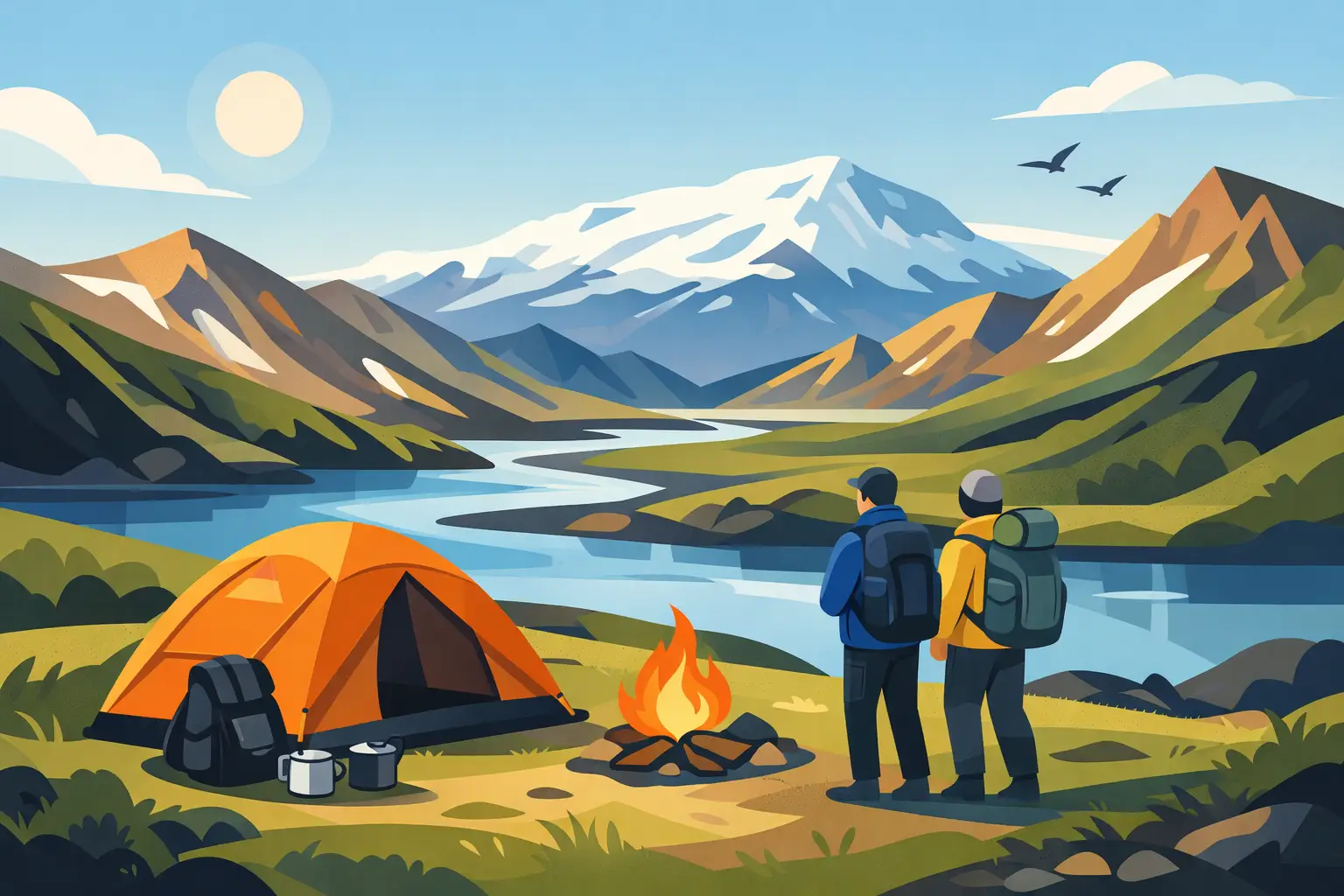
The Highlands are where Iceland stops feeling like a road trip and starts feeling like an expedition. One hour you are on gravel with a clear route ahead. The next, you are checking a river crossing, watching the weather shift, and realizing why people ask how to drive Iceland highlands before they land. That is the right question to ask, because this is not normal car rental territory.
If you want to do it well, keep it simple. Use the right vehicle, know what F-roads actually mean, and leave room in your plan for conditions to change. The Highlands reward flexible travelers. They punish rushed ones.
How to drive Iceland highlands without making rookie mistakes
The first rule is straightforward: you need a proper 4×4 for F-roads. In Iceland, many Highland routes are marked with an F before the road number. That F matters. It means the road is only legal for 4×4 vehicles, and it usually means rough surfaces, potholes, loose gravel, steep sections, and sometimes unbridged river crossings.
A regular rental car is not enough, even if the road looks manageable at the start. Conditions can change fast, and some routes get rougher the deeper you go. A small 4×4 can handle many Highland roads, but not every one of them in every condition. That is where travelers get caught out. They assume 4×4 means unlimited access. It does not.
You also need to respect that Highland driving is seasonal. Most F-roads only open in summer, usually from late June into August or early September, depending on snowmelt, weather, and road repairs. Opening dates are never fixed in a way you should build your whole trip around months in advance. If Highland access is a priority, keep your itinerary flexible.
What makes Highland driving different
The challenge is not just the road surface. It is the combination of isolation, weather, river crossings, and long distances without services. You cannot treat the Highlands like the South Coast, where the next gas station, café, or tow truck feels close enough.
Cell coverage can be limited in some areas. Wind can be strong even on calm-looking days. Fog can roll in quickly. A road that feels easy in dry weather can become much slower after rain. And if you meet a river that is deeper or faster than expected, there is no prize for pushing through.
This is why pace matters so much. In the Highlands, distances on a map often look short, but average speeds are low. A route that seems easy in theory can take much longer than visitors expect. Build your days around that reality.
Know what your vehicle can actually do
Not all 4×4 campers are equal. Ground clearance matters. Tire condition matters. So does whether you are comfortable driving on rough gravel for hours. If you are renting a 4×4 camper or rooftop tent vehicle, ask which F-roads are realistic for that specific setup, not just whether it is “Highland capable.”
That distinction matters a lot. Some roads are ideal for first-time Highland drivers. Others are better left to people with more experience, better clearance, or a stronger comfort level with river crossings. Honest rental advice is worth more than a vehicle label.
How to prepare before you leave the paved road
Before heading into the Highlands, check three things on the same day you travel: road conditions, weather, and your fuel level. Do not assume yesterday’s information is good enough. A road can close, a river can rise, or visibility can change overnight.
Fuel early, not later. Once you are in the Highlands, gas stations are scarce. The same goes for food and basic supplies. Bring more water and snacks than you think you need, and make sure your phone is charged before you leave.
It also helps to have a simple plan for the day instead of an overpacked one. Pick a route, know where you are sleeping, and leave extra time for slower sections. If something changes, you want options.
What to pack for a Highland day
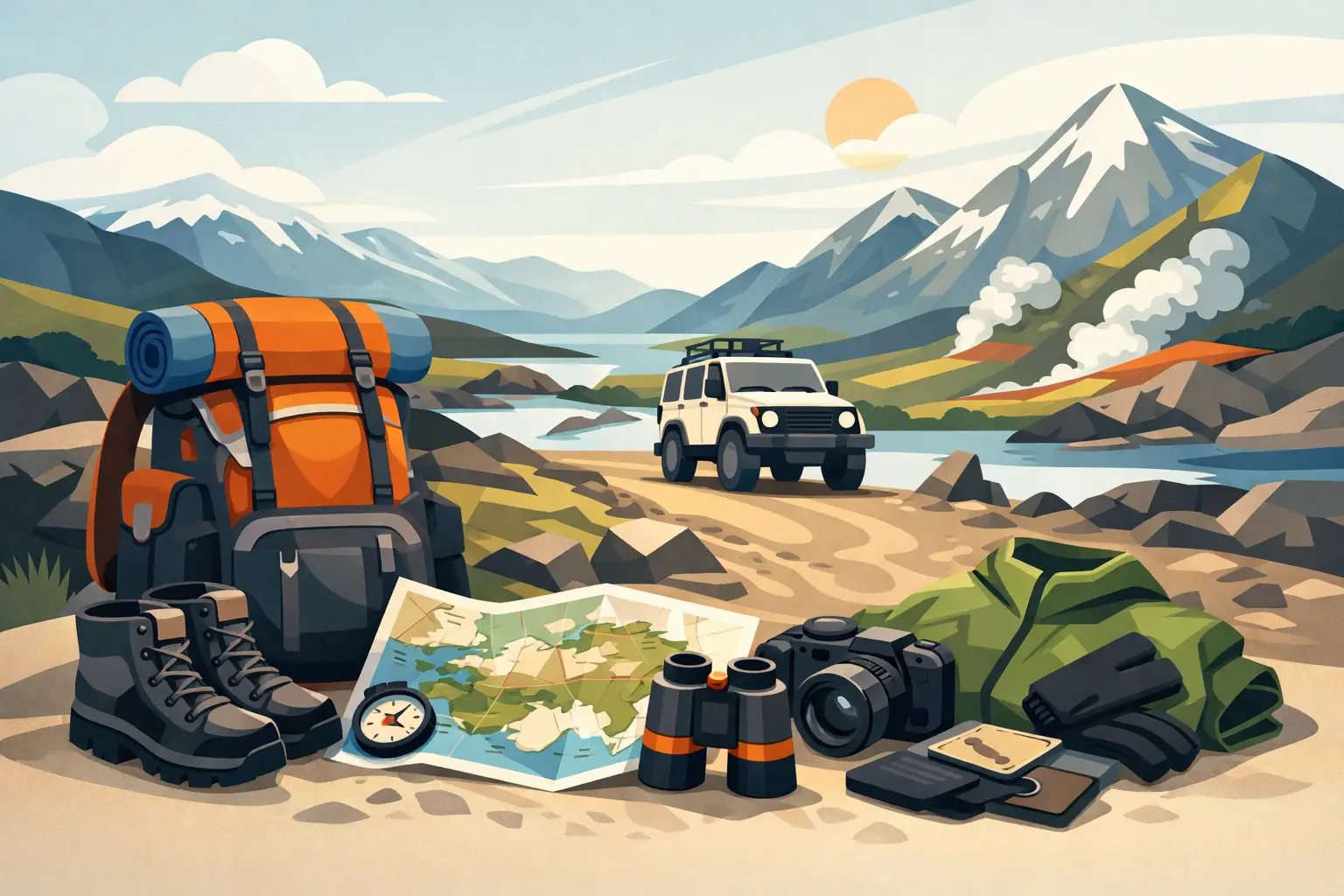
You do not need expedition gear, but you do need to be self-sufficient. Warm layers, waterproof outerwear, food, water, and a fully charged phone should be standard. Good footwear matters too, especially if you plan to get out and check a river crossing or walk around rough, wet ground.
A practical camper setup makes a big difference here. If your vehicle already has cooking gear, bedding, and the basics packed and ready, the day becomes easier. Less time organizing, more time adjusting to conditions as they happen.
Driving on F-roads: speed, surface, and control
Most mistakes happen because drivers carry normal-road habits into abnormal-road conditions. On F-roads, you need to slow down earlier, brake more gently, and avoid sudden steering inputs. Loose gravel reduces traction fast, especially in corners.
Keep both hands on the wheel and expect washboard sections, rocks, and potholes. If you hit rough patches too quickly, the vehicle will bounce and lose stability. Going slower is not timid. It is how you keep control and avoid damage.
Crossing narrow bridges, blind hills, and uneven sections takes patience. If another vehicle is coming, do not force the moment. Give space. Let the road decide the pace.
River crossings are the part that changes everything
Not every F-road has river crossings, but many of the more famous Highland routes do. This is where caution matters most. If you are not experienced, choose routes that avoid major crossings or ask for route suggestions that match your comfort level.
If you come to a river, stop and assess it before doing anything. Look at the entry and exit points. Watch how fast the water is moving. Check whether another suitable vehicle crosses first, because that can tell you a lot about depth and current. Water levels can rise during the day, especially in warm weather when glacier melt increases.
If there is any doubt, do not cross. Turn around or choose another route. That decision can save your trip.
A few basic rules help. Cross in low gear at a steady, slow speed. Do not stop mid-crossing. Do not change direction suddenly. And never enter fast-moving water just because another driver did. Their vehicle, tires, clearance, and experience may be very different from yours.
Route choice matters more than bravado
If this is your first Highland trip, start with roads known for easier access and fewer technical challenges. Landmannalaugar can be approached by different routes, and some are much more beginner-friendly than others. Kerlingarfjoll is another good example of a Highland destination that can be realistic with the right 4×4 and the right conditions.
The hardest routes are not automatically the best ones. In fact, many travelers have a better experience by choosing roads that let them enjoy the scenery instead of white-knuckling every hour. You are there to see Iceland, not prove a point.
This is also where a smaller, practical 4×4 setup often works well. You get the freedom to camp, the flexibility to change plans, and access to a big part of the Highlands without turning the trip into a logistics exercise. That is a big reason travelers choose companies like Black Sheep Campers in the first place.
When not to drive the Highlands
Sometimes the smart move is not going. If heavy rain is forecast, if strong winds are expected, or if road conditions look uncertain, wait a day or change route. The Highlands are not a place to force an itinerary.
The same applies if you are tired. Rough roads demand more concentration than many visitors expect. A long travel day, a late arrival, and a same-day push into the interior is rarely a good idea. Sleep, reset, and go the next morning.
If your plan depends on reaching one exact campsite by nightfall no matter what, your plan is too tight. Build in room to stop earlier, turn back, or take a different road.
The mindset that makes Highland travel work
People often ask how to drive Iceland highlands as if there is one trick that makes it easy. There is not. The real answer is judgment. Good Highland drivers stay calm, watch conditions, and make conservative decisions early.
That means checking roads before departure, not after a problem starts. It means slowing down before the rough section, not after the bounce. It means turning around at the river you do not trust, not testing your luck because the destination looks close on a map.
Done right, Highland driving is one of the best ways to experience Iceland. You get the freedom to reach places buses do not, stay longer where it feels right, and travel on your own schedule. No queues. No waiting. No fixed plan you have to protect at all costs.
Treat the Highlands with respect, give yourself more time than you think you need, and let the road set the pace. That is usually when the trip gets really good.