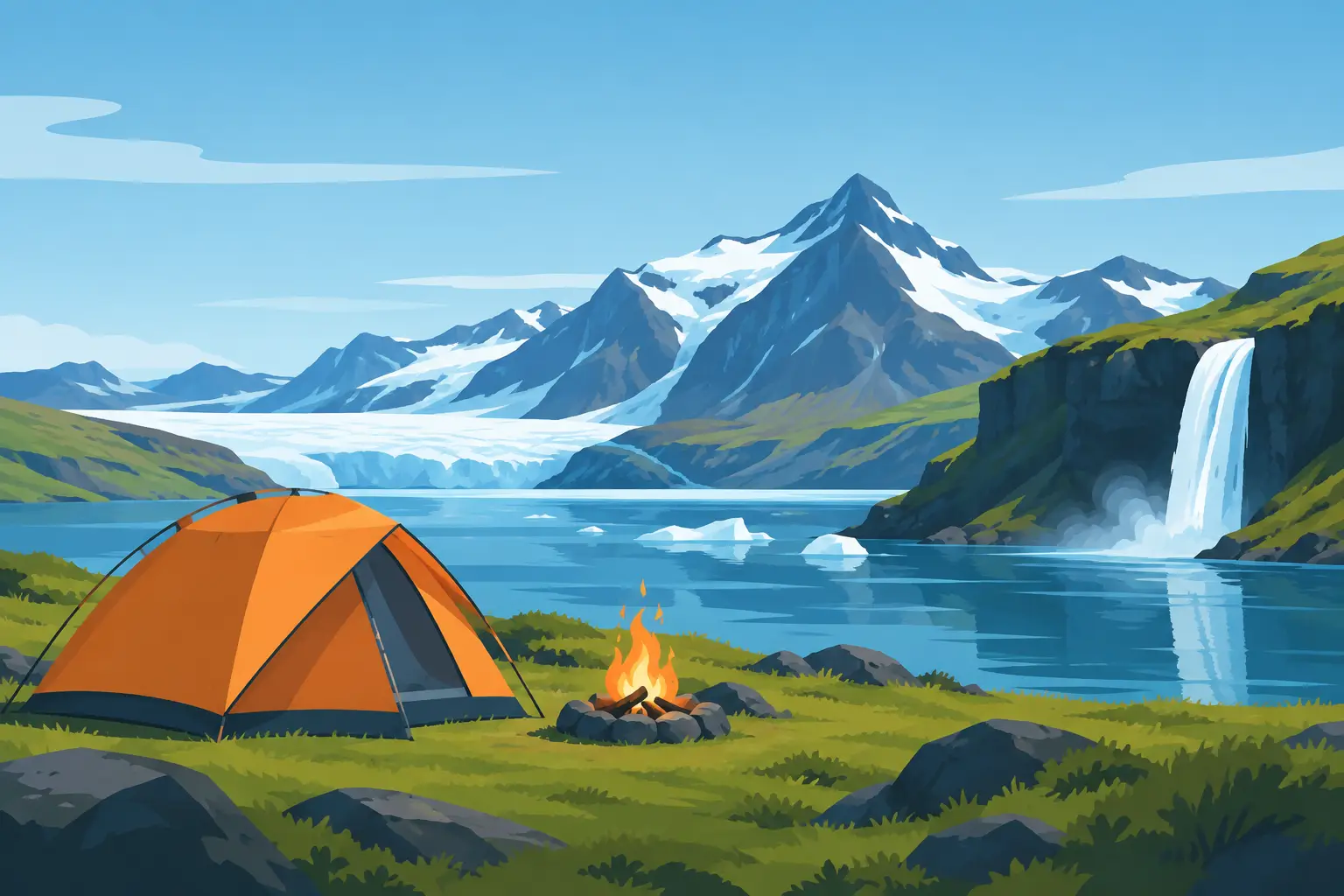
A summer road trip lets you pull into a campground late, make dinner beside the car, and wake up near the next waterfall. Winter is different. If you are asking, are Iceland campsites open year round, the practical answer is no – but a small number do stay open, and a self-drive trip is still possible with the right overnight plan.
Most Icelandic campsites operate from late spring through early fall. Their exact opening and closing dates vary by region, weather, staffing, and local demand. In winter, choices become much more limited, particularly outside towns and on the quieter parts of the Ring Road.
Are Iceland Campsites Open Year Round?
A few campsites and designated overnight facilities remain open through winter, usually near larger towns, popular South Coast stops, or main roads that are regularly maintained. However, you should not assume a campsite is open just because it appears on a map or was open last summer.
Seasonal sites may close their service buildings, lock gates, turn off water, or stop accepting overnight guests entirely. Others may remain open with reduced facilities, such as toilets but no showers, cooking room, or laundry. That can be perfectly workable if you are prepared, but it is not the same experience as summer camping.
The key difference is planning. In June, you can often decide where to sleep as the day unfolds. Between October and April, check your intended stop on the same day and keep a backup in mind. Winter weather, road conditions, and holiday periods can change the plan quickly.
When Camping Is Easiest in Iceland
For rooftop tent travel and classic campground hopping, late May through September is the straightforward season. Most campsites are open, daylight is generous, and more roads are accessible. July and August offer the widest choice, though they also bring the busiest campgrounds and highest demand.
May and September are strong options for travelers who want more space and lower-season pricing while still using a broad range of campsites. Expect cooler nights, shorter days, and a few seasonal facilities to be closed at either end of the season.
From October through April, think of your trip as a winter road trip with occasional camping options, rather than a campground-based vacation. You can still travel independently, but a sleep-in-the-back 4×4 is generally more practical than relying on a rooftop tent in cold temperatures, wind, rain, and snow.
Winter Camping Is About More Than Temperature
Icelandic winter conditions are not only about how cold it gets. Wind can be the deciding factor. A clear forecast can still feel harsh when strong gusts hit an exposed coastal campground, and nighttime conditions can change much faster than many visitors expect.
A winter campsite also needs working basics. Confirm whether there is a heated restroom, drinking water, electrical hookup if you need it, and an accessible road into the site. If your vehicle needs to be parked on a snowy or icy surface, make sure the campground is actively maintaining its entrance and parking area.
Rooftop tents are a great way to travel Iceland in the milder camping months, especially for travelers who want the freedom to stop near the route they are exploring. In deep winter, sleeping inside a properly equipped vehicle gives you more protection from wind and less setup time at the end of a long driving day.
That does not mean winter travel has to feel restrictive. It means building a route with realistic daily distances and places to stop before the weather decides for you.
Do Not Replace a Closed Campsite With Wild Camping
If a campground is shut, you cannot simply pull into a scenic turnout, a beach access road, or a random field and sleep there. Iceland has rules designed to protect private land and fragile nature, and overnight stays in vehicles are generally expected to take place at designated campsites or authorized overnight areas.
This matters most in popular regions, where informal camping puts pressure on landowners and local communities. A beautiful view is not permission to stay the night.
Avoid treating parking lots at attractions, gas stations, residential streets, or roadside pullouts as free campgrounds unless the location clearly permits overnight parking. Signs, local rules, and site operators take priority. If conditions make your planned stop impossible, choose a legal alternative in the nearest town rather than pushing farther into bad weather.
How to Plan a Flexible Overnight Route
Keep it simple: plan your driving route around reliable towns and main-road services, especially outside summer. You do not need to reserve every night months ahead, but you do need options.
Before setting off each morning, check the weather forecast, road conditions, and the operating status of your likely campground or overnight location. Then identify a second stop within a sensible driving distance. This small habit gives you freedom without gambling on a closed gate at the end of the day.
For a winter itinerary, it is smart to book a few indoor nights or choose a flexible vehicle setup that lets you sleep comfortably without depending on campground facilities every evening. The best plan often mixes camping, guesthouses, cabins, and town-based overnight stops according to the forecast.
Do not build a route around the Highlands in winter. Iceland’s F-roads are seasonal mountain roads and are normally closed for much of the year, often from fall until summer. A 4×4 is useful on Iceland’s changing roads and for added confidence in appropriate conditions, but it does not make closed roads passable or legal to drive.
What to Check Before You Arrive
For each potential overnight stop, confirm these practical details:
- Whether it is open on your specific travel date, not just listed as open seasonally
- Whether tents, campervans, and sleep-in-the-back vehicles are all accepted
- Which facilities are operating, including toilets, showers, water, and electricity
- Whether late arrival is allowed and how payment works
- Whether the access road is maintained in winter conditions
Calling ahead is useful where possible, but availability can also change after a storm. Check again if the forecast turns rough.
What to Pack for Cold-Season Overnight Travel
A good Iceland camping setup should reduce hassle, not create it. Warm bedding, proper layers, waterproof outerwear, a headlamp, and a charged power bank make cold evenings far easier. Keep drinking water and simple food in the vehicle in case weather delays your plans.
Bring traction-safe footwear for icy campground paths and keep your essentials easy to reach. Searching through bags in wind and rain is nobody’s idea of freedom. A thermos, dry gloves, and a simple dinner you can make quickly are small things that make a real difference after a day on the road.
Your vehicle matters too. A practical 4×4 camper combines transport, storage, and a place to sleep, so you are not unpacking and repacking at every stop. Black Sheep Campers offers 4×4 setups designed for independent travel, with the flexibility of 24/7 self-service pickup and return. No rental-counter schedule deciding when your Iceland trip begins.
The Best Way to Think About Year-Round Camping
Iceland does not close in winter, but the way you travel needs to change with the season. Summer gives you a wide-open campground network and easy spontaneity. Winter rewards travelers who watch the forecast, use official overnight options, leave room in the itinerary, and accept that a weather day can be part of the adventure.
Choose your vehicle and sleeping setup for the month you are visiting, not for an idealized version of the trip. With a flexible route, legal places to stay, and no pressure to drive through poor conditions, you can spend less time worrying about closed campsites and more time enjoying the road when it is at its best.