A rooftop tent gives you a bed with a better view, but Iceland is not a place to treat camp setup as an afterthought. Wind can build quickly, rain can turn firm ground soft, and a peaceful-looking parking spot can become an exposed place to spend the night. Good rooftop tent safety is mostly about making calm, practical decisions before conditions force you to make them.
The good news is that the routine is simple. Choose a proper campsite, park carefully, set up with the weather in mind, and never drive until the tent is fully closed and secured. Do those things consistently and a rooftop tent is a safe, comfortable way to travel independently around Iceland.
Start With a Safe Place to Park
Your vehicle is the foundation of your sleeping setup. Before opening the tent, look at the ground rather than the view. Park on firm, reasonably level ground where all four tires are supported. Avoid steep side slopes, soft grass, loose gravel, muddy edges, and ground that looks likely to collect water overnight.
A small amount of front-to-back slope is usually easier to sleep with than a side-to-side slope. If the vehicle leans heavily toward the ladder side, getting in and out can feel awkward and put unnecessary force on the ladder. If it leans away from the ladder, the entrance may feel higher and less stable. Reposition the vehicle instead of trying to solve a bad parking angle with improvised blocks or rocks.
Use established campgrounds and follow local signs, campsite rules, and seasonal restrictions. They are designed to give travelers access to facilities while protecting Iceland’s fragile landscape. A marked campsite also reduces the chance that you wake up needing to move because you have parked in a restricted or unsafe area.
Before bed, apply the parking brake, select park or first gear as appropriate for the vehicle, turn off the engine, and make sure nobody can accidentally move the car. Keep keys somewhere dry and easy to find, not loose in the tent entrance.
Rooftop Tent Safety Starts With the Weather
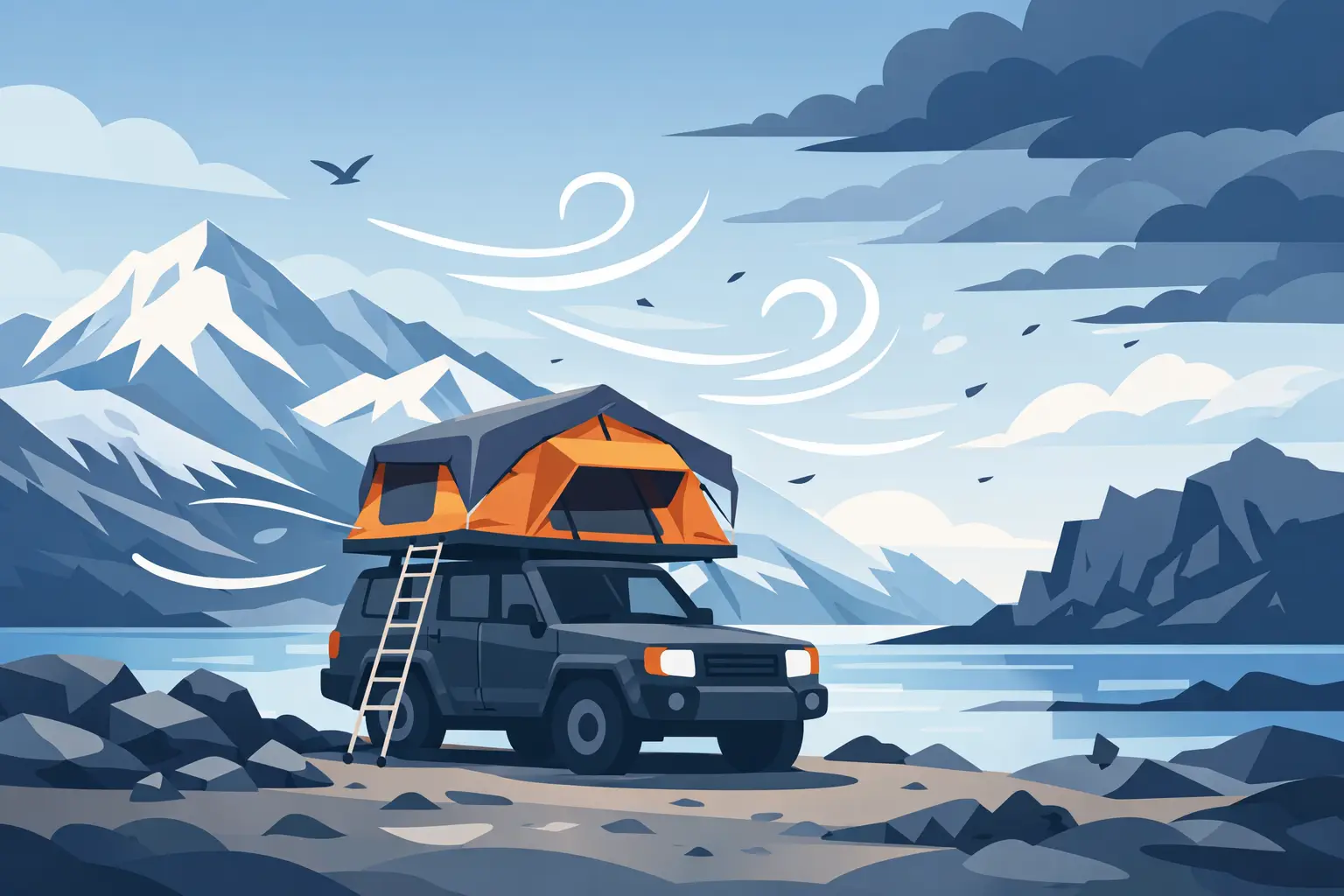
In Iceland, wind is often the deciding factor. A rooftop tent is secure when it is correctly installed and used within its limits, but it is still a fabric structure raised above the ground. Strong gusts can make a noisy night uncomfortable, strain an awning, and turn opening or closing the tent into a two-person job.
Check the forecast before you choose where to sleep, then check the actual conditions when you arrive. A forecast gives you the bigger picture, but terrain matters. Coastal sites, open lava fields, mountain valleys, and exposed parking areas can all feel much windier than a nearby town.
If strong wind is expected, choose a sheltered campground when possible. Do not park directly under unstable branches or close to a steep bank where falling rocks may be a concern. Shelter is useful, but do not force the vehicle into a tight spot where opening the tent will hit a tree, building, sign, or another vehicle.
Rain deserves the same attention. Close windows and vents enough to keep water out while maintaining ventilation. Condensation is normal when two people sleep in a compact tent, especially in cool, wet weather. A small, protected opening usually helps more than sealing the tent completely. Keep wet jackets and boots in the vehicle or covered vestibule area if your setup allows, rather than bringing all that moisture into your sleeping space.
If wind becomes severe, follow the rental company’s instructions and consider moving to safer accommodation or a more sheltered location before conditions worsen. Flexibility is part of self-drive travel. There is no prize for staying on an exposed beach when the weather says otherwise.
Set Up the Tent Methodically
The safest setup is not the fastest one. Take two extra minutes and work through the same order every time: park, check clearance, open the tent, position the ladder, secure the cover and straps, then inspect everything before climbing in.
Make sure the tent opens fully and the base is properly supported. The ladder is not just a way into the tent. On many rooftop tent designs, it is part of the structural support system. Extend it to the correct length so it rests firmly on solid ground. It should not be overextended, balanced on a loose stone, or positioned where feet can sink into mud.
Keep the ladder at a sensible angle. Too vertical can make climbing difficult, while too shallow can allow it to slide. Test it gently before putting your full weight on it. If the site is uneven enough that the ladder cannot sit securely, move the vehicle and start again.
Once the tent is open, check that fabric is not trapped in hinges or caught under the shell. Secure guy lines only if your specific tent setup includes them and conditions call for them. Keep lines visible and avoid placing them where neighbors will trip over them after dark.
Climb, Sleep, and Pack With Care
Use the ladder facing the tent, with both hands free when possible. Do not climb while holding hot drinks, loose camping gear, or a phone you are trying not to drop. Pass bulky items up after you are inside, or have your travel partner hand them to you.
Children should only use a rooftop tent when the tent, ladder, vehicle, and rental rules are suitable for them. They need direct supervision on the ladder and around the vehicle. A rooftop tent may feel like a treehouse, but the ground below is still hard gravel, pavement, or uneven grass.
At night, keep the entrance zipped enough to prevent insects, drafts, and rain from entering, but avoid leaving loose fabric flapping in the wind. Keep a headlamp within reach for ladder trips after dark. Iceland’s summer nights may stay bright, but darkness returns quickly in other seasons and campground paths are not always evenly lit.
Morning is when people often rush. Do not pack the tent while tired, wet, or distracted by a busy driving day. Remove bedding and loose items as instructed, brush off sand or debris, dry the fabric where practical, and check every strap and buckle. Fabric caught in the closing mechanism can damage the tent and prevent a secure closure.
Never Drive With the Tent Open
This rule is simple: if the rooftop tent is not completely closed, latched, and secured, the vehicle does not move. Not to reposition by a few feet. Not to leave a campsite quickly. Not to escape a rain shower.
An open or partly secured tent can catch wind immediately, damage the vehicle, and create a hazard for people nearby. Before driving, walk around the vehicle once. Confirm that the ladder is stowed, windows are closed, straps are fastened, the cover is properly seated, and no fabric is hanging out.
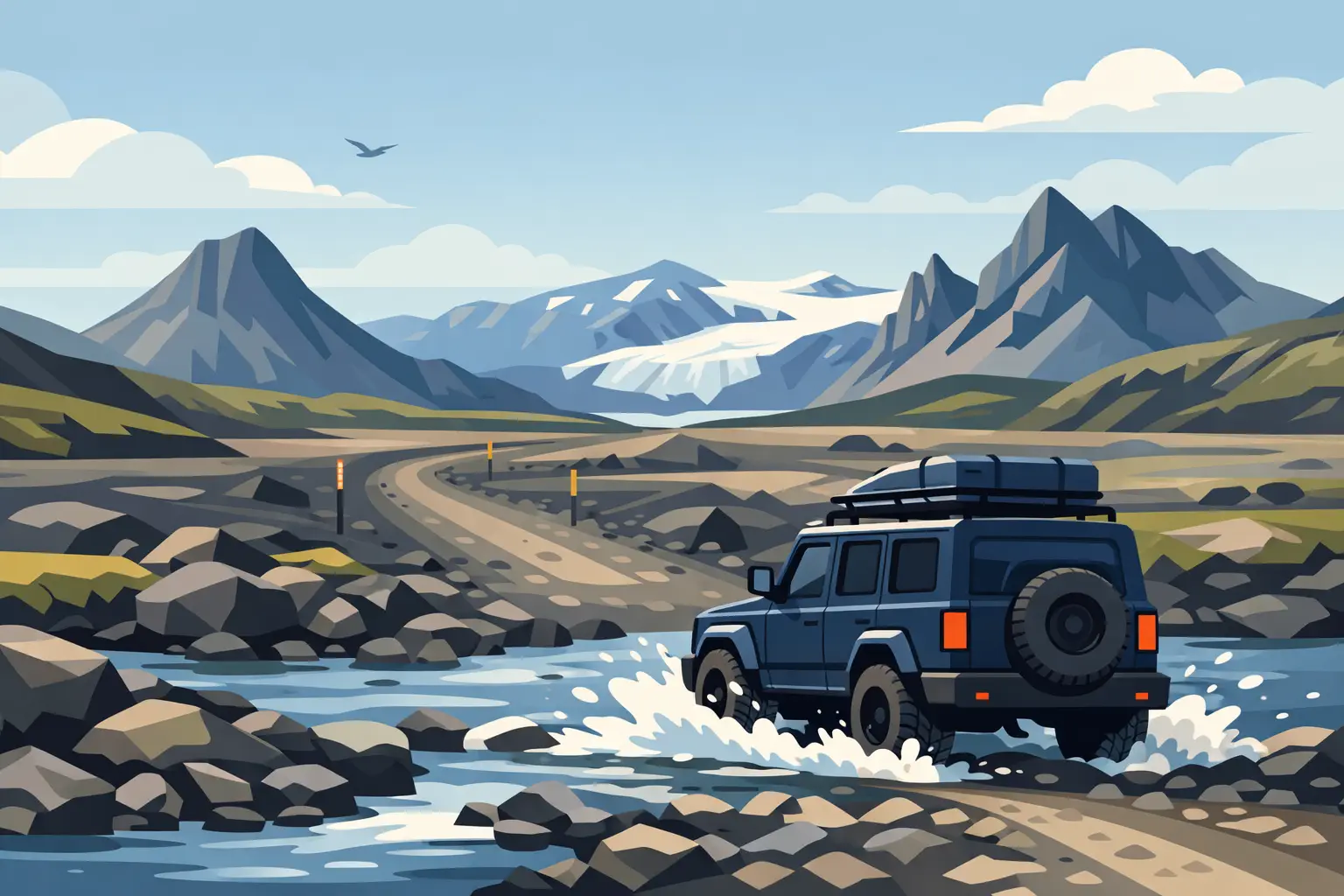
This check matters even more before driving on Iceland’s rougher roads. F-roads and gravel routes can involve vibration, uneven surfaces, river crossings where permitted, and changing weather. Drive within the vehicle’s limits, follow road and weather information, and keep the rooftop tent packed exactly as the rental instructions show.
A Five-Minute Nightly Check
A short check before bed prevents most avoidable problems:
- The vehicle is on firm, reasonably level ground with the parking brake applied.
- The tent is fully open, with no trapped fabric or damaged-looking hardware.
- The ladder is locked, supported on solid ground, and tested before use.
- Wind, rain, and local conditions are suitable for staying at the site overnight.
- Keys, a headlamp, warm layers, and your phone are easy to reach.
Know When to Change the Plan
Rooftop tent travel is about freedom, not stubbornness. Sometimes the safest move is choosing a different campground, taking a hotel room for one stormy night, or continuing your drive before setting up. That is especially true if the wind is building, the ground is saturated, you are arriving very late, or you cannot find a level spot with secure ladder footing.
At Black Sheep Campers, the goal is to make self-drive camping simple, not complicated. Read the vehicle-specific instructions at pickup, use the included equipment as intended, and ask for support if anything about the setup does not look or feel right.
The best Iceland camps are rarely the ones where you pushed your luck. They are the ones where you parked well, listened to the weather, made a warm meal, and climbed into a tent that was set up properly for the night ahead.