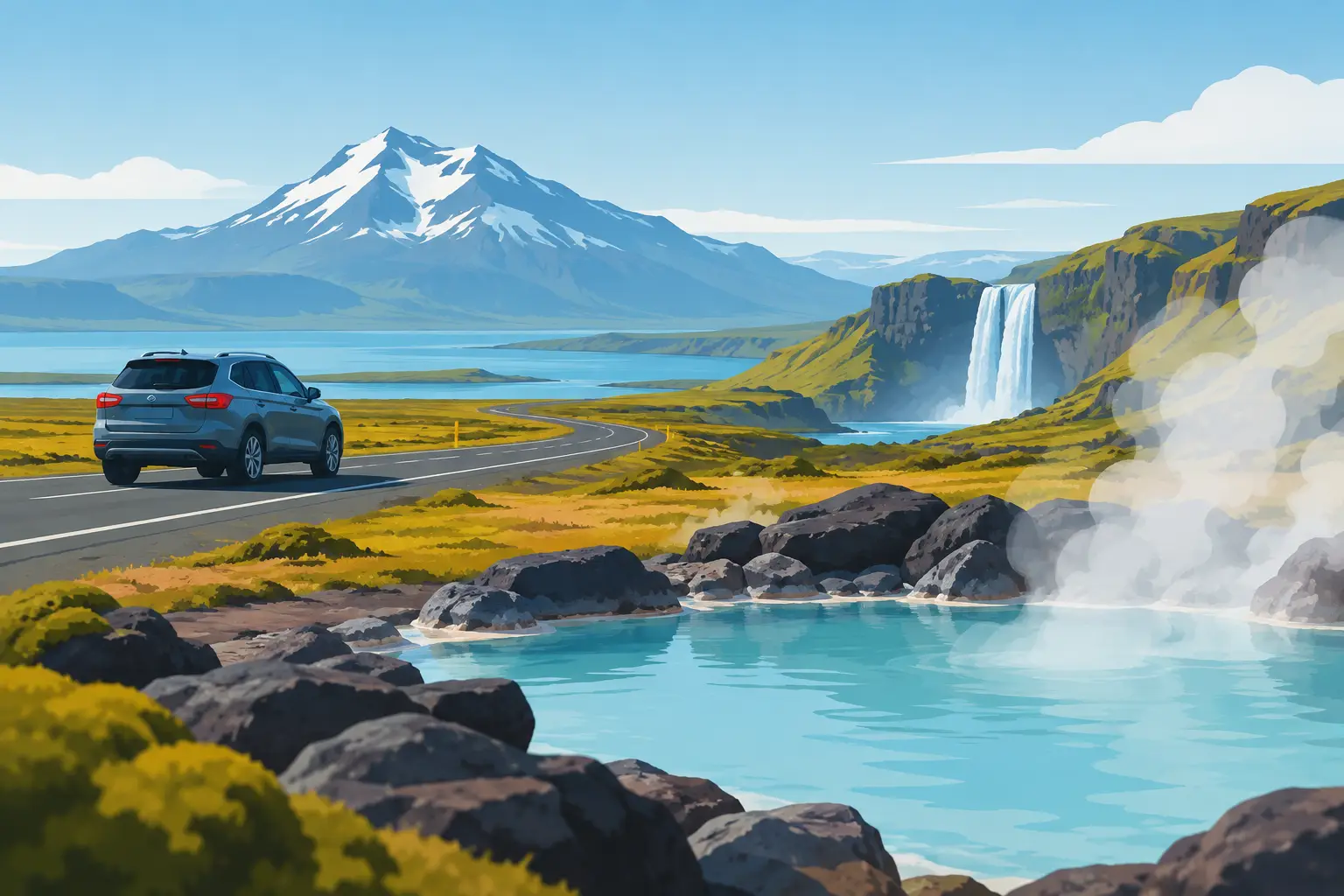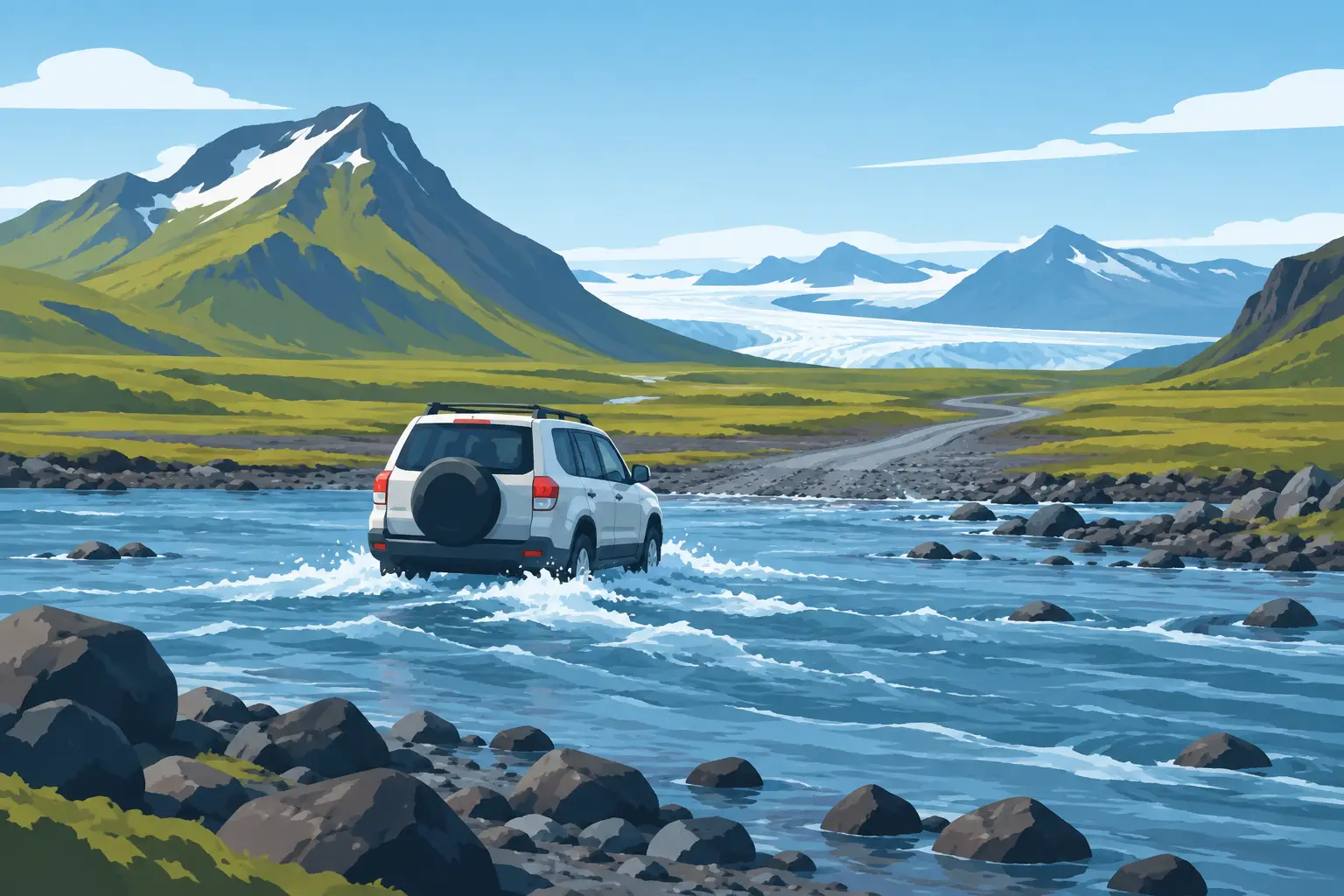
A fuel stop in Iceland is usually quick: pull up, pay at the pump, fill up, and get back on the road. The catch is that the next station may be much farther away than expected, especially once you leave the Ring Road. This Iceland fuel station guide covers the practical details that keep a self-drive trip moving – from choosing the right fuel to handling unattended pumps and planning for the Highlands.
For most travelers, fueling is easy. Iceland has reliable stations in towns and along popular routes, cards are widely accepted, and many larger stations have a small store, restrooms, coffee, and food. The smart move is not waiting for the fuel light. Treat a half tank as your prompt to look ahead, particularly in rural East Iceland, the Westfjords, and any route involving F-roads.
How fuel stations work in Iceland
Most Icelandic fuel stations are self-service, including outside normal store hours. You can usually pay directly at the pump with a debit or credit card, select the fuel type, and start filling. Some pumps ask you to enter a PIN, so make sure you know the PIN for the physical card you plan to use before arriving in Iceland.
You may also see a temporary authorization hold placed on your card before fueling. This is normal. The station reserves an amount, then charges the final cost after you finish. The timing for the unused portion to return depends on your bank, not the fuel station. Use a credit card with room for a hold if possible, especially if you are traveling on a tight daily budget.
At staffed locations, paying inside may be an option during opening hours. But do not depend on it. Iceland road trips work best when you assume the pump needs to accept your card on its own.
Common station brands
You will see N1, Olís, ÓB, Orkan, Atlantsolía, and Costco near Reykjavík, among others. Coverage varies by region. N1 is one of the most familiar names for travelers because many locations combine fuel with food, supplies, and services. Discount-focused stations may have lower prices but fewer facilities.
Price should not be the only deciding factor. A few krónur saved per liter matter less than a detour, an uncertain fuel range, or arriving at a remote campsite with the tank nearly empty. Fill where it makes sense for your route.
Choosing the right fuel at the pump
Before you touch the nozzle, confirm what your vehicle uses. Your rental vehicle’s fuel type will be stated in its instructions and often on or near the fuel cap. Never guess based on the nozzle color alone.
Gasoline is commonly labeled bensín, and 95 octane unleaded is the standard choice for most gasoline vehicles. Diesel is labeled dísel. Some stations offer higher-octane gasoline, but it is not necessary unless your vehicle specifically requires it.
Putting gasoline into a diesel vehicle, or diesel into a gasoline vehicle, can cause serious damage. If you realize you selected the wrong fuel before starting the pump, stop immediately and ask the station staff for help if anyone is present. Do not start the engine.
If your camper uses diesel, check whether it also needs AdBlue or diesel exhaust fluid. Most travelers will not need to top it up during a normal rental, but the vehicle instructions should always come first. Liquefied petroleum gas is not as widely available as gasoline or diesel, so travelers with LPG-dependent setups need a more deliberate plan.
Payment tips for unattended pumps
Bring more than one payment option. A chip-and-PIN credit card is the most dependable choice, while a debit card can work well if your bank allows international fuel-station authorizations. Contactless payment is increasingly common, but it is not universal and should not be your only plan.
Tell your bank that you will be traveling in Iceland before departure. A declined card is usually a bank security setting, an insufficient available balance for the temporary hold, or a card that does not work with an unattended terminal. It is rarely a sign that the entire station is unavailable.
Keep one backup card separate from your main wallet. It is a small precaution that protects a big part of your trip. Cash is not necessary for most fuel stops, and relying on it can make things harder at fully automated stations.
Some pumps allow you to choose a fixed amount in Icelandic króna before fueling. This can be useful if you want to control the authorization amount. If the pump asks for an amount that seems high, remember that it may be a temporary hold rather than the final charge.
Iceland fuel station guide: where to fill up
On the Ring Road, stations are frequent enough that fuel planning is straightforward. Reykjavík and the Southwest have the most options. Larger towns such as Selfoss, Vík, Höfn, Egilsstaðir, Akureyri, Borgarnes, and Ísafjörður are sensible places to fill up, buy food, and reset before longer stretches.
The gaps grow once you take scenic detours. East Iceland has beautiful coastal roads and small villages, but stations are not around every corner. The Westfjords demand more attention because distances are long, roads are slower, and a planned stop may be closed inside even though the pump remains available. In North Iceland, side trips around the Tröllaskagi Peninsula, the Arctic Coast Way, or remote valleys can add more distance than map estimates suggest.
A good everyday rule is simple: fill up when you reach about half a tank if you are leaving a main town or changing to a less-traveled road. If you are staying near the Ring Road and traveling in summer, you can be more relaxed. If strong wind, heavy rain, snow, or road closures are possible, give yourself more margin.
Fuel planning for F-roads and the Highlands
There are very few fuel stations in Iceland’s interior. Do not expect to find a pump once you are properly into the Highlands. Fill up completely before you enter, and plan your exit point before you go.
Highland routes take longer than they look on a map. Gravel surfaces, washboard sections, steep climbs, river crossings, weather, and frequent photo stops all increase fuel use. A 4×4 may use more fuel on these roads than it does on pavement, particularly when loaded with camping gear.
Your route matters. Some Highland trips can be done as a day loop from a service town; others connect remote areas with no practical chance to refuel in between. Check current road conditions, weather, river information, and your vehicle’s permitted roads before setting out. F-roads are only open seasonally, and a 4×4 is required. No fuel plan makes an unsuitable route safe.
How much fuel should you budget?
Fuel in Iceland is expensive compared with the United States, so build it into your trip budget early. The total depends on your vehicle, passenger load, wind, driving speed, road type, and route. A compact 4×4 camper may be efficient on paved roads, then use noticeably more on gravel or mountain routes.
Rather than trying to predict every gallon, budget by distance and leave a cushion for spontaneous detours. Unlimited mileage gives you the freedom to take the scenic road, but it does not make fuel free. The flexibility is worth it when you plan for it.
Driving smoothly helps. Keep a steady speed, avoid unnecessary idling, and do not race into a headwind. Icelandic weather can change quickly, and slowing down is often safer as well as more economical.
Make every fuel stop do double duty
A larger gas station is often more than a place to refuel. It can be your chance to use a restroom, pick up water and snacks, grab a hot meal, check the weather, clean the windshield, and look at tomorrow’s route. If you are camping, use the stop to confirm you have enough food and drinking water before heading toward a more remote campsite.
Do not leave your vehicle blocking a pump while you shop. Move it to a parking space first if you are stopping for food or supplies. It is a simple courtesy at busy stations, especially during summer.
In winter, take a few extra minutes to clear lights, mirrors, and windows. Visibility matters more than speed when daylight is short and conditions are changeable.
A simple fuel routine for your road trip
Start each driving day by checking your fuel level alongside the weather and road conditions. When the tank falls below half, look at the next major town rather than the next tiny dot on the map. Fill up before remote overnights, before F-roads, and before long stretches where weather could slow you down.
With a well-equipped 4×4 camper, this routine gives you real freedom: no fixed hotel check-ins, no need to rush back to a rental counter, and no nervous search for fuel after dark. Black Sheep Campers travelers can keep the trip simple by using every fuel stop as a quick reset, then choosing the next road on their own terms.
The best fuel plan is not complicated. Keep a reliable card ready, know your fuel type, and top up before the landscape gets empty. Then you can spend less time watching the gauge and more time enjoying the road ahead.