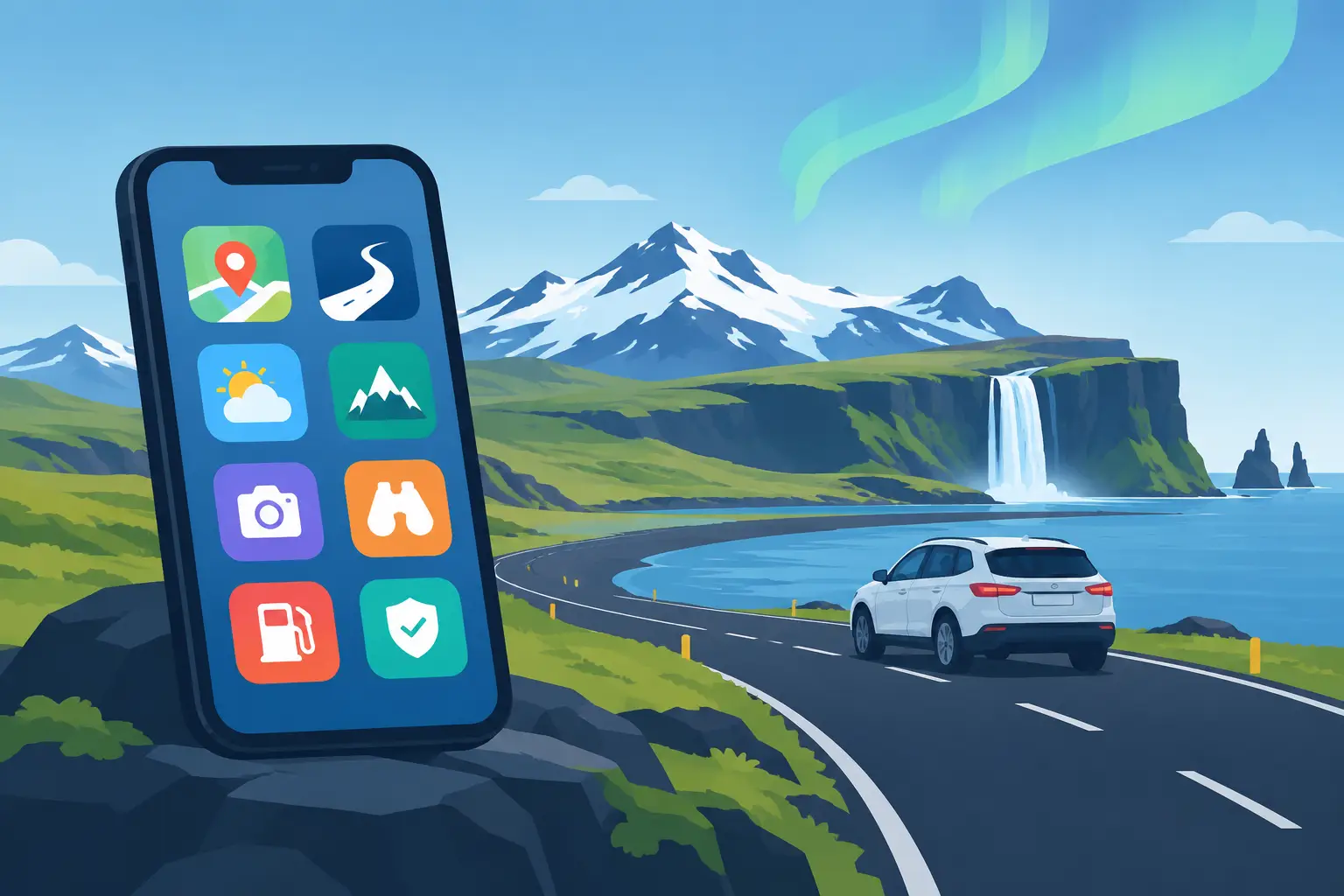
Landing at Keflavik on a late flight should not mean waiting until morning to collect your vehicle. Knowing how to book a self-service rental lets you set your own arrival plan, collect a fully equipped 4×4 camper when it suits you, and get on the road without a rental-counter queue.
A self-service rental is not complicated, but it does put a little more responsibility in your hands. You book online, provide the required driver details before arrival, receive digital pickup instructions, inspect the vehicle, and start your trip independently. The payoff is simple: no fixed office hours, no unnecessary waiting, and more freedom to build an Iceland road trip around the weather, your energy, and the places you want to see.
Start with your route, not just your dates
Before you choose a vehicle, think honestly about where you want to drive. Iceland can look small on a map, but road conditions, wind, river crossings, and changing weather can turn a short distance into a full day of travel.
If your plan centers on the Ring Road, the South Coast, Snæfellsnes, and well-maintained gravel roads, a practical 4×4 camping vehicle gives you flexibility without taking on more vehicle than you need. If you want to drive designated F-roads in the Highlands, check the vehicle rules carefully. F-roads require a 4×4, are only open seasonally, and conditions change fast. Not every 4×4 is suitable for every route, and river crossings are never something to treat casually.
Also decide how you want to sleep. A rooftop tent gives you a raised, outdoor camping setup and saves interior space for gear. A sleep-in-the-back camper is often the better choice if you prefer a quicker bedtime routine, more shelter from wind, or travel outside the warmest summer weeks. Neither option is automatically better. It depends on your season, comfort level, group size, and willingness to set up camp each evening.
How to book a self-service rental step by step
The booking process should be clear from the start. A good rental company shows the total price, what is included, the insurance options, and any conditions that could affect your trip. If something is unclear before you pay, ask. Transparent information is worth more than a low headline rate with surprise add-ons later.
Choose the right dates and pickup time
Enter the day and time you need the vehicle. With a 24/7 self-service setup, you are not tied to normal counter hours, which is especially useful for early-morning departures and late-night arrivals. Still, give yourself enough time after landing to collect baggage, clear customs, get connected, and reach the pickup location safely.
When planning your return, avoid cutting it too close to your flight. You will need time to refuel, remove your belongings, return the vehicle according to the instructions, and get to the airport. Iceland weather can slow down even a familiar route.
Select your camper and read what is included
Look beyond the vehicle photo. Confirm the sleeping arrangement, passenger capacity, transmission, luggage space, 4×4 capability, and whether the vehicle is approved for the roads you plan to drive.
For a camping rental, the included equipment matters just as much as the car. Your booking confirmation should make it easy to see what comes with the vehicle, such as sleeping gear, cooking equipment, a cooler, camping chairs, or other practical essentials. Check this before packing. Bringing duplicate gear from home wastes suitcase space, while assuming an item is included can leave you scrambling after pickup.
Unlimited mileage is useful for Iceland because good road trips are rarely rigid. A clear morning may convince you to keep driving, while strong wind may make you stay an extra night in one area. You should be able to adapt without watching a mileage limit.
Add your driver details accurately
Self-service pickup works best when the rental company has everything it needs before you arrive. Complete the driver information carefully, using the same details shown on the driver’s license and payment card. Read the age requirements, license rules, deposit terms, and insurance conditions before finalizing the reservation.
If more than one person may drive, add them if the rental terms require it. Do not make assumptions here. An unlisted driver may not be covered, and switching drivers is common on long Iceland road trips.
Review insurance with Iceland in mind
Insurance is not the most exciting part of planning, but it is one of the most practical. Iceland has conditions that many visitors are not used to: loose gravel, strong wind, ash or sand in certain areas, narrow roads, and remote stretches where help can take time to reach you.
The right coverage depends on your route and the season. Someone staying on paved roads in summer has different exposure than someone driving gravel roads in shoulder season. Read the exclusions, excess amount, and rules around wind damage, gravel damage, water damage, and off-road driving. Off-road driving is illegal in Iceland and can cause serious environmental damage, as well as leave you responsible for costly recovery and repairs.
Confirm your reservation and save the instructions
After payment, keep the booking confirmation where you can access it offline. Save the pickup instructions, support contact details, vehicle location, and return steps to your phone. Screenshotting key information is smart because mobile service can be uneven once you leave populated areas.
Black Sheep Campers uses a fully digital process so travelers can pick up and return on their own schedule while still having support available when they need it. That is the point of self-service: independence without being left on your own.
What to do before you arrive
A few small preparations make pickup much easier. First, make sure you have a valid physical driver’s license. Depending on where it was issued, you may also need an International Driving Permit, so verify the requirement well before departure.
Second, plan mobile access. You may need internet to receive instructions, complete a check-in step, or contact support. Airport Wi-Fi can be enough for the initial process, but a local SIM or eSIM is helpful once you begin driving.
Finally, pack for camping in changing weather rather than for the forecast you hope to get. Warm layers, waterproof outerwear, sturdy shoes, a headlamp, and a reusable water bottle all earn their place in Iceland. Summer nights can be bright, but they can still be cold and windy.
Pickup without the rental-counter routine
At pickup, follow the digital instructions in order. You may be directed to the vehicle, given access details, and asked to complete a condition check. Take this seriously, even if you are eager to leave.
Walk around the vehicle and photograph every side in good light. Record existing scratches, chips, tire condition, and the windshield. Check the fuel level, locate the safety equipment, and make sure you understand how to use the sleeping setup and any included camping gear. If you spot damage or have a question, report it immediately through the stated process.
Take five minutes to get comfortable with the basics: headlights, windshield wipers, heating controls, fuel type, tire tools, and how to lock the car. Iceland’s weather can change quickly, and you do not want to learn how the defroster works during your first wet, windy drive.
Drive with flexibility, not a fixed checklist
The best Iceland itineraries leave room for change. Check road conditions and weather each day, especially before heading into mountain areas, across exposed roads, or onto gravel. If warnings recommend delaying travel, listen. A waterfall will still be there tomorrow.
Use designated campsites and follow local rules on overnight stays. Camping is part of the experience, but it works best when travelers respect private land, fragile nature, and the communities they pass through. Keep your vehicle on marked roads and established tracks, secure loose doors in high wind, and never stop in unsafe places just for a photo.
Your camper gives you freedom, not immunity from conditions. Slow down on gravel, leave extra space behind other cars, and let the weather set the pace when necessary.
Return the vehicle on your schedule
Self-service return should be as straightforward as pickup. Follow the return instructions exactly, including where to park, what fuel level is required, where to leave keys or access items, and how to report any new damage or issues. Remove all personal belongings from seat pockets, storage areas, and the sleeping section. It is easy to leave a charging cable or passport pouch behind after several days on the road.
Refuel before returning unless your rental agreement says otherwise. Keep the receipt if requested, take final photos of the vehicle, and make sure it is locked. A few minutes of care at return protects you from avoidable questions later.
Book the vehicle that fits your real route, complete the digital steps before your flight, and leave room for Iceland to change your plans. Then you can spend less time at a counter and more time parked beside a black-sand beach, a quiet fjord, or the next road that looks worth taking.