Summer highland camping in Iceland is not a regular road trip with better views. It means driving into a landscape with no shops, few services, changeable weather, rough roads, and rivers that may decide where you can go. That is exactly why it is worth doing. With the right vehicle, a flexible plan, and realistic expectations, the Highlands give you the freedom to wake up close to some of Iceland’s most remote scenery.
This is not about ticking off every F-road in a week. Keep it simple: choose routes that match your vehicle and confidence, check conditions every day, and camp only where you are allowed.
When Summer Highland Camping in Iceland Is Possible
The Highland season is short, and it does not run on a fixed calendar. Most F-roads open sometime between late June and July, depending on snowmelt, road repairs, river levels, and weather. Some higher or more remote routes may not open until later in July. They can also close temporarily after heavy rain, strong winds, or early-season snow.
That makes July and August the most reliable months for a Highland camping trip. Early September can still be excellent, with fewer people and darker evenings, but conditions become less predictable. By then, a cold night, fresh snow, or a closed road can quickly change your route.
Do not build an itinerary around an F-road simply because it was open last week. Check official road conditions on the morning you drive, then make the call based on current information. A flexible camper setup is useful here: if a route is closed, you can head for another campground instead of losing a prepaid hotel night.
A 4×4 Is Required, but It Is Not a Guarantee
F-roads are mountain roads, marked with an F before the road number. A 4×4 vehicle is legally required on them. However, not every 4×4 is suitable for every F-road, and no vehicle removes the need for good judgment.
Some Highland routes are rough but straightforward in dry conditions. Others involve deep ruts, loose gravel, steep climbs, narrow tracks, and unbridged rivers. Routes such as the main approach to Landmannalaugar can be manageable for many prepared drivers, while roads with frequent or large river crossings demand more experience and the right conditions.
A Dacia Duster 4×4 is a practical choice for travelers who want access to suitable F-roads without driving an oversized camper. It gives you clearance, four-wheel-drive capability, and a compact footprint that makes narrow tracks and campground parking easier. Still, you should select your route around the vehicle, not force the vehicle onto a route beyond its limits.
Off-road driving is illegal in Iceland. That means staying on marked roads and tracks, even when the ground looks flat and open. Iceland’s moss, sand, and fragile vegetation can take decades to recover from tire damage. The rule is simple: if there is no road, do not drive there.
River Crossings: Know When to Turn Around
River crossings are the part of Highland travel that deserve the most caution. Water levels change throughout the day and can rise quickly after rain or warm weather in the mountains. A crossing that looked shallow in a travel video may be completely different when you arrive.
Never drive into a river if you cannot assess it safely. Stop, watch other vehicles if any are present, and speak with drivers who have just crossed. Look for the marked crossing point, assess the current, and consider the depth in relation to your vehicle. If you are unsure, wait or turn around.
Do not cross alone if conditions look questionable. Do not enter fast-moving water. And do not assume a larger vehicle means its driver knows what they are doing. Water damage is serious, usually avoidable, and commonly excluded from vehicle coverage.
The best decision on a Highland trip is often the unglamorous one: skip a crossing, choose a different route, and enjoy the places you can reach safely.
Where You Can Camp in the Highlands
Wild camping rules in Iceland are strict, especially in sensitive Highland areas. Do not plan to pull off an F-road, pitch a tent beside a scenic river, and stay wherever you like. In most cases, overnight camping should be at a designated campground or with the landowner’s permission.
Highland campgrounds are basic, but that is part of the experience. Expect toilets, water, and sometimes showers or a small service building. Do not expect supermarkets, fuel, laundry, or a choice of restaurants. Availability and facilities vary, so arrive with enough food and water for the next day rather than relying on a remote stop being fully stocked.
Popular bases include Landmannalaugar, Hveravellir, Þórsmörk, Kerlingarfjöll, and Askja-area campgrounds. Each gives you a different version of the Highlands: colorful rhyolite mountains, geothermal ground, black-sand valleys, glacier views, or vast volcanic desert.
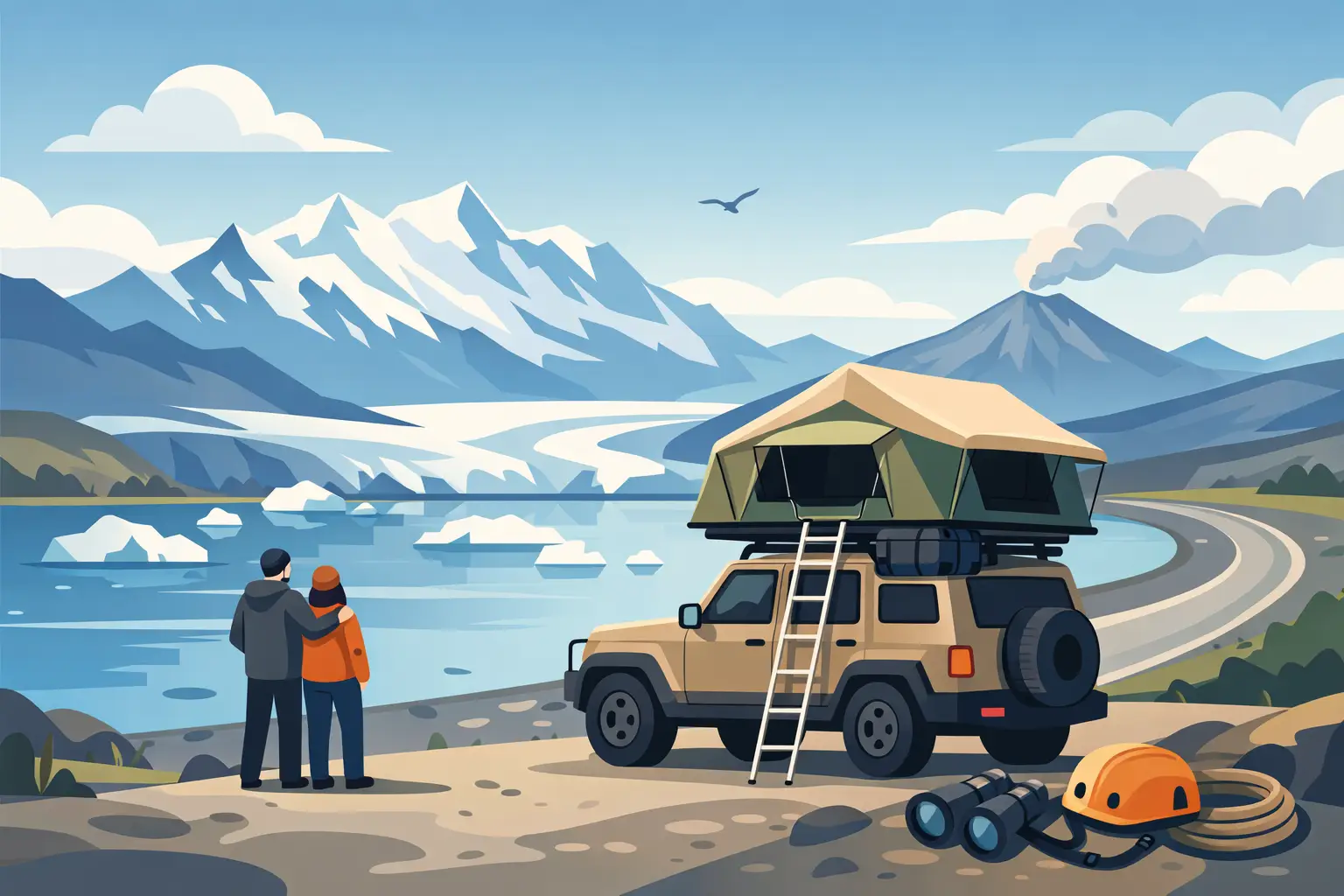
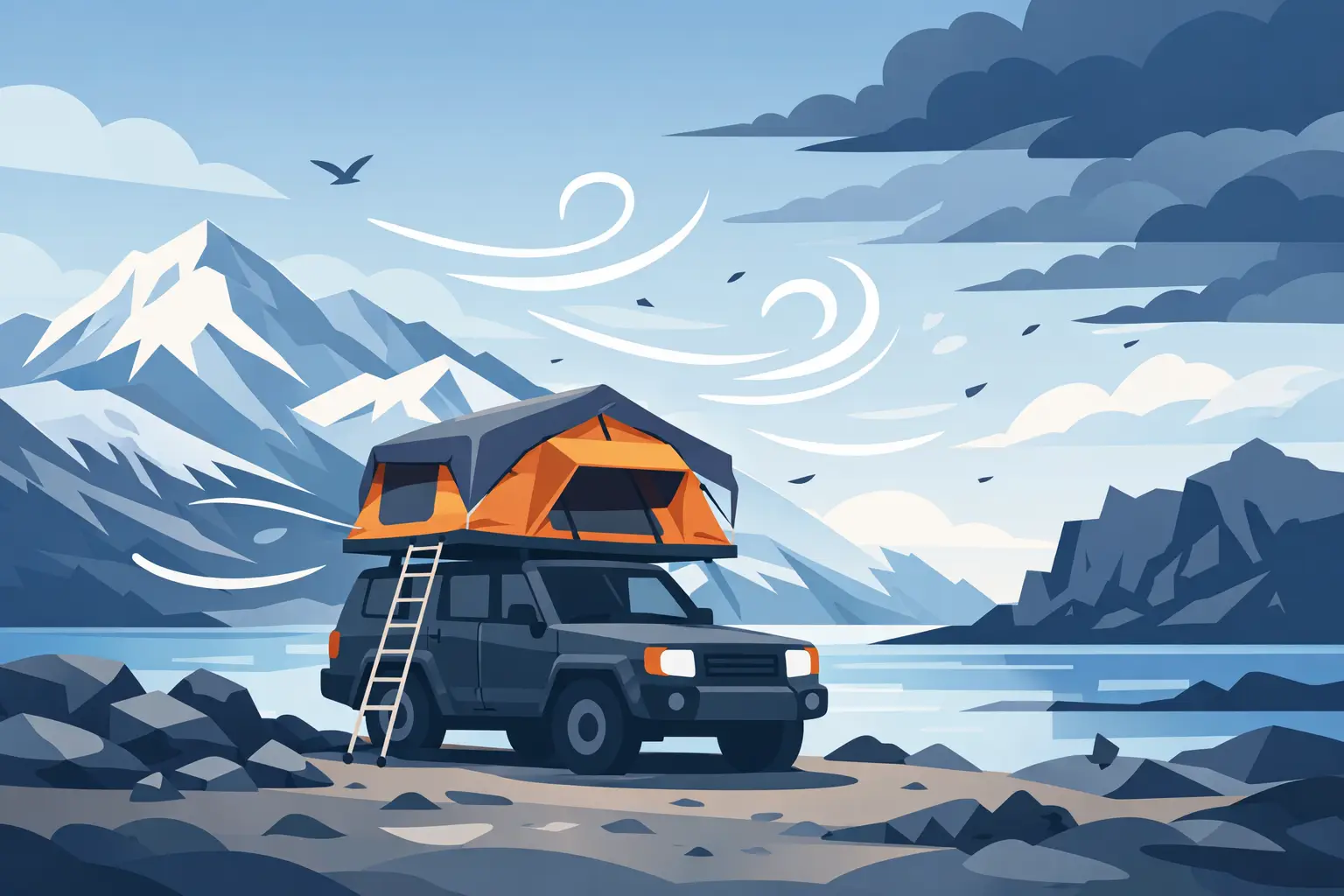
A rooftop tent or sleep-in-the-back camper keeps the overnight setup straightforward. You are not searching for hotel check-in times after a long drive, and you have the flexibility to adjust your route when weather changes. Arrive at a legal campground, park properly, secure your gear against wind, and let the landscape do the rest.
Pack for Cold, Wind, and a Wet Morning
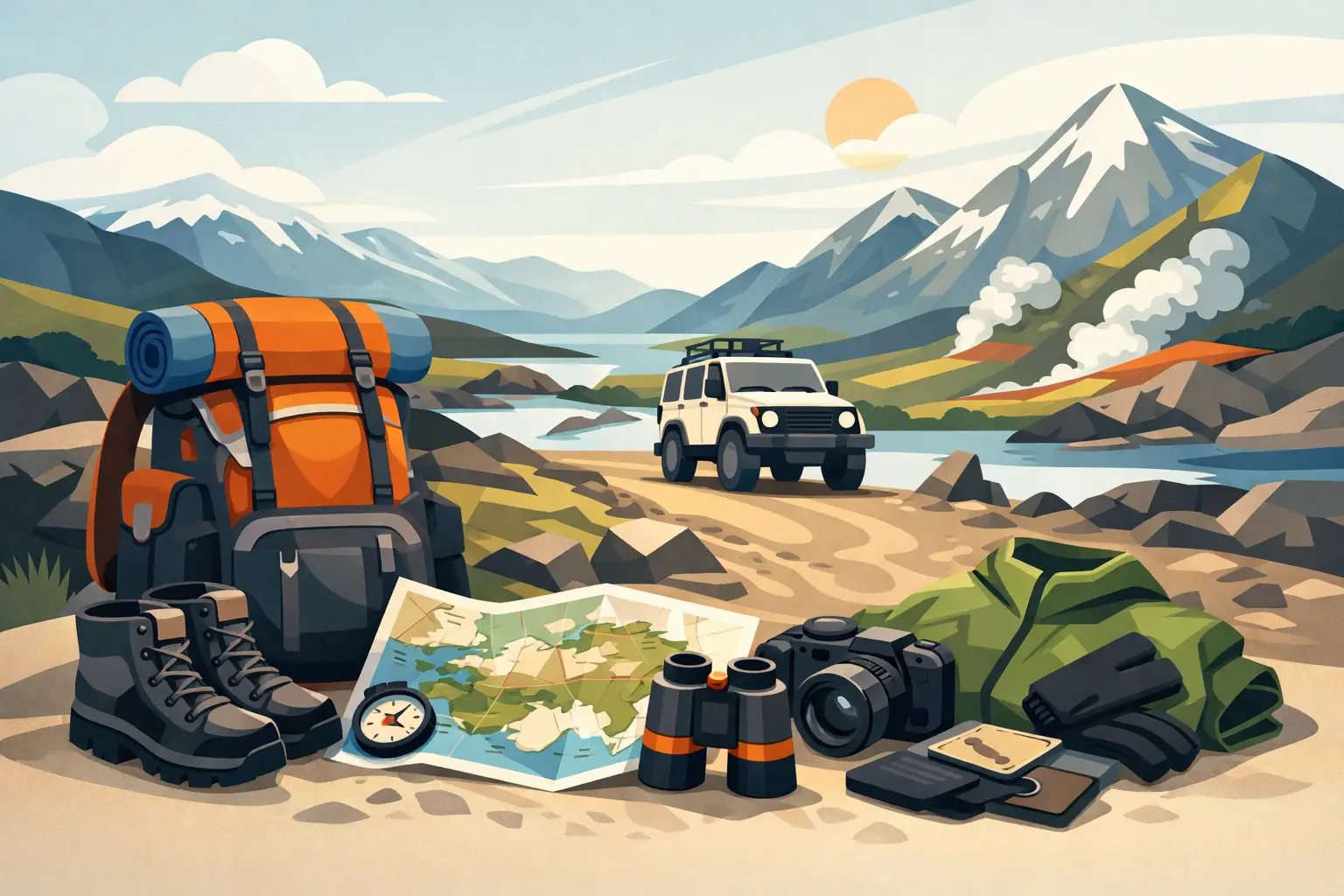
Icelandic summer can feel warm in Reykjavík and close to freezing in the Highlands on the same day. Wind makes the difference even more noticeable. Bring layers that work together: a warm mid-layer, waterproof outer shell, hat, gloves, and sturdy waterproof hiking boots.
Your vehicle should carry practical essentials as well. Keep food, drinking water, a charged phone, navigation backup, a power bank, and a basic first-aid kit within easy reach. Bring a swimsuit for geothermal pools, but do not let a sunny forecast convince you to leave rain gear behind.
For camping, think about what happens after a wet hike. Keep dry clothes separate, pack towels where they are easy to reach, and organize cooking equipment before you need it in the rain. Small routines matter when you are living out of a vehicle for several days.
Fuel planning matters too. Fill up before heading inland and do not wait until the gauge is low. Highland distances can be deceptive, roads are slow, and fuel stations are not part of the landscape once you are deep into the interior.
Build a Route With Room to Change It
The strongest Highland itineraries leave space for conditions. Instead of promising yourself that you will drive a long F-road, hike for six hours, cross multiple rivers, and reach a distant campground before dinner, plan one main objective each day.
For example, you might use Landmannalaugar as a base for hiking and hot springs, then move north toward Hveravellir or Kerlingarfjöll if road conditions support it. Another route may combine the south coast with a suitable Highland approach, then return to the Ring Road before continuing east or west. The right choice depends on road openings, your travel dates, your driving experience, and how much time you want outside the vehicle.
Avoid trying to complete the entire F35 or a remote interior crossing just because it appears efficient on a map. Gravel roads take longer than expected, photo stops add up, and weather can slow everything down. A relaxed route gives you time to stop when the clouds lift or stay put when they do not.
Black Sheep Campers is built for this kind of travel: a fully equipped 4×4 camper, unlimited mileage, and 24/7 self-service pickup and return. No rental counter schedule forcing you to rush your first or last day. Just choose a route that fits the conditions and go.
The Practical Highland Mindset
A good Highland trip is not measured by how many F-roads you manage to drive. It is measured by the moments you would miss on a fixed itinerary: coffee beside a mountain campground, a quiet trail after the day-trippers leave, or an extra night in a place that deserves more than an hour.
Check the road, check the weather, respect the river, and keep one backup plan. The Highlands will handle the wild part.