You do not need to spend your first hour in Iceland standing at a rental counter, sorting out paperwork while daylight and good weather disappear. This Iceland digital camper booking guide shows you how to book a 4×4 camping vehicle online, collect it on your own schedule, and start driving with a clear plan.
For an independent Iceland trip, the vehicle is more than transportation. It is your route plan, your bed, your kitchen setup, and your backup when the weather changes. Booking digitally can make all of that simpler, but only if you know what to check before you confirm.
Why digital camper booking makes sense in Iceland
Iceland rewards travelers who can adjust their plans. A clear forecast may convince you to head toward the Highlands. Strong wind on the South Coast may make you stay another night farther inland. A camper gives you room to make those decisions without paying for a string of fixed hotel reservations.
A fully digital booking and pickup process adds another layer of freedom. You can complete your reservation online, receive the information you need before arrival, and collect or return the vehicle without planning your flight around rental office hours. No queues. No waiting. No unnecessary detours through town.
That does not mean every booking is identical. Digital service should still come with clear instructions, a way to reach support, and transparent details about what is included. Convenience works best when there are no surprises.
Iceland digital camper booking guide: start with your route
Before comparing vehicles, decide what kind of Iceland trip you actually want. The right camper for a Ring Road trip in summer is not automatically the right choice for rougher interior routes or shoulder-season travel.
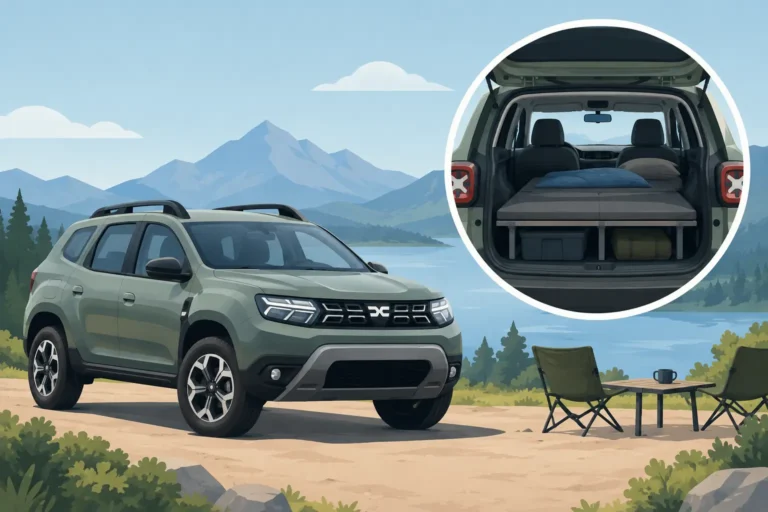
If your plan focuses on paved roads, popular stops, and established campgrounds, a sleep-in-the-back 4×4 can be a practical, lower-profile setup. It keeps transport and accommodation together while avoiding the size and fuel demands of a large motorhome.
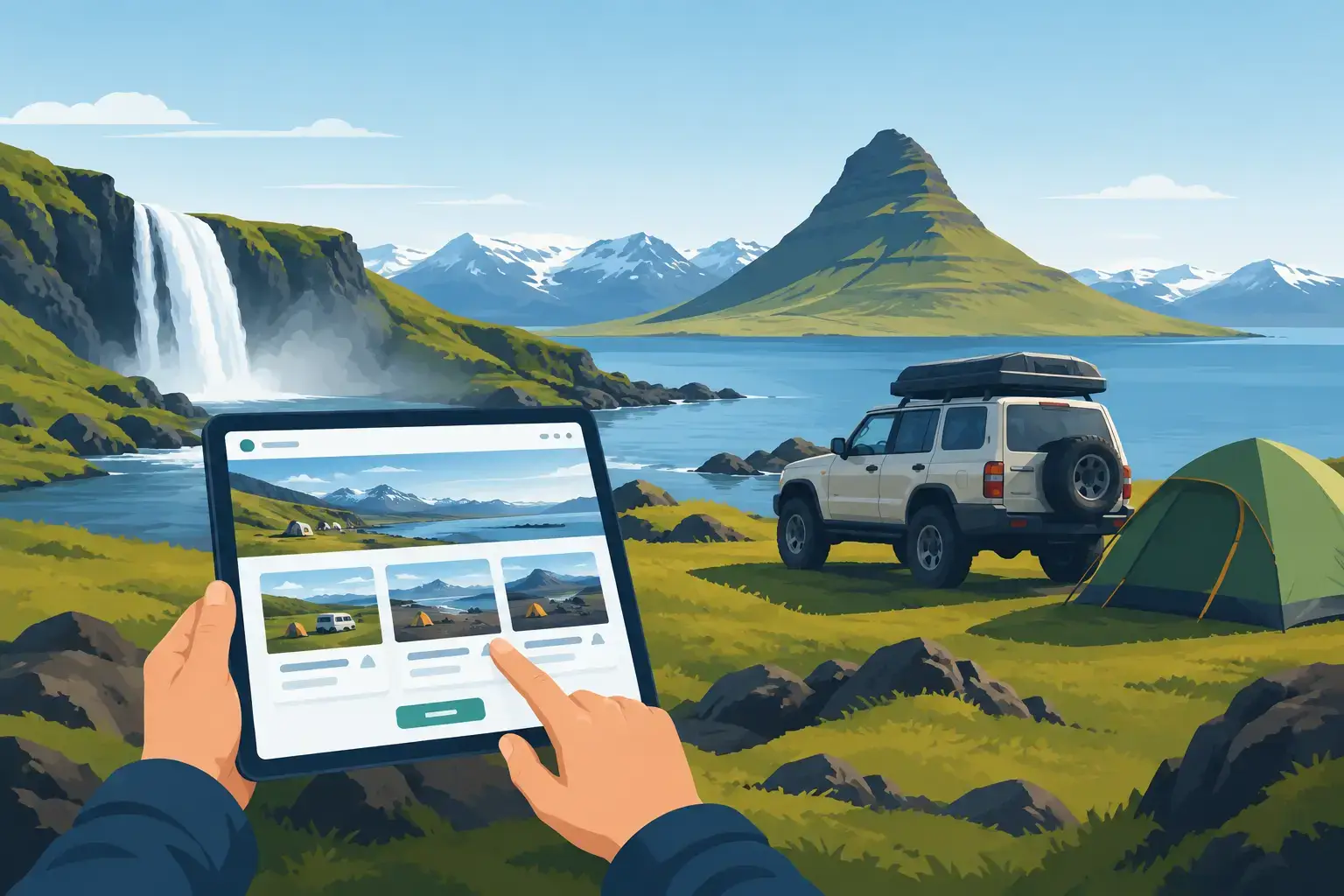
If you want the rooftop-tent experience, a 4×4 with a rooftop tent gives you a comfortable elevated sleeping setup and a compact footprint for the road. It is especially appealing for couples who want to camp often and travel light. The trade-off is that you need to open and close the tent at each overnight stop, and wind matters more than it would in a conventional camper.
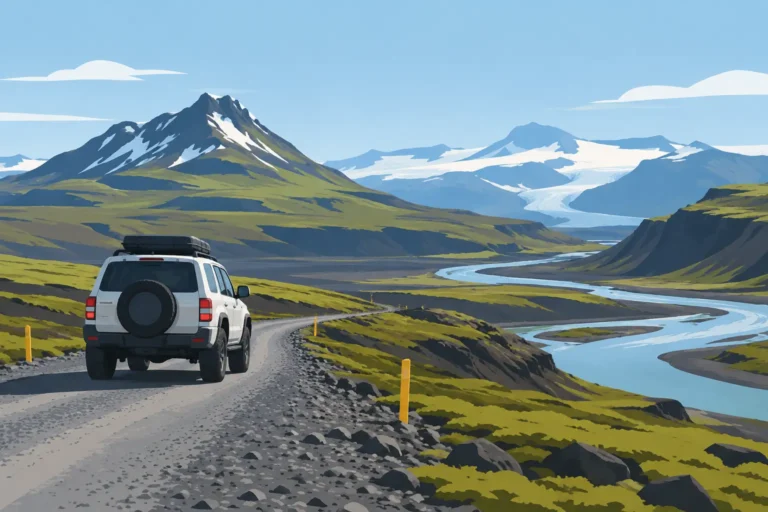
Planning to drive F-roads changes the question. Iceland’s mountain roads can involve uneven surfaces, steep stretches, loose gravel, and river crossings. They are generally seasonal, conditions can change quickly, and access is often restricted. Choose a vehicle specifically permitted for the roads you plan to use, then check current official road and weather information before setting out. A 4×4 improves capability, but it does not make every route safe or suitable.
Check what your camper rental actually includes
The lowest daily price does not always make for the lowest-cost trip. A useful digital booking page should make the full setup easy to understand before payment.
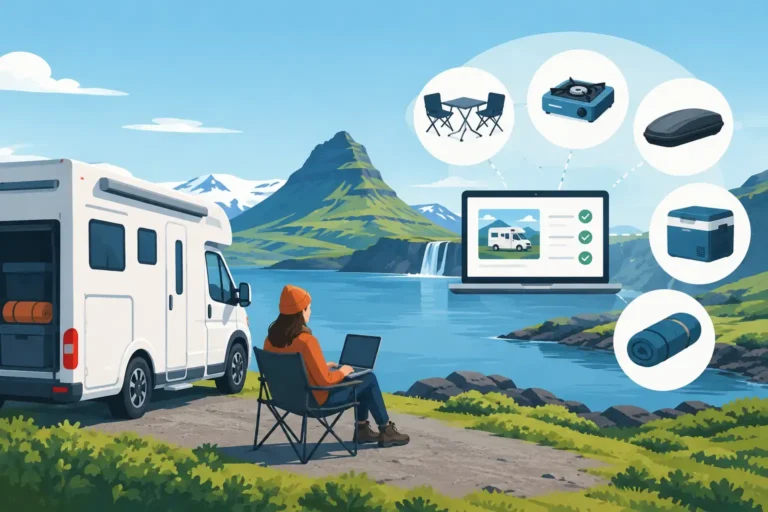
Look at the camping equipment as closely as the vehicle itself. Bedding, cooking equipment, a gas stove, cooler or storage solution, chairs, a table, and basic utensils can save you time and money after arrival. If you have to buy half your camp setup in Reykjavik, a cheap rental can stop being cheap quickly.
Also confirm whether mileage is limited. Iceland road trips cover more ground than many first-time visitors expect. A route from Reykjavik around the Ring Road, with detours to waterfalls, geothermal areas, beaches, and side roads, adds up fast. Unlimited mileage gives you more freedom to take the scenic road without watching the odometer.
Read the insurance terms rather than assuming all damage is treated the same. Gravel, sand and ash, wind, and river crossings each create different risks in Iceland. Understand the deductible, optional protection, prohibited use, and what to do if something happens. Clear terms are more valuable than vague promises.
Book the dates that match the season
Summer has the widest campground choice, long daylight hours, and the best chance of open Highland roads. It is also the busiest period, so book early if you are traveling from June through August. A digital reservation lets you secure the vehicle before flights and campsites narrow your options.
Spring and fall can offer quieter roads and more flexible availability, but they demand more caution. Nights are colder, some facilities have limited hours, and weather can change a route quickly. A rooftop tent can still be a great option when conditions are suitable, but pack warm layers and choose your overnight stops carefully.
Winter is a different kind of trip. Road conditions, daylight, wind, and snow require conservative planning. Not every camping setup or route is appropriate in every month. If your goal is winter driving, focus less on an ambitious lap around the country and more on a flexible itinerary with realistic distances.
Make pickup and return work for your flight
Digital pickup is one of the biggest advantages of booking a camper online. If your flight arrives late or leaves early, 24/7 self-service collection and return can remove the pressure of coordinating with a rental desk.
Before you fly, make sure the main driver has the correct license, that your contact details are accurate, and that you have read the pickup instructions. Keep your arrival information accessible even if mobile service is limited. It is also smart to download offline maps before leaving the airport.
When you collect the vehicle, take a few minutes to get organized. Check the condition report, locate the safety equipment, learn how the sleeping setup works, and make sure you understand fueling requirements. Test the stove or camping gear while you are still near the pickup location if instructions allow. Five calm minutes at the start can prevent a frustrating first night.
Black Sheep Campers keeps this process simple with fully digital booking and 24/7 self-service pickup and return, so your itinerary does not need to fit traditional office hours.
Plan campsites, not random overnight parking
A camper gives you flexibility, not permission to sleep anywhere. Iceland has clear rules around overnight stays, and camping outside designated areas is often not allowed. Use registered campgrounds unless you have explicit permission to stay elsewhere.
Campgrounds vary. Some are basic fields with toilets and showers; others have kitchens, laundry, charging points, and more sheltered pitches. In peak season, you can often choose your campground as you travel, though popular areas may be busy. In remote regions or outside the main season, check whether facilities are open before depending on them.
Build a simple evening routine: arrive with enough daylight to set up, check wind direction, secure loose gear, cook before you are exhausted, and charge what you need for the next day. It keeps the trip relaxed even when the weather is not.
Use a realistic daily driving plan
Iceland looks compact on a map. That can be misleading. Gravel roads slow you down, one-lane bridges require patience, weather can force detours, and every viewpoint seems to deserve a stop.
For most travelers, fewer destinations make a better trip. Give yourself time to walk to the waterfall, wait out a rain shower, take a hot shower at camp, or change direction when the forecast improves. A camper is most valuable when you do not turn it into a race against a fixed reservation.
Keep food and fuel topped up before entering remote areas. Do not rely on finding an open store late at night, especially outside summer. On F-roads, use extra caution: never attempt a river crossing if you are unsure, and turn around when conditions exceed your experience or the vehicle’s limits.
Book directly, then leave room for the good surprises
A good digital camper booking should feel clear before you arrive: vehicle details, included equipment, insurance options, pickup instructions, and support information in one place. If something is unclear, ask before booking rather than hoping it will make sense at the airport.
Then keep the rest simple. Choose the 4×4 setup that fits your route, reserve dates that suit the season, and leave enough open space in your itinerary for Iceland to change your plans. The best road-trip days are often the ones you did not schedule too tightly.