The Highlands are where Iceland gets quieter, rougher, and far less predictable. This Iceland highland driving guide is for travelers who want to trade crowded viewpoints for volcanic tracks, glacial rivers, and long days under an open sky – without making avoidable mistakes along the way.
Driving F-roads is not about pushing a rental vehicle to its limit. It is about choosing the right route for the conditions, reading the road ahead, and being willing to turn around when the day says no. Keep it simple: plan well, drive patiently, and let the weather have the final word.
What Counts as Highland Driving in Iceland?
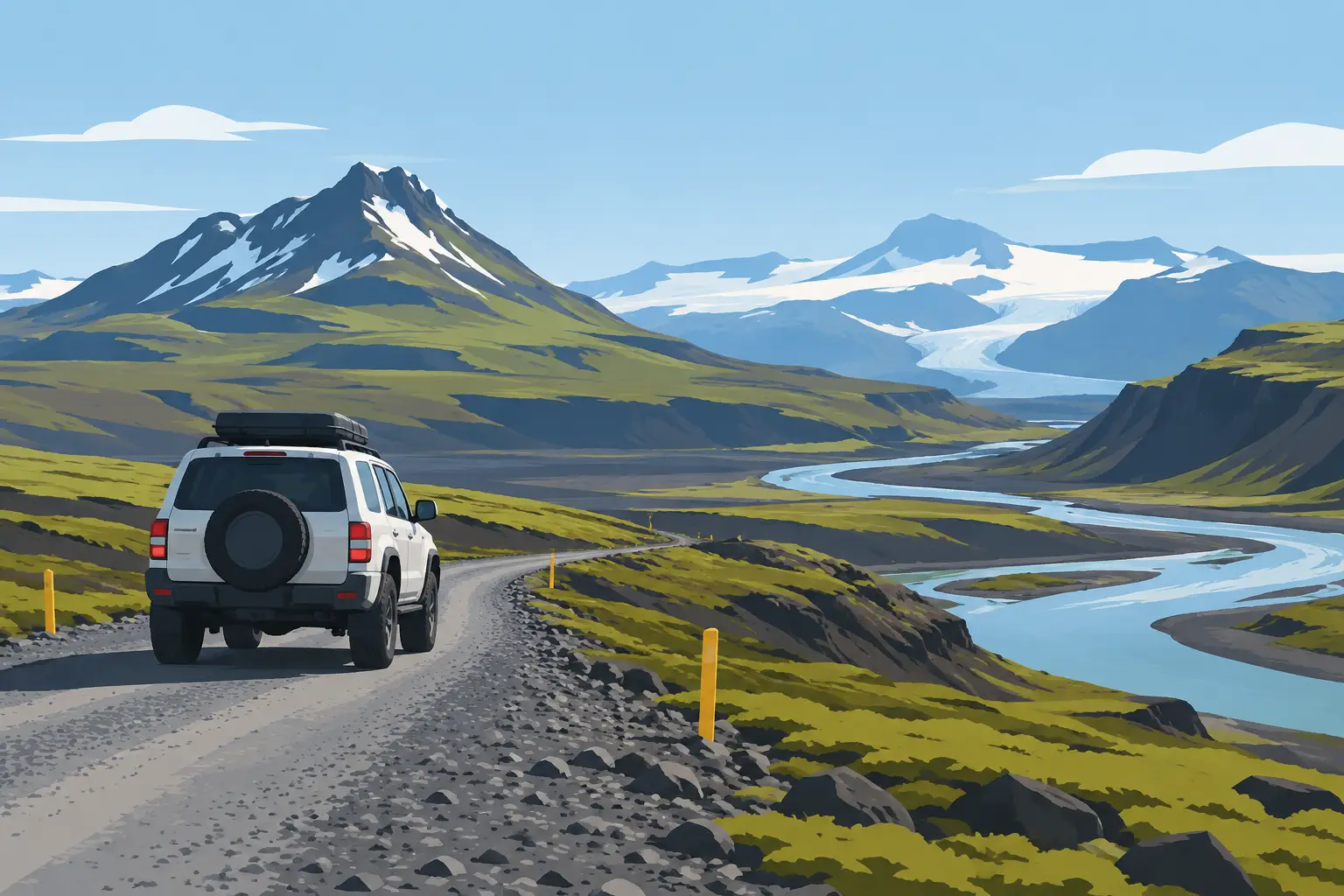
Iceland’s interior is a remote mountain and desert region, generally reached by roads marked with an F. These F-roads are unpaved mountain tracks that can include loose gravel, deep potholes, steep sections, narrow passes, snow, and unbridged rivers. They are normally open only in summer, often from late June into September, but opening dates change every year.
An F-road sign is not a promise that the road will be easy. Some routes are relatively manageable in a capable 4×4 when dry, while others involve repeated river crossings and demand serious experience. Conditions can also change dramatically between morning and afternoon after rain, warm temperatures, or strong winds.
The reward is real. The Highlands give you access to places such as Landmannalaugar, Askja, Kerlingarfjoll, and the long interior routes between north and south Iceland. But this is travel with fewer services, longer distances, and no room for casual decisions.
Iceland Highland Driving Guide: Start With the Right Vehicle
F-roads are legally restricted to 4×4 vehicles. A regular two-wheel-drive car is not allowed, even if the road looks dry and smooth at the beginning. More importantly, not every 4×4 is suitable for every F-road.
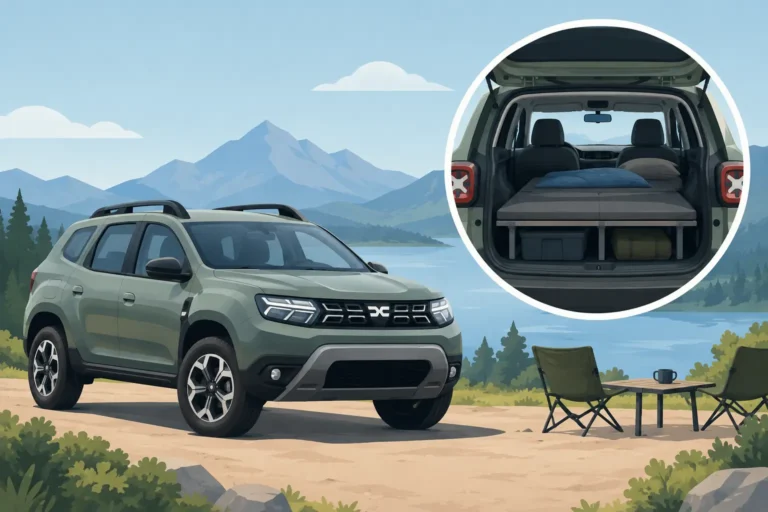
A compact 4×4 like a Dacia Duster can be a practical choice for many Highland routes, particularly when you travel light, keep a sensible pace, and choose routes that match its ground clearance and capabilities. It is a good fit for travelers who want a comfortable road-trip vehicle with the freedom to camp and explore beyond the Ring Road.
However, a compact 4×4 is not a substitute for a large modified off-road vehicle. Deep river crossings, rough tracks, and remote routes such as parts of F88, F210, or F249 may require more clearance, more experience, or a decision to skip the route entirely. Always check your rental terms and the current road conditions before setting out. Water damage from river crossings is commonly excluded from insurance, so the cost of getting it wrong can be significant.
With a Black Sheep Campers 4×4 camping setup, you have the flexibility to sleep where your route takes you, but the same rule applies: choose the road for the vehicle, not the other way around.
When Can You Drive F-Roads?
There is no fixed Highland season. Roads open after winter only when snow has melted and the ground is stable enough to handle traffic. A route that opened early last year may remain closed well into summer this year.
July and August are usually the most reliable months for Highland travel. Even then, temporary closures are common. Heavy rain can raise rivers quickly, wind can make exposed driving uncomfortable, and early snow can arrive in the mountains before the end of September.
Check official road information on the morning you drive, not just while building your itinerary at home. Look at closures, warnings, weather forecasts, wind speed, and river conditions. If a road is marked impassable or closed, do not drive around barriers or assume a local-looking track is an alternative route.
A flexible schedule is one of the best things you can bring to Iceland. Give yourself an extra day or two around your Highland plans so a closure does not ruin the rest of your trip.
How to Drive Gravel and Rough F-Roads
The fastest way to lose control on an F-road is to drive it like pavement. Gravel reduces grip, corrugations can shake the vehicle, and blind rises can hide another car, sheep, or a washout on the other side.
Slow down before corners and hills rather than braking hard while turning. Keep both hands on the wheel, leave generous space behind the vehicle ahead, and expect oncoming traffic to throw loose stones. Sudden steering inputs are rarely helpful on gravel.
Potholes and washboard surfaces deserve patience. You may find a slightly different line that is smoother, but do not leave the marked road or create new tracks across fragile terrain. Icelandic vegetation and volcanic soil recover slowly. Staying on the road protects the landscape and keeps you out of soft ground that can trap a vehicle.
Fuel is another practical concern. Gas stations are scarce in the interior, and some routes are much slower than their mileage suggests. Start a Highland day with a full tank, enough food and water for a delay, warm layers, and a charged phone. Download offline maps before you lose signal.
River Crossings: Know When Not to Cross
Unbridged rivers are the defining challenge on many F-roads. They are also where good judgment matters most. Never treat a river crossing as a box to tick for the photo.
Before crossing, stop in a safe place and watch the water. Look for the marked entry and exit points, the direction of the current, and the route used by vehicles ahead. If another driver has crossed safely, that gives you useful information, but it does not guarantee the river is suitable for your vehicle.
Do not cross if the water looks too deep, fast, or unclear, or if you cannot see a reliable exit. Glacial rivers can rise rapidly during warm weather and after rain. A crossing that was manageable early in the morning may be dangerous later in the day.
If you decide conditions are safe and your vehicle is suitable, use low gear, enter slowly, maintain a steady pace, and avoid stopping midstream. Do not race through the water. A bow wave can push water into the engine, and engine damage can end the trip quickly.
When in doubt, wait, ask another driver for current information, choose a different route, or turn back. Turning around is not failing. It is exactly what experienced Highland drivers do when conditions are wrong.
Plan Realistic Highland Routes
Highland travel takes longer than the map suggests. A 60-mile route can take several hours once you account for gravel, river crossings, road checks, photo stops, and changing weather. Avoid stacking too many destinations into one day.
For a first Highland drive, choose a route with a clear goal and an established campsite nearby. Landmannalaugar is a popular introduction because it combines dramatic scenery, hiking, and services in season, though the approach road still requires care. Askja is more remote and demands a full-day commitment. Routes through the central interior can be spectacular, but they work best when you are comfortable being self-reliant.
Tell someone where you are going if you plan a remote route. Keep your daily plan loose enough to stop early if wind, rain, fatigue, or road conditions make driving less enjoyable. Iceland is better when you have time to notice it.
Camping in the Highlands Without Problems
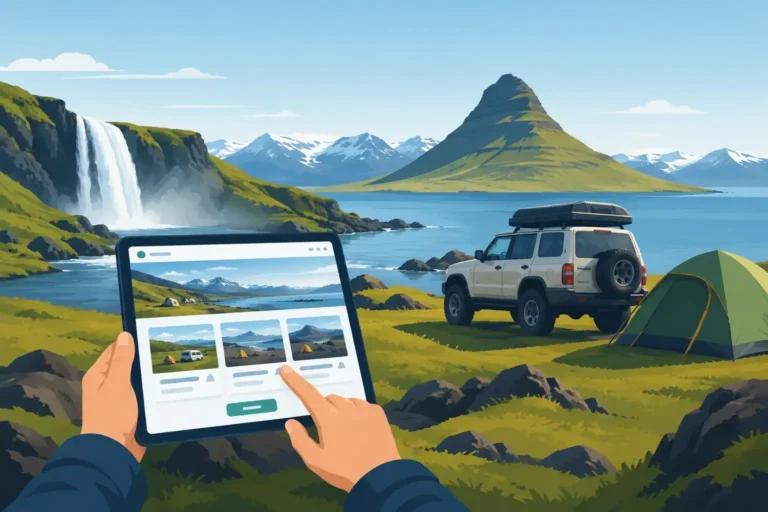
A rooftop tent or sleep-in-the-back setup gives you freedom, but it does not mean you can camp anywhere. In most cases, overnight camping should be at designated campsites, especially in protected areas and the Highlands. Rules can vary by location, and some sites may have limited facilities or seasonal opening hours.
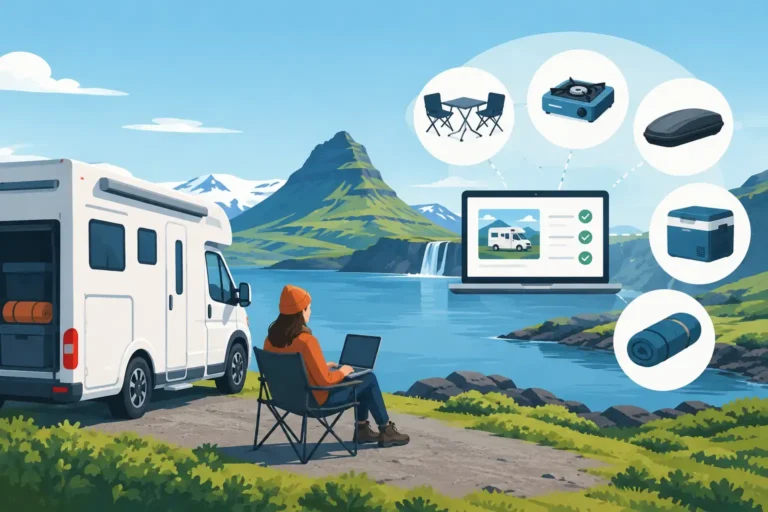
Arrive with enough food, water, and a backup plan in case a campsite is full or a road closure changes your route. High winds are common, so park thoughtfully and secure loose gear before setting up a rooftop tent. If the forecast is rough, a campsite with shelter and facilities can make a big difference.
Leave no trace. Pack out trash, use restroom facilities where available, and never drive off-road to find a private spot. The freedom of a self-drive trip depends on travelers treating these places with respect.
A Better Way to Think About the Highlands
The best Highland days rarely follow a perfect timetable. They are the days when you leave early, take the road conditions seriously, stop when the light is good, and adjust without stress when a route is closed. Bring the right 4×4, keep your plans flexible, and give yourself permission to choose the safer road. The interior will still feel wild – and you will enjoy it far more when you get back to camp with a good story instead of a damaged vehicle.