Iceland camping seasons are less about picking a perfect month and more about deciding what kind of road trip you want. Long daylight and open Highland roads make summer easy, while winter brings quieter routes, Northern Lights potential, and conditions that demand more planning. A camper gives you freedom, but Iceland’s weather, road rules, and campsite availability still set the pace.
Iceland Camping Seasons at a Glance
For most travelers, the main camping season runs from late May through September. This is when the widest range of campsites, services, roads, and hiking routes are available. July and August are the simplest months for first-time camper travelers, but they are also the busiest and usually the most expensive.
Shoulder season, typically May, early June, September, and October, can be an excellent balance of lower crowds and real road-trip freedom. The trade-off is that weather changes faster, some campsites may be closed, and Highland access is less certain.
Winter camping runs roughly from November through April. It can be unforgettable, especially for travelers chasing snowy landscapes and dark skies, but it is not summer camping with a thicker jacket. Short daylight, wind, ice, and winter road closures mean your route needs to stay flexible.
The simple rule
If your trip depends on F-roads, multi-day Highland routes, or a rooftop tent, plan for summer. If you want the Ring Road, South Coast, Snæfellsnes, Reykjavík, and a quieter experience, shoulder season can be a smart choice. For winter, choose a warm sleep-in-the-back setup, keep daily driving distances realistic, and let the forecast decide the day’s plan.
Summer Camping in Iceland: Late May to August
Summer is the most reliable season for an Iceland camper road trip. Days are extremely long, with near-24-hour daylight around June. That gives you time to drive, hike, cook dinner at camp, and still catch a late-evening view without racing the clock.
Most organized campsites are open by June, although opening dates vary by location and weather. Facilities are usually at their best in July and August, when you are more likely to find showers, kitchens, laundry, and small shops at or near campgrounds. Do not assume every campsite offers every service, especially in rural areas.
The Highlands are the big summer draw. F-roads generally open between late June and mid-July, but there is no fixed opening day. Snowmelt, river levels, road repairs, and weather determine when each route becomes accessible. A 4×4 is required on F-roads, but a 4×4 alone does not make every route suitable. Some roads involve rough surfaces, steep sections, or river crossings that require experience and careful judgment.
July and August also bring the highest demand. Popular campsites can feel social and busy, particularly around the Golden Circle, Vík, Skaftafell, Mývatn, and the Westfjords. The advantage of a camper is that you can move on if a place does not suit you, but arriving earlier in the evening gives you more choice.
A rooftop tent is at its most comfortable during this period. You will still need warm layers, a windproof outer layer, and a proper sleeping bag. Icelandic summer temperatures can feel cold when rain and wind arrive, even in July.
Shoulder Season: May, September, and October
For travelers who want fewer people on the road without fully committing to winter conditions, shoulder season is often the sweet spot. September is especially popular because many summer campsites remain open, daylight is still useful, and darker nights can bring a chance of seeing the Northern Lights.
May can feel like two different seasons. The lowlands may be green and bright, while higher elevations remain snowy. Some campgrounds and attractions operate on reduced schedules, and Highland roads are usually still closed. It is a good time for the Ring Road, the South Coast, Reykjanes, Snæfellsnes, and the Golden Circle, provided you pack for mixed weather.
September is usually more predictable than October, but neither month comes with guarantees. Wind can be strong, rain can arrive quickly, and nights become colder. A rooftop tent can still work well in September for travelers comfortable with camping in cool conditions. By October, a sleep-in-the-back camper is generally the more practical choice because it offers better shelter from wind and rain.
The key benefit of shoulder season is flexibility. You may find quieter campsites and more room to change your route when a place catches your attention. The key trade-off is that you need a backup plan for every outdoor activity. If a hike is fogged in or a road becomes unsuitable, be ready to switch to a hot spring, a coastal drive, a town stop, or another region.
Winter Camping: November to April
Winter road trips show a different Iceland: frozen waterfalls, snow-covered lava fields, low golden light, and long dark evenings. It is also the season when practical decisions matter most. You may have only a few hours of daylight for driving and sightseeing, so a route that looks short on a map can take most of the day.
Campsite choice becomes more limited in winter. Many seasonal campgrounds close, while some year-round or winter-friendly sites remain available. Check your intended overnight stops before setting out each day. Never assume a campground will be open simply because it appears on a map.
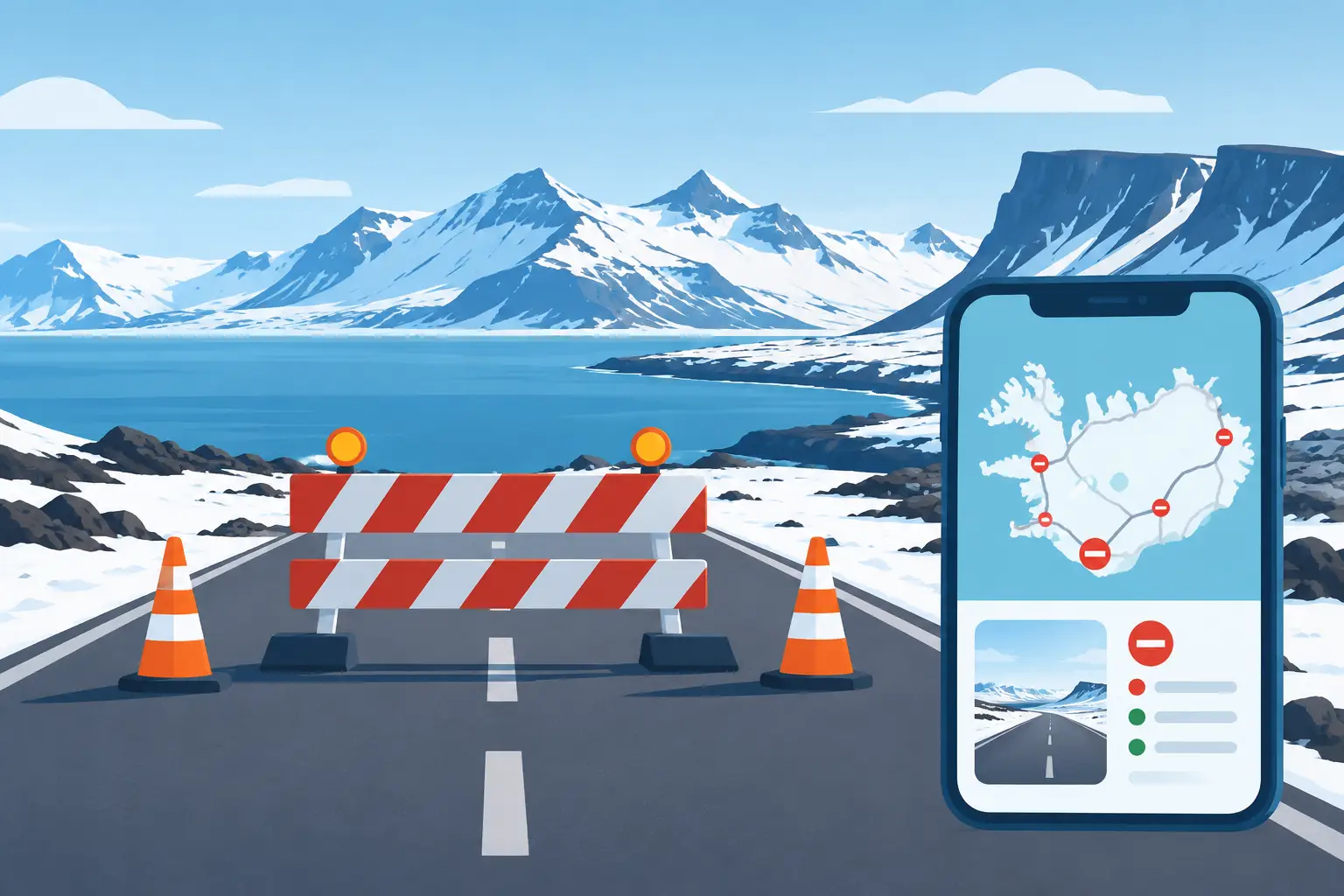
Winter weather can change plans with little warning. Roads may close due to snow, ice, wind, or poor visibility, including major routes. Keep your itinerary loose, monitor official road and weather updates, and avoid planning flights, tours, or accommodation around an arrival time that leaves no margin.
For winter, a sleep-in-the-back 4×4 camper is often the better fit than a rooftop tent. It is quicker to settle in after a long, cold day and keeps you out of the wind when conditions are rough. A 4×4 can provide useful traction and confidence on approved roads, but it does not remove the need to drive carefully. Slow down, leave extra distance, and do not continue into conditions that feel beyond your experience.
Northern Lights are possible from September through April when the sky is dark and clear, but they are never guaranteed. Treat them as a bonus, not the only reason to choose a route or stay up late. A clear forecast, low light pollution, and patience matter more than chasing a specific location.
Spring and Fall Weather: Plan for Four Seasons
Iceland’s weather does not follow the calendar politely. Wind is often the factor that changes a day fastest, and it matters just as much as rain or snow. Strong gusts can make driving tiring, affect tent comfort, and turn opening a car door into a two-handed job.
Whatever month you choose, pack layers rather than one heavy outfit. A warm mid-layer, waterproof shell, hat, gloves, and sturdy waterproof shoes belong in the vehicle year-round. Bring dry clothes for camp, too. Nothing improves a rainy evening like changing into warm, dry layers before cooking dinner.
It also helps to avoid a tightly packed route. Iceland is better when you can stop for weather, a short walk, a roadside waterfall, or a view that deserves more than five minutes. Unlimited mileage gives you room to adjust, but it does not make long driving days more enjoyable. Build your itinerary around fewer overnight stops and give each region time.
Where Can You Camp in Iceland?
Camping in Iceland is not a free-for-all. Wild camping with a motor vehicle, camper, or rooftop tent is generally not allowed outside designated campsites or clearly permitted areas. The rule protects fragile landscapes, private land, and the experience of everyone traveling through them.
Use organized campsites for overnight stays unless you have explicit permission from a landowner. Most campsites operate on a first-come basis, and many do not require reservations, though this can vary in the busiest areas and during events. Expect simple facilities in remote regions and more services near larger towns.
Respect quiet hours, sort waste where facilities provide recycling, and leave your campsite exactly as you found it. Do not drive off marked roads or park on moss, grass, or exposed ground just to find a better view. Iceland’s landscapes can look tough, but much of the ground is easily damaged.
Choosing the Right Season and Camping Setup
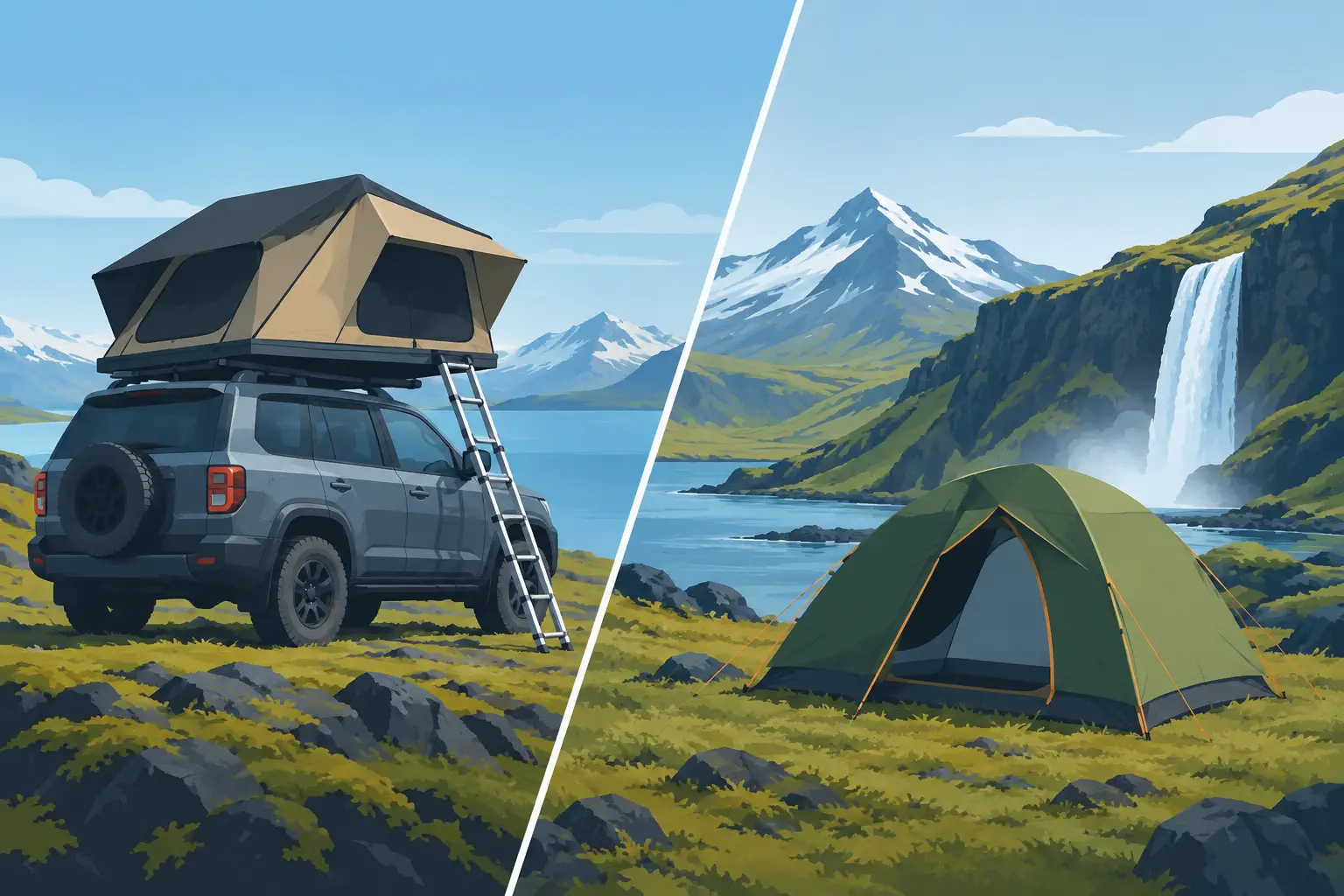
Your vehicle setup should match your trip, not just the photos you want to take. A Dacia Duster with a rooftop tent is a strong summer choice for couples and independent travelers who want a compact 4×4, open-air camping, and access to approved mountain roads when conditions allow. It keeps the trip simple while leaving plenty of room for spontaneous detours.
A sleep-in-the-back camper makes more sense for colder months, unpredictable shoulder-season weather, or travelers who want a faster bedtime setup. You can pull into a campsite, make dinner, and settle in without climbing outside in the rain.
Black Sheep Campers is built for this kind of flexible travel: practical 4×4 camping vehicles, essential gear included, unlimited mileage, and 24/7 self-service pickup and return. No rental-counter timing dictating your first or last day.
The best Iceland camping season is the one that matches your comfort level and priorities. Choose summer for open roads and easy camping, shoulder season for quieter routes and changing skies, or winter for a slower, weather-led adventure. Keep your plan loose, use designated campsites, and let Iceland give you the route worth taking that day.