A good Iceland couple roadtrip itinerary example is not about checking off every famous stop. It is about having enough time to pull over when the light changes, take the longer walk to a waterfall, and change plans when the weather has other ideas. This seven-day route follows the Ring Road at a comfortable enough pace for couples who want real outdoor time, not seven days of rushed windshield sightseeing.
This route works best from late spring through early fall, when campgrounds are open and road conditions are generally easier. In winter, shorten the route and leave more room for weather delays.
Before You Set Off: Keep the Plan Flexible
Iceland looks small on a map, but driving times can be misleading. Gravel roads, wind, rain, one-lane bridges, photo stops, and a sheep wandering across the road all slow things down. Plan one main region or activity each day, rather than trying to see every pin on your map.
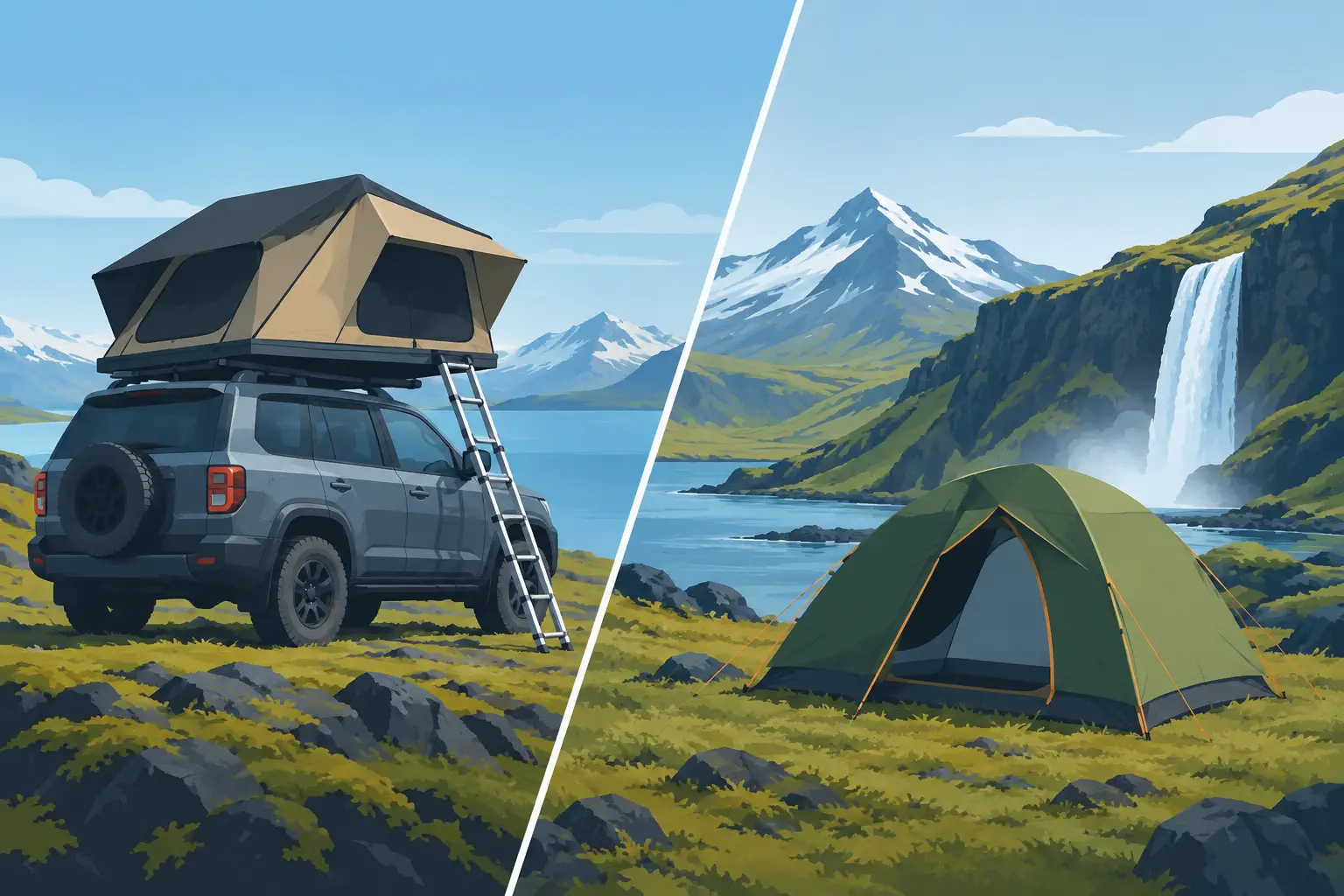
A 4×4 camper gives you a simple advantage: your transport and accommodation move with you. You can choose a campground closer to the next morning’s hike instead of backtracking to a hotel. Black Sheep Campers vehicles are set up for exactly that kind of independent travel, with the practical gear you need and no rental-counter schedule holding up your first day.
Camp only at designated campgrounds. Wild camping in a vehicle is generally not permitted, and Iceland’s fragile landscapes need that protection. Check road and weather conditions every morning, especially outside summer.
Day 1: Keflavik to the Golden Circle
Pick up your vehicle and use the first day to ease into Iceland driving. If your arrival is early, stop on the Reykjanes Peninsula for a short coastal walk before heading inland. Otherwise, go straight toward the Golden Circle and save your energy for the days ahead.
Your main stops are Thingvellir National Park, the Geysir geothermal area, and Gullfoss. Thingvellir is ideal for a slower walk together between the tectonic plates. At Geysir, wait for Strokkur to erupt rather than chasing the perfect photo. Gullfoss is powerful in any weather, although windproof layers matter here.
Stay at a campground near Fludir, Laugarvatn, or the Golden Circle. If you want a hot spring on the first night, choose one in this area, but do not try to fit in every spa option after a long flight.
Day 2: Golden Circle to Vik
Leave early enough to enjoy the South Coast without racing it. Start with Seljalandsfoss, where the path behind the waterfall is often open in warmer months. Bring a waterproof jacket, because you will get sprayed. Nearby Gljufrabui is smaller and more enclosed, but it is worth the short walk if conditions allow.
Continue to Skogafoss, then decide how much walking you want. The view from the top is excellent, but the staircase is a commitment. From there, drive toward Vik and stop at Dyrholaey only if wind conditions are calm and access is open. The cliffs and black-sand coastline are dramatic, but they are not a place to take risks near an edge.
End the day near Vik. Visit Reynisfjara Black Sand Beach with care: sneaker waves are real, and the ocean can reach much farther up the beach than expected. Stay well back from the water and never turn your back on the sea.
Day 3: Vik to Skaftafell and Jokulsarlon
This is one of the most scenic driving days of the trip. The road crosses wide black-sand plains, passes moss-covered lava fields, and brings you closer to Vatnajokull, Europe’s largest glacier. Keep the schedule light enough to stop when something catches your eye.
Skaftafell is your main active stop. For many couples, the hike to Svartifoss is the right balance of effort and reward. The waterfall is framed by dark basalt columns, and the trail gives you a break from the car. If the weather is poor or you prefer a shorter day, choose one of the easier nearby walks instead.
Later, reach Jokulsarlon Glacier Lagoon and Diamond Beach. Icebergs drift through the lagoon before fragments wash onto the black sand, creating one of Iceland’s most unusual landscapes. Stay nearby for the night. This gives you the option to revisit early the next morning when the light and crowds are different.
Day 4: Jokulsarlon to the Eastfjords
Start with a second look at the lagoon if conditions are good, then follow the Ring Road east. This is a quieter part of Iceland, with fewer headline attractions and more space to travel slowly. The route around the Eastfjords brings narrow roads, mountain views, fishing villages, and plenty of places for a simple picnic.
Do not force every fjord detour into one day. Choose one or two that fit your energy level. Djupivogur is a good stop for coffee and a leg stretch. Further east, small towns such as Faskrudsfjordur or Seydisfjordur make memorable overnight areas, though Seydisfjordur requires an extra mountain-road detour.
If you stay near Egilsstadir, you will have easier access to services, groceries, and the next day’s route. If you stay in a fjord, you will get a quieter evening and a more remote feel. Both are good choices. It depends on whether you value convenience or scenery more that day.
Day 5: East Iceland to Myvatn
Drive north toward the Lake Myvatn area, where Iceland’s volcanic landscape becomes impossible to ignore. The terrain changes quickly from green valleys to lava formations, geothermal vents, and wide open plains.
Spend the afternoon around Myvatn. Walk through Dimmuborgir’s lava formations, see the bubbling mud pots at Hverir, and take a short walk around the Krafla volcanic area if roads and weather allow. The geothermal ground here can be uneven and hot, so remain on marked paths.
A geothermal soak is a good choice tonight, especially if the weather is cold or wet. Myvatn has campgrounds and services, making it an easy place to reset, shower, cook a proper meal, and organize gear before the longer drive west.
Day 6: Myvatn to North Iceland and Borgarnes
This is the route’s longest driving day, so start early and keep stops selective. First, visit Godafoss, a broad waterfall with easy access from the road. Then continue through Akureyri, Iceland’s main town in the north. It is a practical place to refuel, restock groceries, and grab lunch.
From Akureyri, follow the Ring Road west through mountain passes and open farmland. You can stop at a viewpoint or take a short walk, but avoid turning this into another full sightseeing day. The goal is to reach the Borgarnes area with enough time to set up camp without rushing.
If the forecast is poor, this is the day to be especially realistic. Strong winds can make driving tiring, and visibility can change quickly. Skip optional detours, reduce your speed, and arrive safely. A less ambitious day is never a wasted day in Iceland.
Day 7: Borgarnes to Keflavik
Your final day can be as relaxed or as active as your flight time allows. If you have a late departure, explore the Reykholt area, see Hraunfossar and Barnafoss, or take a coastal route around the Snæfellsnes Peninsula only if you have a full day available. Do not underestimate the drive back to Keflavik and the time needed to pack and refuel.
With 24/7 self-service return, you are not tied to a rental desk’s opening hours. That makes an early flight or a late-night departure easier to manage. Still, give yourself time to clean out the vehicle, check for personal items, and leave the fuel level as required.
A Few Smart Choices for a Couple’s Iceland Road Trip
Bring layers, waterproof outerwear, sturdy shoes, and an eye mask for bright summer nights. Keep snacks, water, and a warm layer within reach in the vehicle rather than buried in your luggage. Iceland’s weather can change between one stop and the next.
Do not build this itinerary around F-roads unless you are traveling in the right season, have a suitable 4×4, and understand river-crossing and road restrictions. The route above stays on established roads, so it delivers plenty of Iceland without adding unnecessary risk. If you have extra days, then consider the Highlands as a separate, weather-dependent adventure.
The best part of a couple’s road trip is having room to make it your own. Keep one or two anchor stops per day, choose a campground that suits the weather, and leave space for the places that were never on your original plan.