Winter is the quiet half of our year – and, for the right traveller, the best. Prices are at their lowest, the campsites are empty, the waterfalls are frozen at the edges and the northern lights are out most clear nights. It is also the half of the year when the vehicle matters most. Here is how a winter camper trip in our Dacia Duster 4×4 actually works.
Is a winter camper trip in Iceland a good idea?
Yes, with three conditions: a 4×4 on studded tyres, a heater for the nights, and a plan that follows the weather rather than fighting it. Thousands of people do it every winter. The ones who have a bad time are usually in a two-wheel-drive van, trying to keep a fixed itinerary.
The car
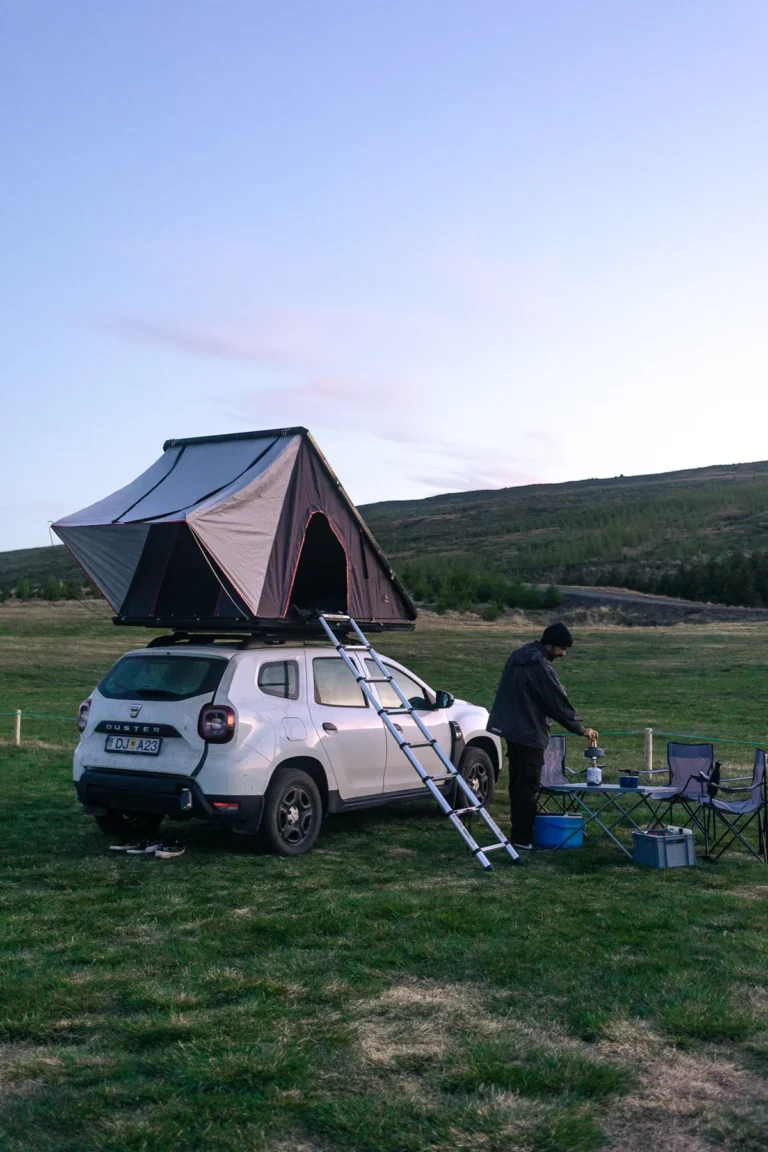
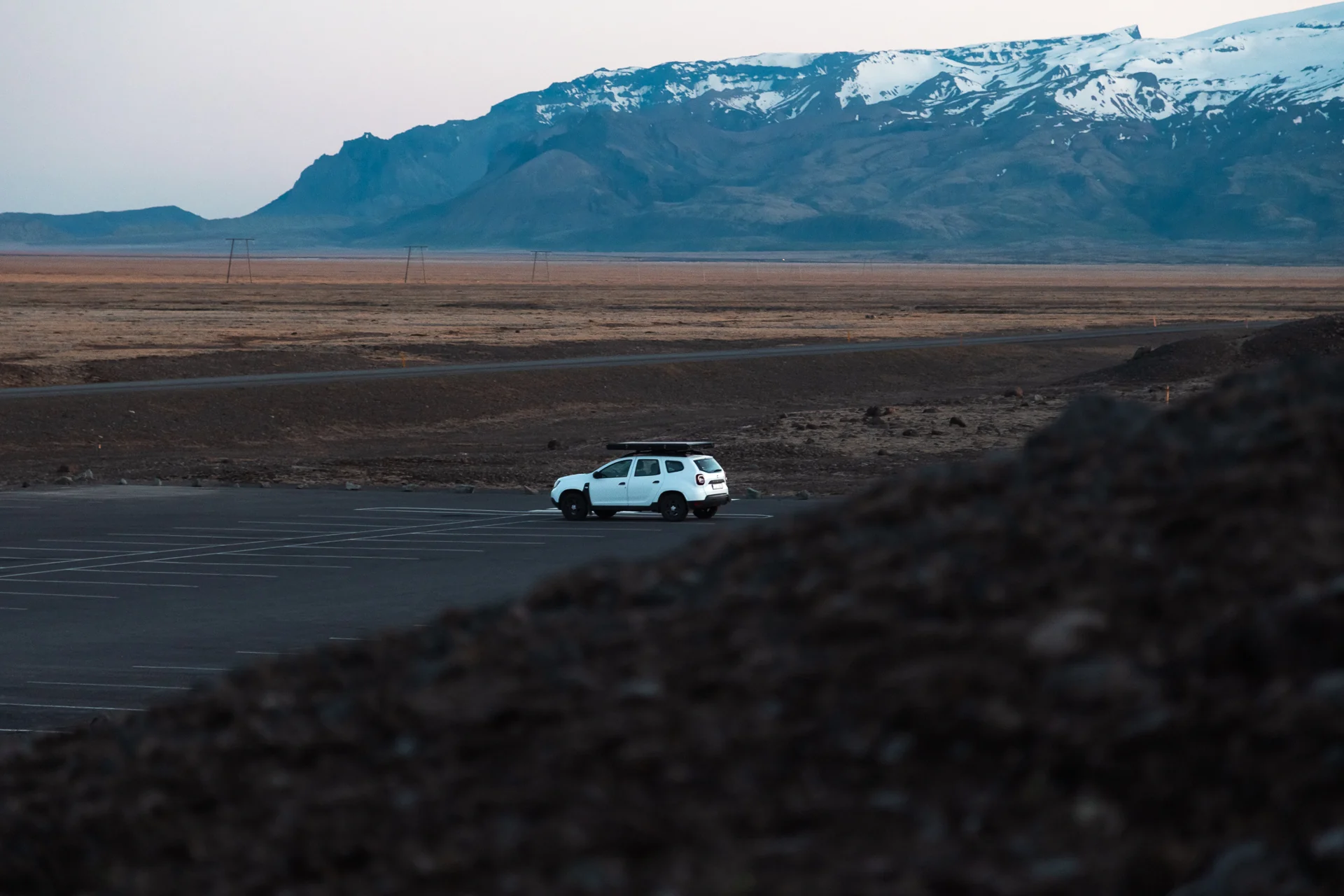
Every Duster runs on studded winter tyres from 1 November to 15 April. Four-wheel drive, about 21 cm of ground clearance and a short wheelbase make it one of the easiest cars to drive on snow and ice in Iceland – it is the car Icelanders themselves drive in winter. It is also light enough that you can dig it out if you misjudge a campsite entrance. A 220V electric heater is in the car for campsites with electricity, which in winter is almost all of the open ones.
Sleeping warm
The bed is inside the car – about 190 cm long, 100 cm wide at the tailgate and widening to around 135 cm – so you sleep inside a closed steel body, not in a tent. Plug the heater into the campsite hookup and the cabin is comfortable all night. What makes the difference is the sleeping bag: bring a proper winter bag or borrow ours (free when you book), wear a hat, and keep tomorrow’s clothes inside the bag with you. The rooftop tent is not a winter option; in winter the Duster is a two-person camper.
Daylight and distances
In December you have about four to five hours of daylight; in February and early March, eight to ten. Plan around it: drive in the light, arrive at the campsite before dark, and treat the long evenings as the time for hot pools and northern lights. A realistic winter day is 150–250 km, not the 400 km people cover in June. The south coast from Reykjavík to Jökulsárlón, the Golden Circle, Snæfellsnes and the north around Akureyri are all comfortably winter-friendly. The Westfjords and the highlands are not – F-roads are closed from September to June.
Weather: the only rule that matters
Check vedur.is and umferdin.is every morning and again at lunch. Roads are closed quickly when storms come in and reopened quickly afterwards; a closed road is never worth driving. Build one spare day into every week and you will never need to. Register your plan at safetravel.is.
Campsites in winter
A good number of campsites stay open all year, including Reykjavík, Skaftafell, Höfn, Akureyri, Mývatn and several on the Golden Circle and Snæfellsnes. They have electricity, heated service buildings with kitchens and showers, and in winter you will often have them almost to yourself. Fees are per person and the same as in summer. Camping outside registered campsites is not allowed in Iceland.
Northern lights from the camper
You do not need a tour: you need a dark sky, a clear forecast and patience. The Duster is the tour. Check the aurora forecast on vedur.is, drive ten minutes out of the campsite lights, open the tailgate, sit in the sleeping bag and wait. Clear, cold nights between October and March are the best, and the hours around midnight are busiest – but the lights can appear from eight in the evening.
Packing list for a winter camper trip
- Winter sleeping bag (or ours, free), hat and wool socks for sleeping
- Ice grips for your boots – the car parks are icier than the roads
- Headtorch, power bank, thermos
- Swimsuit – hot pools are the winter evening activity
- Ice scraper and a small folding shovel
What it costs
Winter is the cheapest time to rent a camper in Iceland – the same Duster that costs the most in July is at its lowest from November to March. Unlimited kilometres, CDW, the heater, the free airport shuttle and the camping gear are included, and you pay 5% less when you book direct and pay in full. Live prices for your dates are on the Duster page; pickup is self-service at Keflavík Airport at any hour, which matters when winter flights land late.
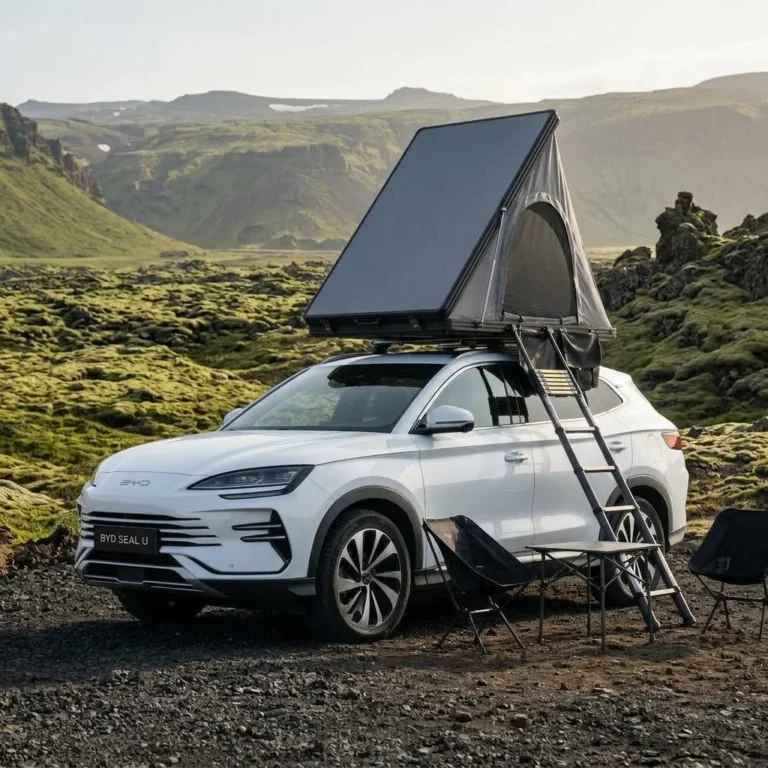
Prefer an automatic for winter driving? The all-wheel-drive electric Leapmotor C10 heats itself all night in Camp Mode, and from April 2027 the automatic 4WD BYD Seal U joins the fleet.